Good News
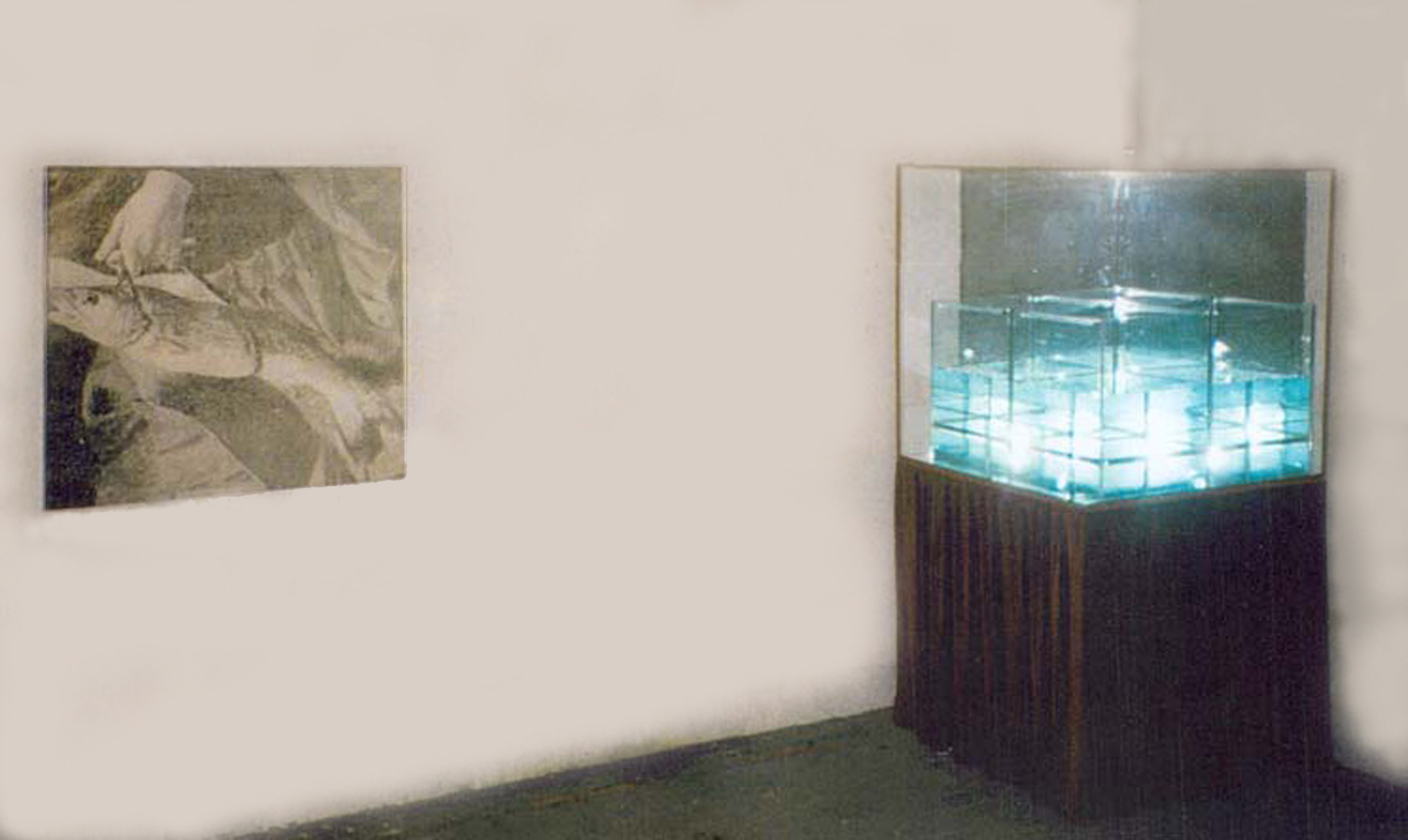
Three mirrors (each 100 x 100 cm ) are bordering each other, like half a cube. Starting from the corner of this half cube there is an aquarium (50 x 50 cm), The aquarium is only halfway full with water. Looking into the mirrors one has the sensation of observing four aquaria, instead of one. About one and half meter away this object a photocopy of a detail of Botticelli’s painting “Tobias and his guardian angels” is hanging: the hand carrying a fish.
Exhibited: Unesco- Paris, France 1996
AL JOLSON – 1996
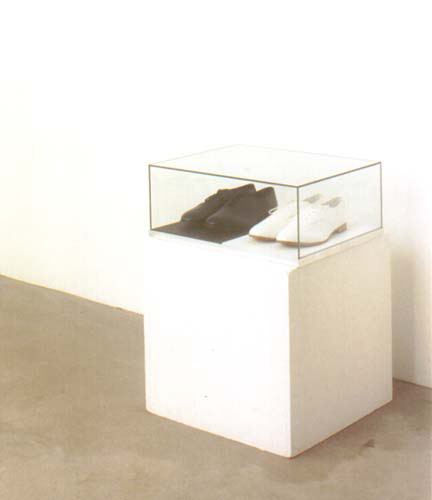
Two pairs of tap dance shoes -one in white, the other in black- are placed under a glass cube on a black and white wooden base. The object is accompanied by the sounds from an original song and tap dance performance of the legendary Al Jolson, a white tap dancer who used to colour his face black for his performances.
Exhibited: Gallery Schuppenhauer, Cologne 1997
THE CONSCIENCE – 1997
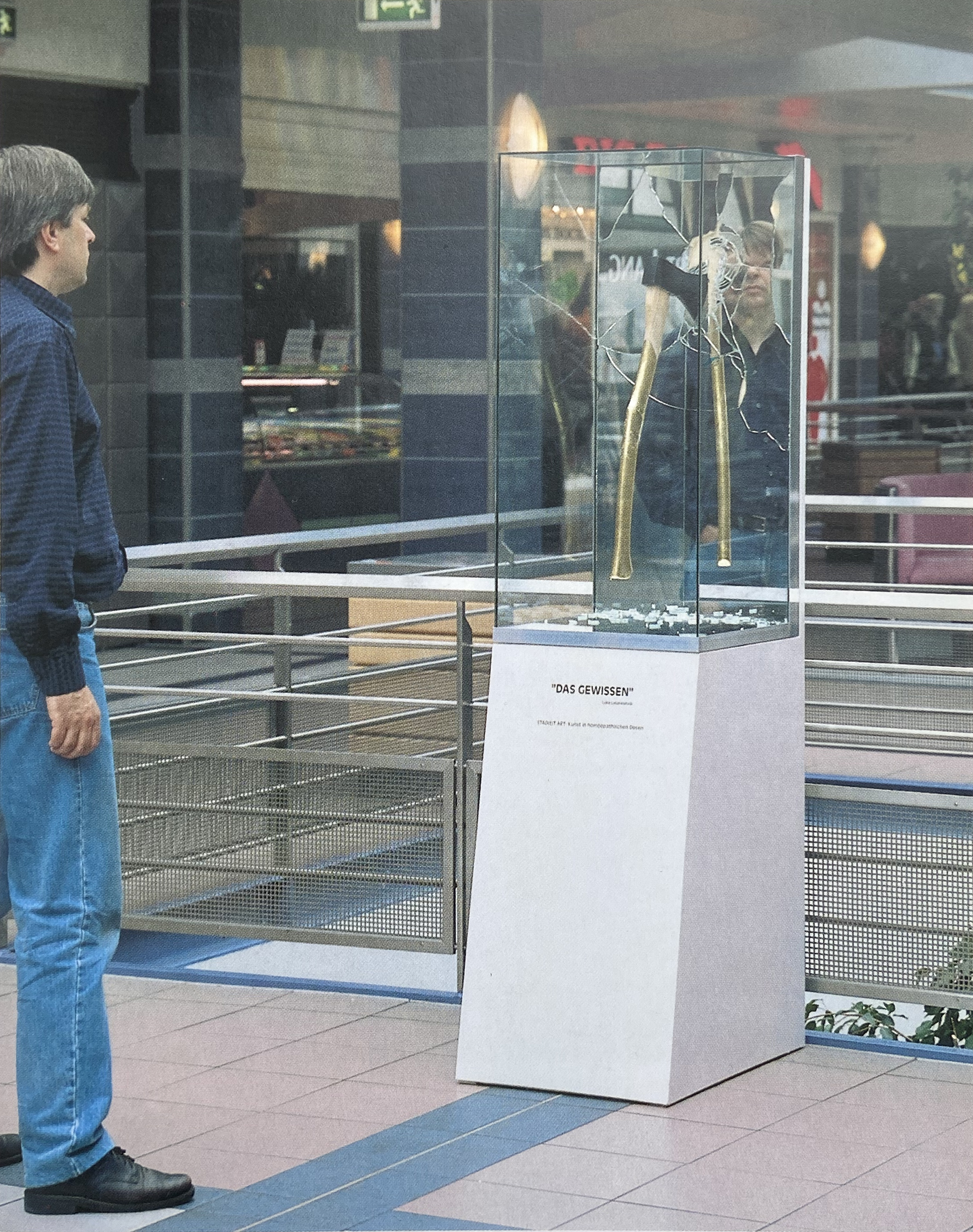
“He, who doesn’t have a clear conscience, cannot look in the mirror” (Folk wisdom)
“Who wants to live has to forget the conscience” (L. Beria)
This object consists of a glass cube, standing on a socle. The background and base planes are constituted by mirrors. The background mirror is severely cracked by a large axe that sticks into it. The cracked by a large handle of the axe is covered with gold leaf. On the base the broken mirror fragments are scattered around. Looking at the object on eye level, one can not see oneself in the cracked background mirror, instead the golden handle is what catched the eye. The issue “to have or to be” is the main theme of this object. The object raises questions to the observer on the loss of conscience of modern man, the role of money in contemporary, consumptive society and its influence on our morals.
Exhibited: Hurth, Germany 1997
THE ANGEL
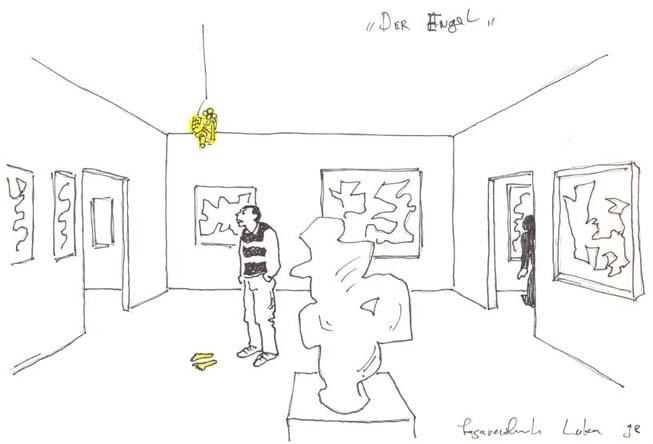
“Some people believe that children are able to see angels.”
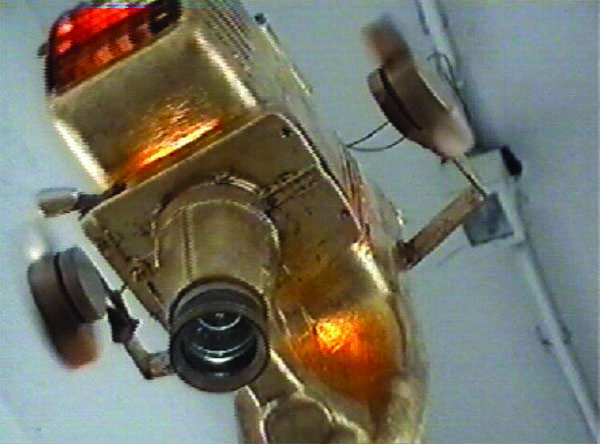
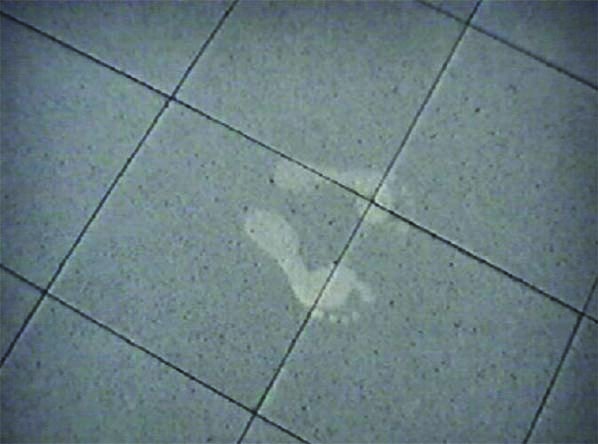
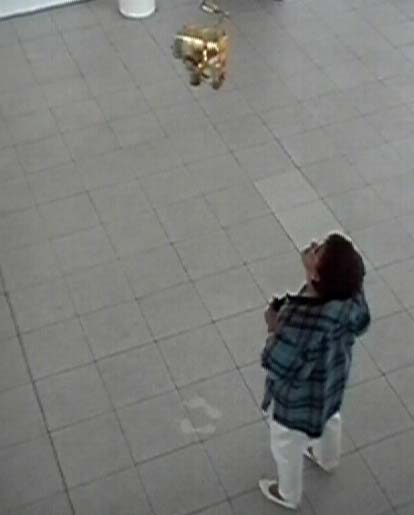
Two moving, lighted footsteps are projected on the floor surface and represent the presence of an angel, or not? When looking up, one sees an old slide projector, with two small propellers mounted on it. The object is hanging on a single wire and moves around its own axis. The object is covered with gold leaf.
Exhibited:
Kunsthous Kaufbeuren, Germany, 1998
European Kunsthalle Trier, Germany, 1999
SUPER STARS
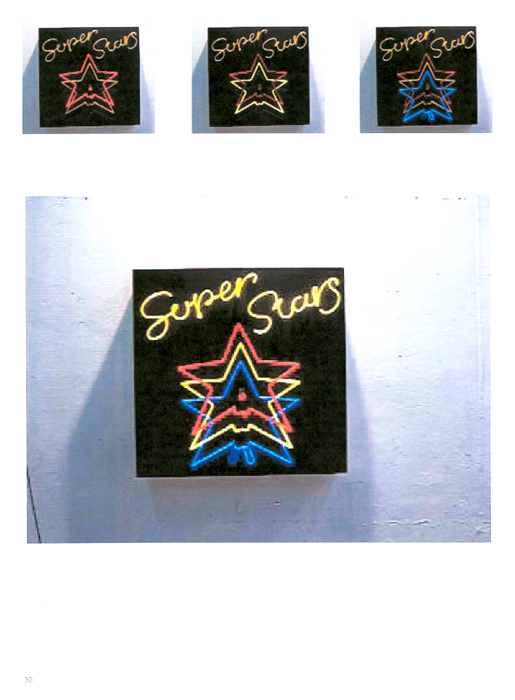
Cyclic sequence of three male stars, that are subsequently lighting, suggesting to be in intimate interaction with the next, thereby functioning as its “star-maker”. The sequence is concluded by a climax of all three lucky stars lighting up.
Exhibited: Gallery Schuppenhauer, Cologne, Germany, 1998
THIS GENERATION
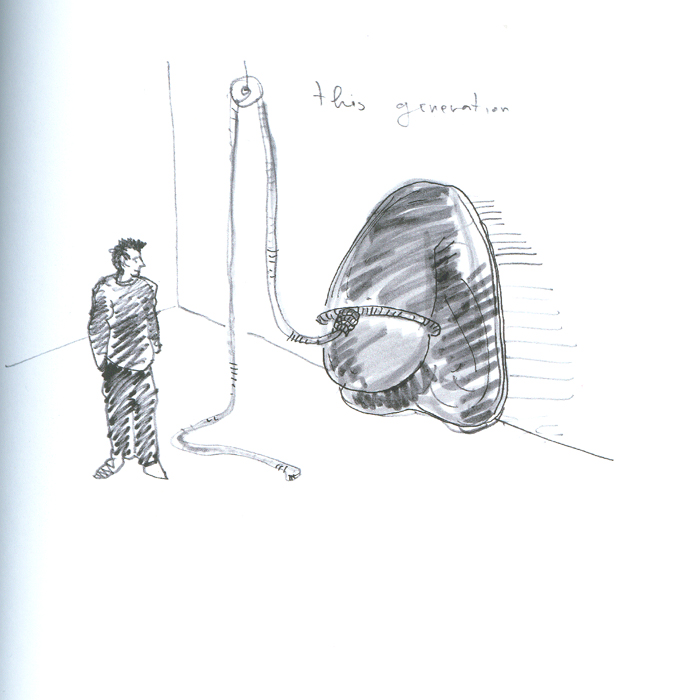
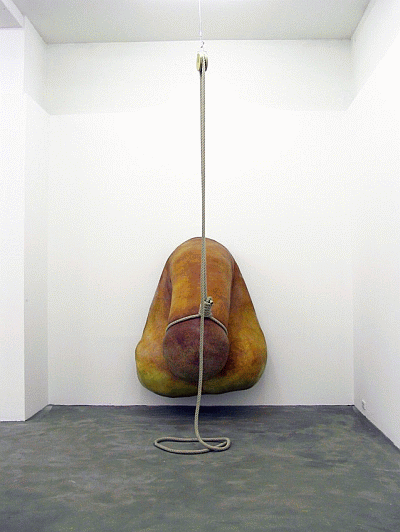
Description: Attached to the wall is a massive object that represents an oversized, powerless penis. Around its head a rope is tied, much like on an execution scene. The rope goes up towards a winch which is connected to the ceiling. The other side of the rope is freely falling on the floor. Visitors can pull the penis up by using the rope and “hang” it, at the same time however the impotent penis becomes a powerful, erect thing. However, if one lets go of the rope, the giant penis will helplessly fall down again on its own testicles. In the interaction with the observer, the question arises whether the actual execution takes place rather during the pull up, or once the rope is let loose again. Potency and incompetence, strength and weakness, not just in a masculine, but in a general artistic-creative sense are staged in “This Generation”. The title aims at a dependency relation, there where illusion instead of substantial strength is artificially kept alive, little effort is needed to bring the house of cards down. Once the protection ends, the true face of this generation appears. Whereas almost universally the more ordinary (as opposed to the official, medical) term for the male sexual organ is used to express disrespect for someone one regards as weak, corrupt or incompetent, the penis at the same time symbolizes the human desire for power, indicating our complexes, which we somehow over and again keep replicating. “This Generation” speaks to the universal theme that those that hold powerful positions are kept on their erected pedestals by their supporters, who have placed them there and turned them from an impotent insignificance into a powerful, erect force. Yet, such force is only potent as long as the support structures are kept in place; if let go- they will helplessly fall back into oblivion again.
Across the globe, and across generations, societies have been, are, and will be involved in keeping the powerful in their positions (and if we happen to let them fall, we replace them by new ones).Though “This Generation” was in fact dedicated to some of my colleagues and the power-holders in my professional field, I leave it up for the viewers interpretation to where they see “This Generation” applicable in their daily and worldly realities.
Exhibited:
Gallery Schuppenhauer, Cologne, Germany, 2004
Cobra Museum, Amsterdam, Netherland, 2009
Exhibited:
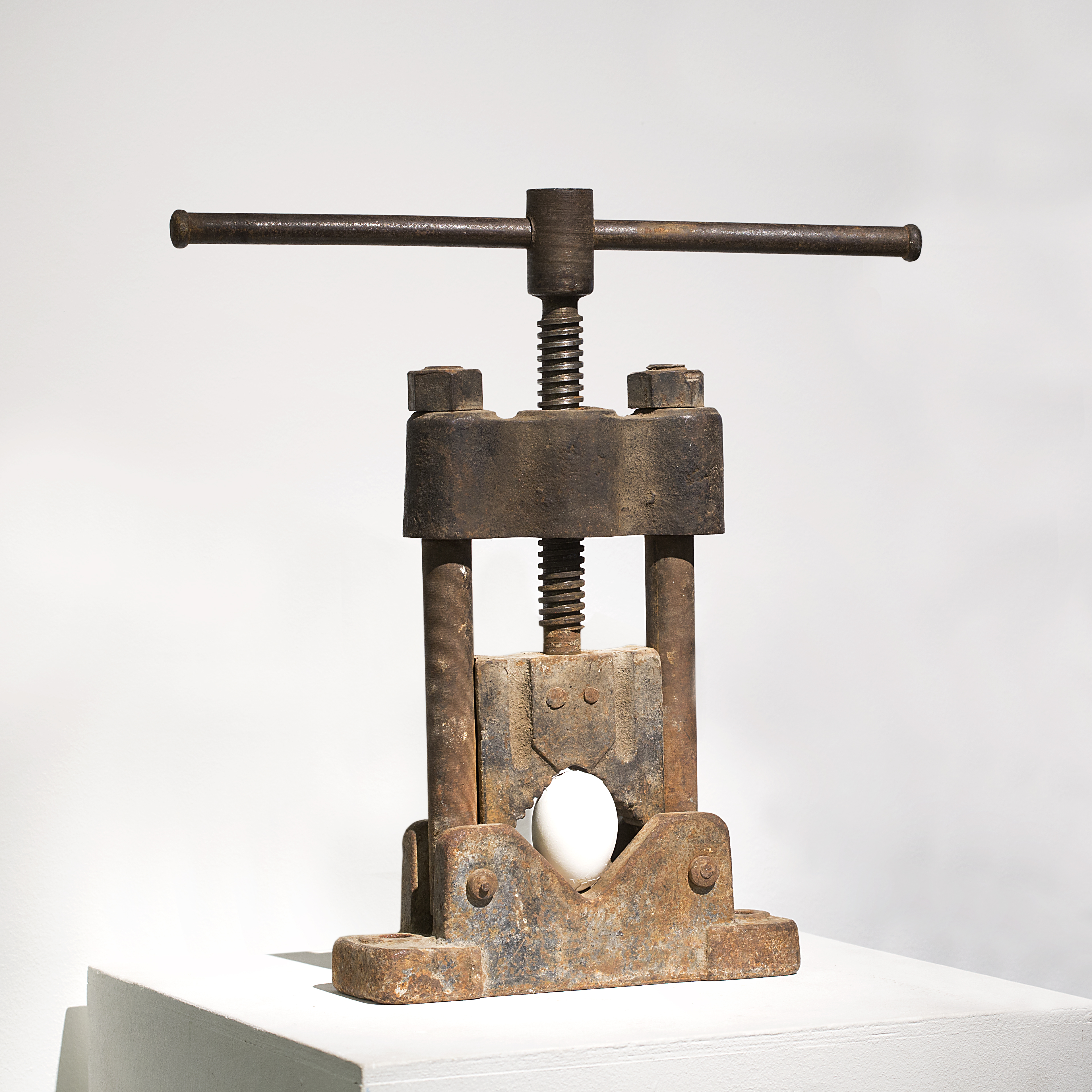
MOMA Tbilisi, Georgia, 2021
Exhibited:
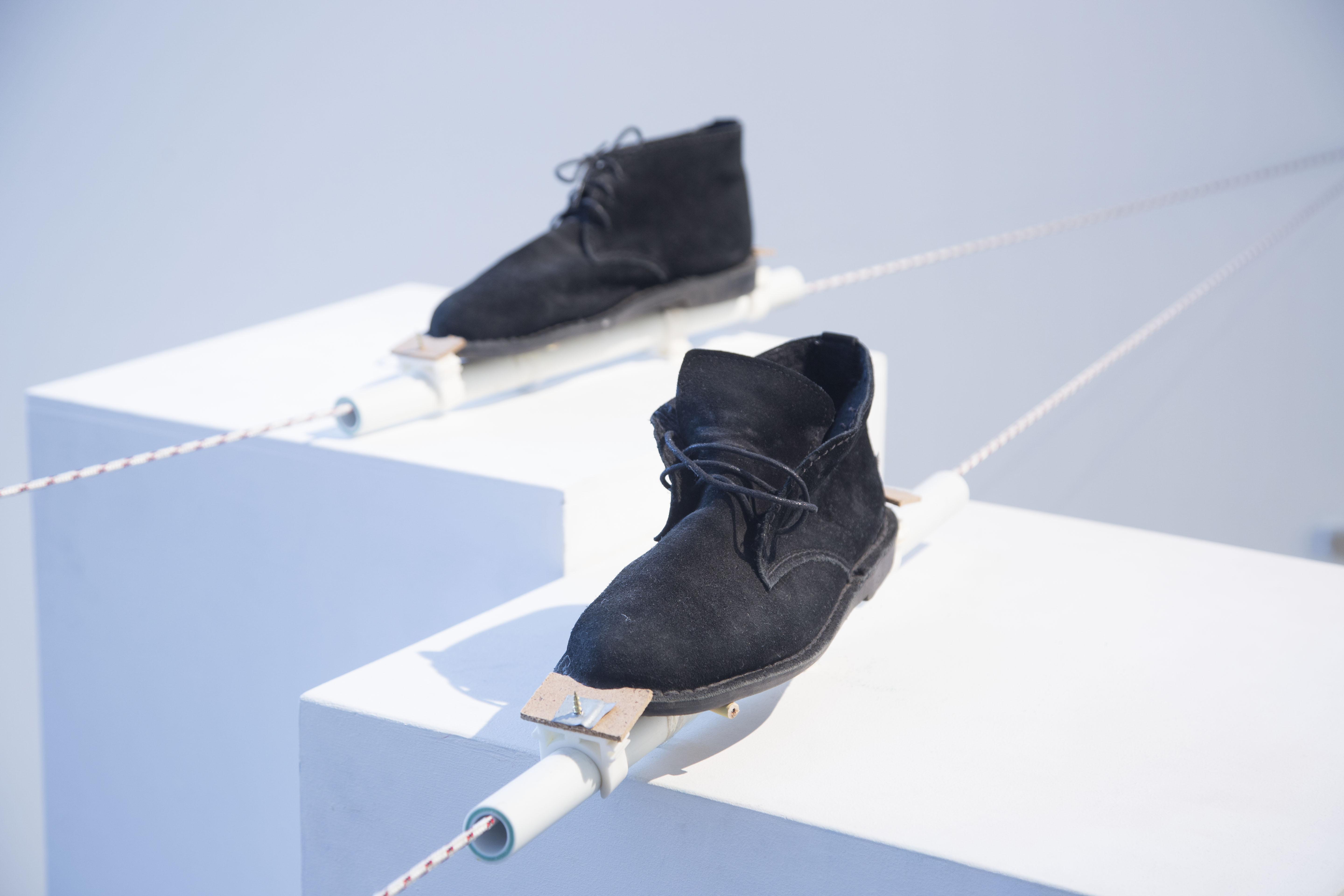
MOMA Tbilisi, Georgia, 2021
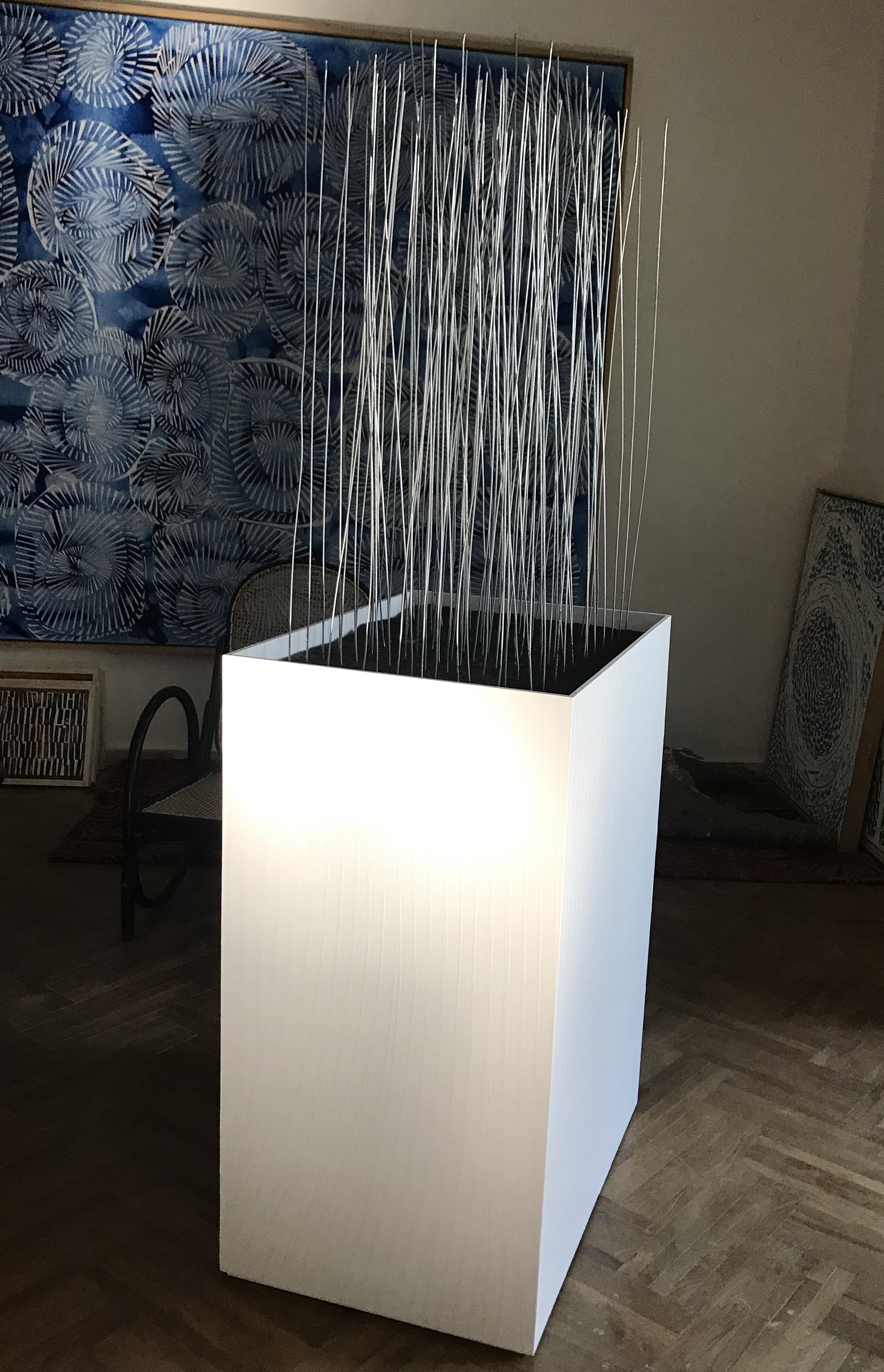
Exhibited:
Baia Gallery, Tbilisi, Georgia 2023
Luca Lazar
lucalazarart@gmail.com
Pages