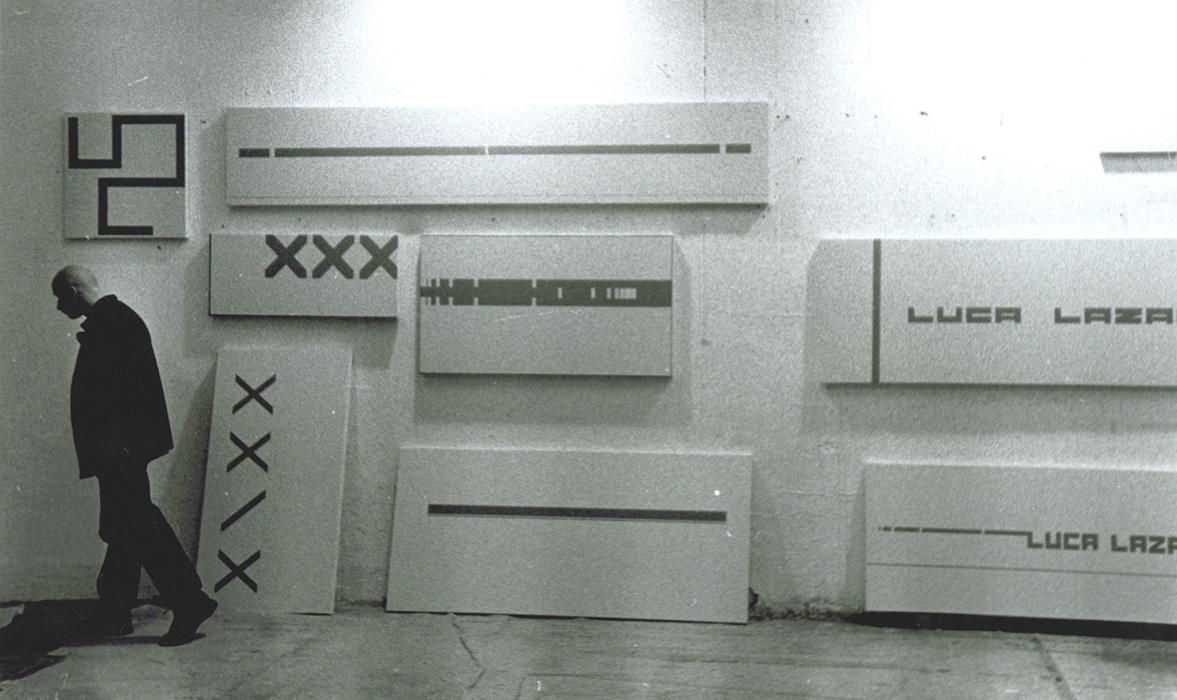
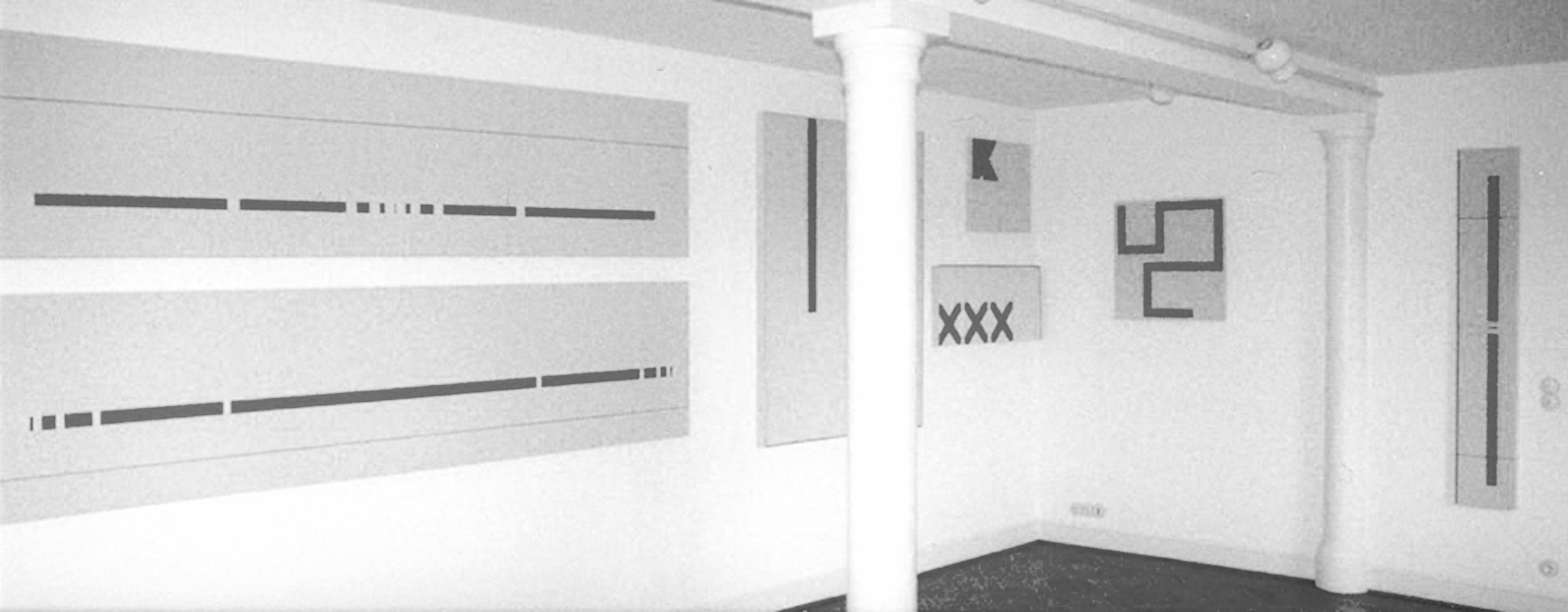
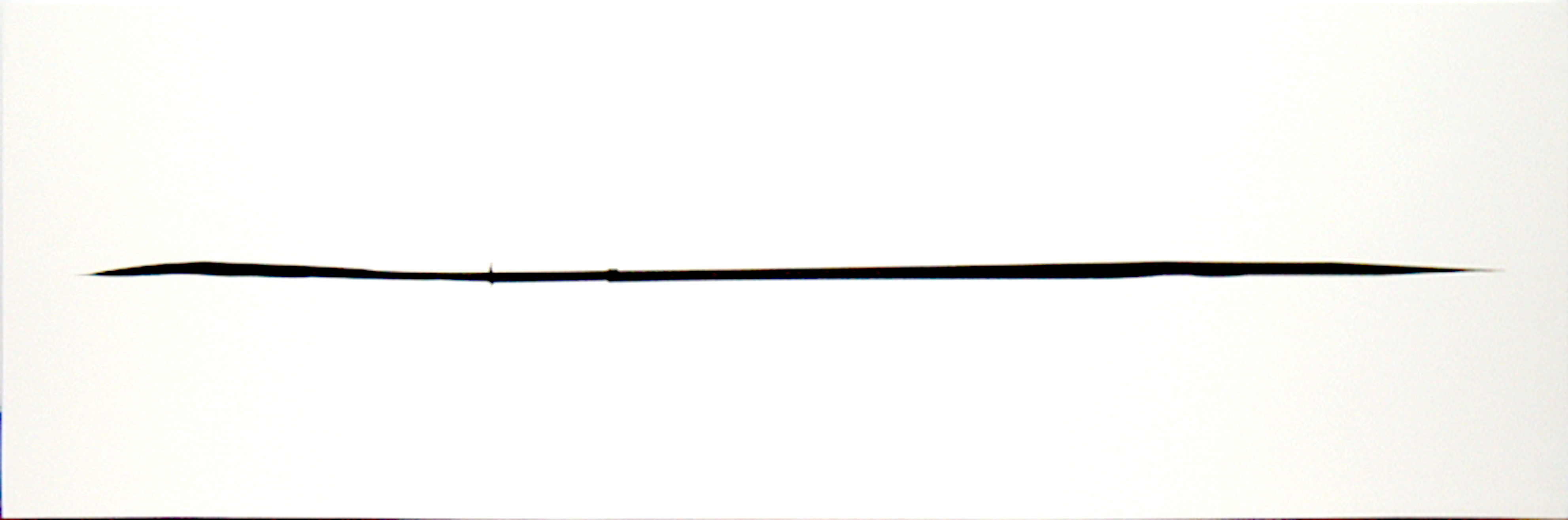
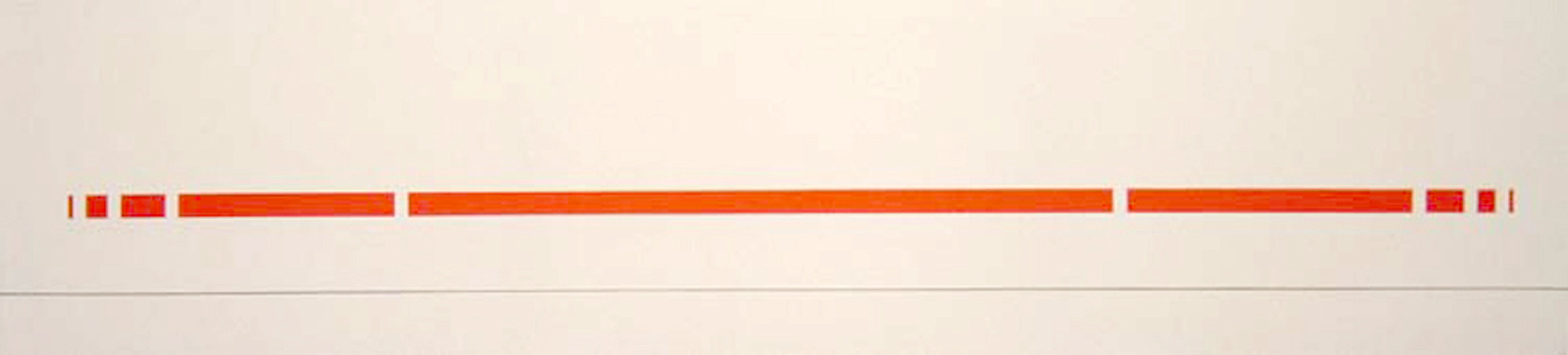
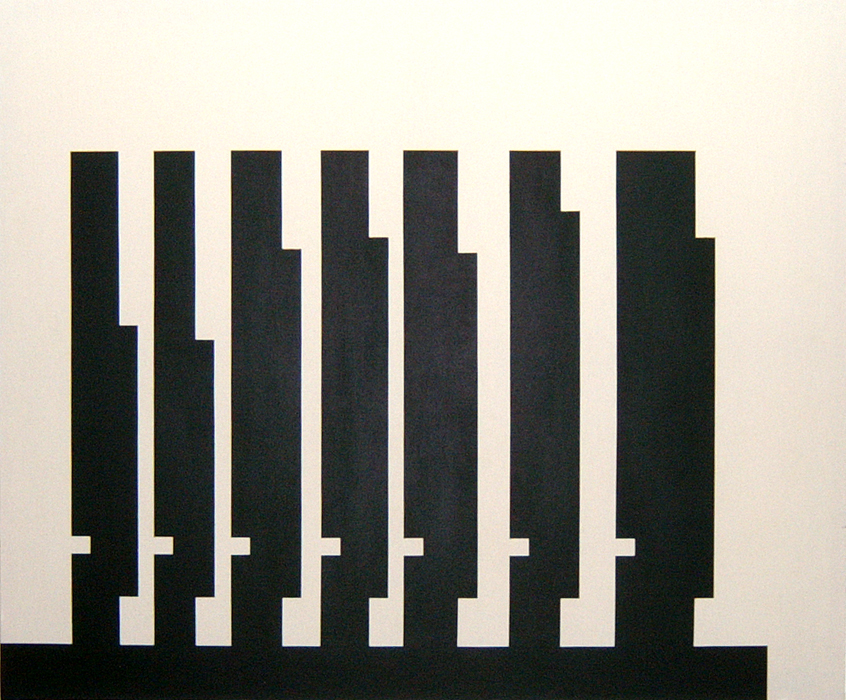
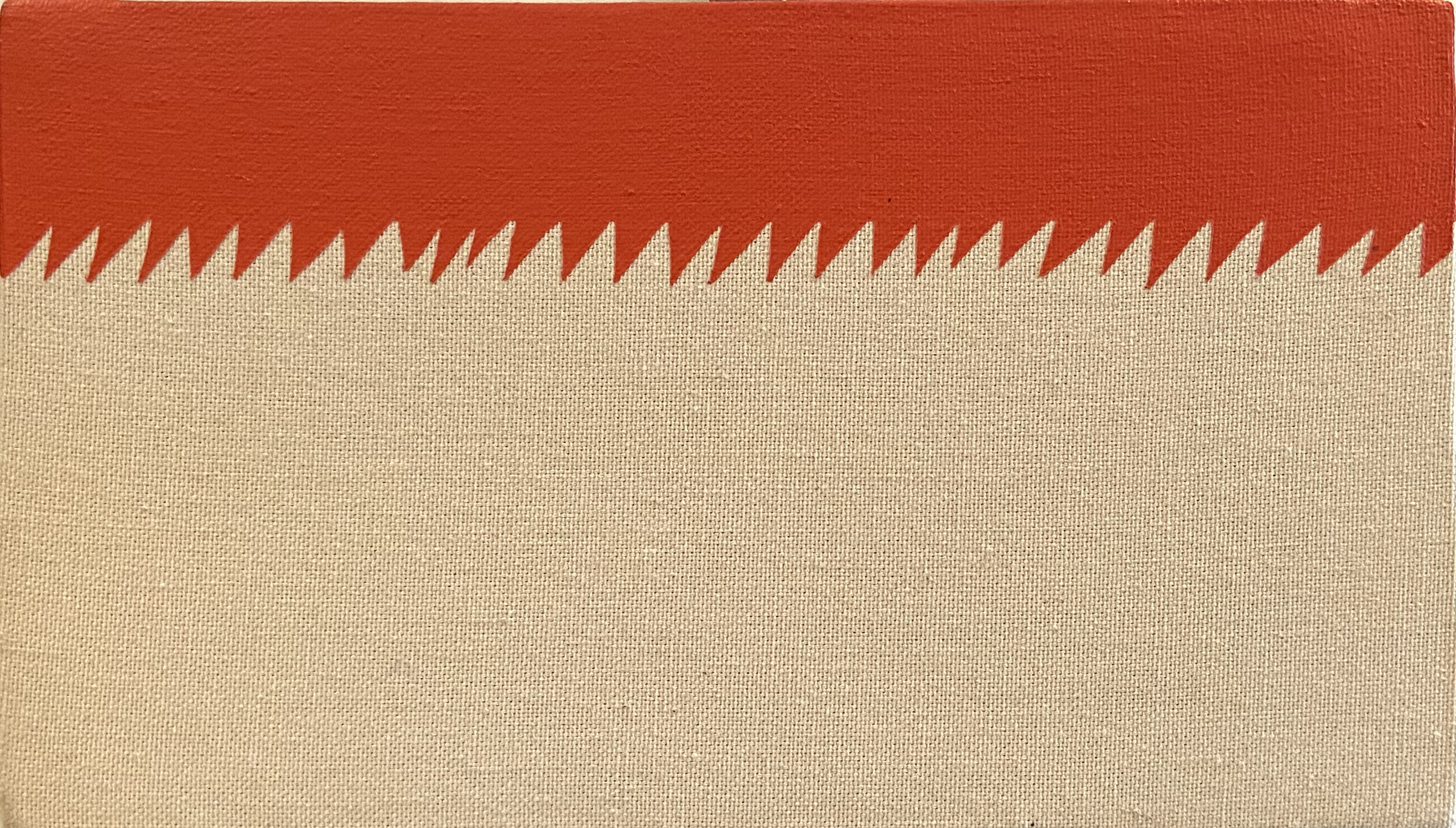
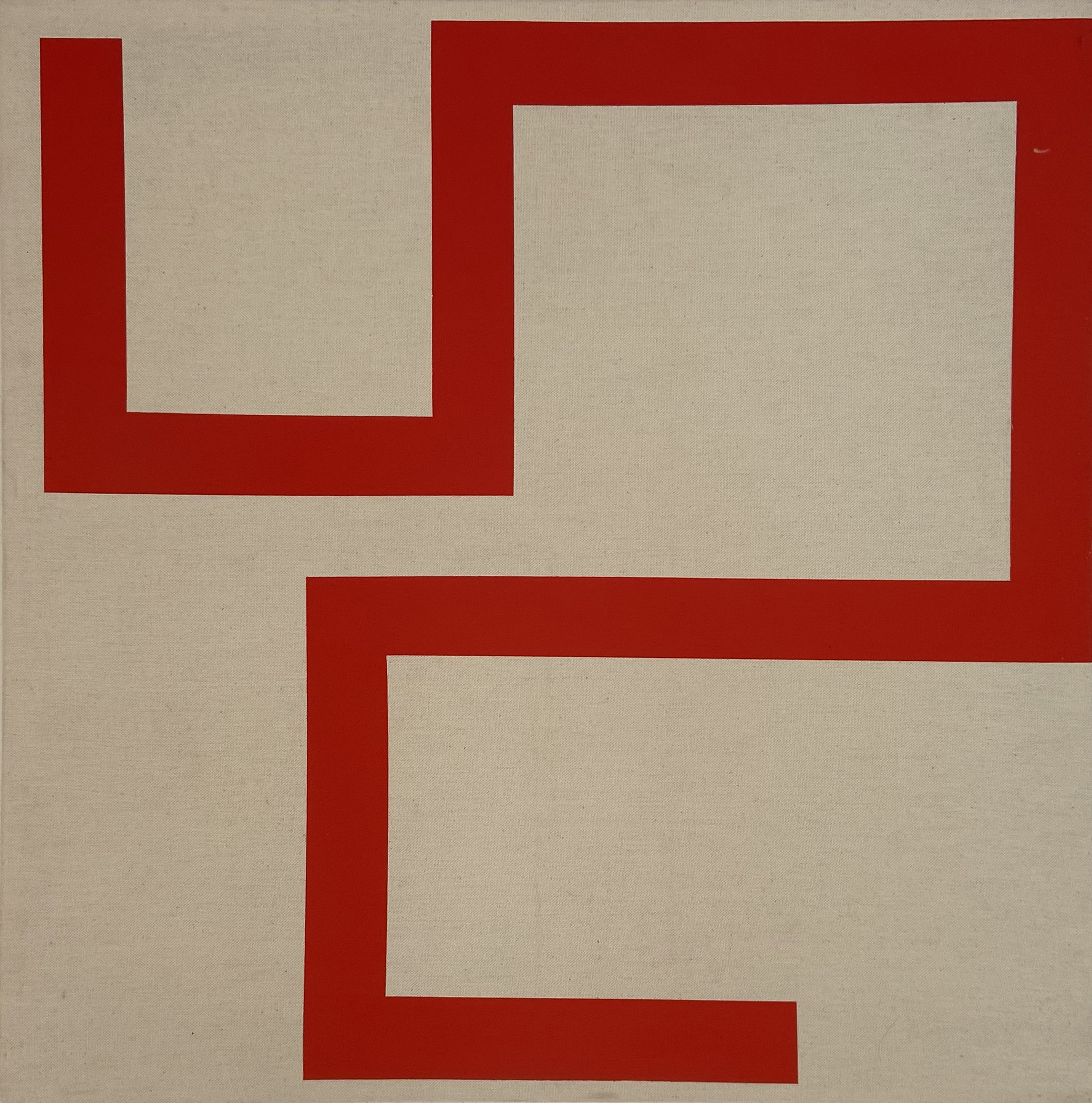
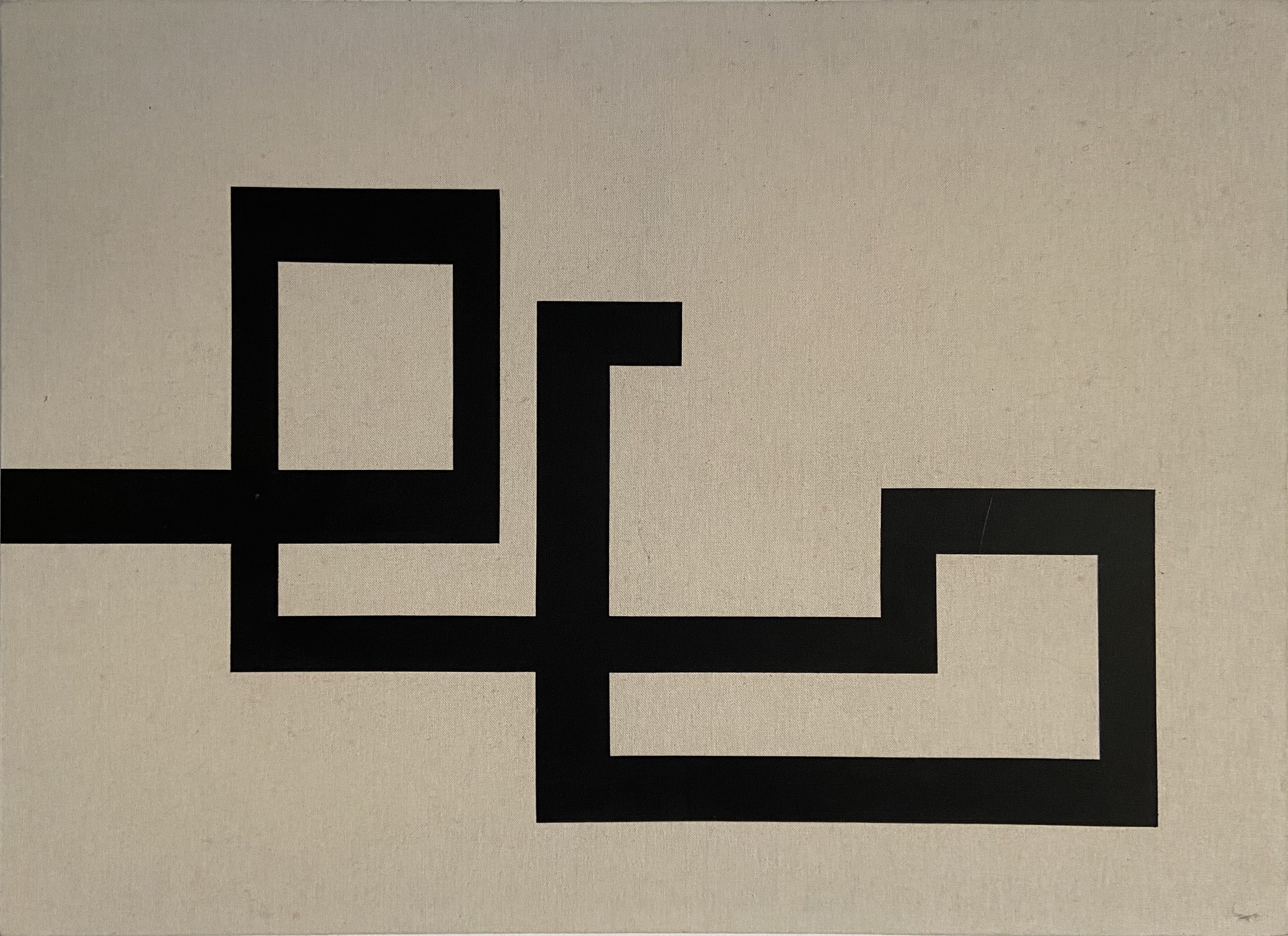
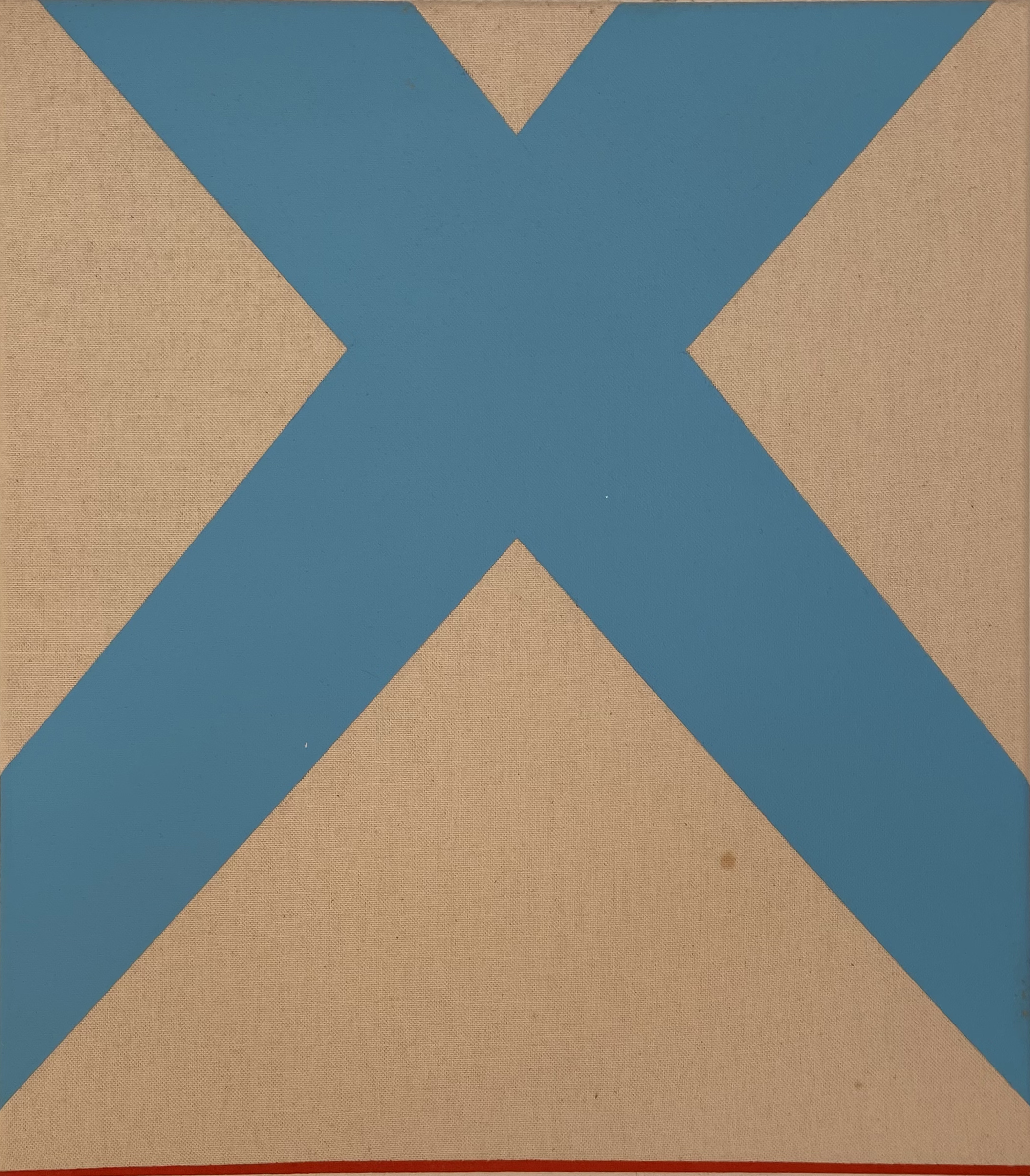
In a certain space and its specific time, movement is represented by a line. The line is a substance of form. Time creates form and has its own speed. In time, speed constructs rhythm. If one imagines history as an abstractical form, it consists of different rhythmical ongoing movements. Notwithstanding its changibility and similarity, it never repeats. In the painting this movement starts in eternity and moves towards infinity. Similarly, if one considers the line of the horizon, this horizontal line by itself doesn’t provide us the possibility to imagine earth as it is in its completeness. This constitutes the symbolic value of the line. Next to the symbolic aspect, the line for a painting necessitates a visual and aesthetical side. The main factor in the aesthetics of the line, regardless of its form, coincides with its degree of perfection. In the process of taking out unnecessary and superficial inequalities, a state of transcending beauty can be reached by which something is brought to artistical value. As Malevich said “Sandpaper finalizes that, what the file couldn’t make”. The painting is not negating, neither is it an exact transformation of reality, instead it is everything we see and emphatize. When Malevich based suprematism, he reduced art to its most simple elements, a simple form in two colors according to a certain composition in a confined space. With this he emphasized, more extremely than any of his predecessors, the painting as a painting. At the same time he transformed it into a symbol with various layers of meaning. He did not negate existing art; he just cleaned up and refined the abundance of artificial beauty and turned it into a modern icon, that symbolized a ‘supreme’ reality, by geometry and independent abstraction in itself. And where he stopped, is where I attempt to continue, namely by reducing the geometrical form to its basic element of the all-encompassing line. The line itself is visible and in autonomous interaction with the background of the anonymous, empty canvas. Visually, on this void, monochrome surface something is concretely existing. The line and its context bring together different energies, which are parallel to hearing a sound in a surrounding of silence. These constitute the two elementary components of the painting: the emptiness and the existence. This is additionally supported by the use of elementary colors. Furthermore asymmetrical symmetry and the general form of the painting are of great significance to how we experience the work. The generally long size of the painting prevents one from concentrating on the center. Instead, one is forced to follow the painting from one side to another, while the center of the painting exists by the grace of the observer’s movement. This provokes the initial view’s symmetrical division, which in reality is constituted by asymmetry existing of difference in size, distance and width of the line. The concreteness of the line and nonsymmetrical symmetry offers a continuous change of focus from negative to positive and vice versa. Thus the continual variation in interruptive intervals effectuate a sense of vibration, while straight and sharp corners and intuitive order suggest a false mathematical correctness, that renders the painting nothing more (nor less) than a meditating quality.
Luca Lazar
lucalazarart@gmail.com
Pages