I was born on November 14th, 1957, in Tbilisi (current-day Georgia, then part of the Soviet Union). My father was an architect, and my mother was an English teacher.
As far as I know from family accounts, I started drawing very early, even before I could walk or talk. The most important object for me was a pencil. The pencil became the link between myself and the outside world. Whatever I saw, heard, understood, or failed to understand, I tried to draw. My drawings were my language. I interpreted everything through drawing. To better comprehend what I had seen or heard, I needed to draw it. If I disliked something, I expressed my protest through drawings. I also imagined my dreams through drawings.
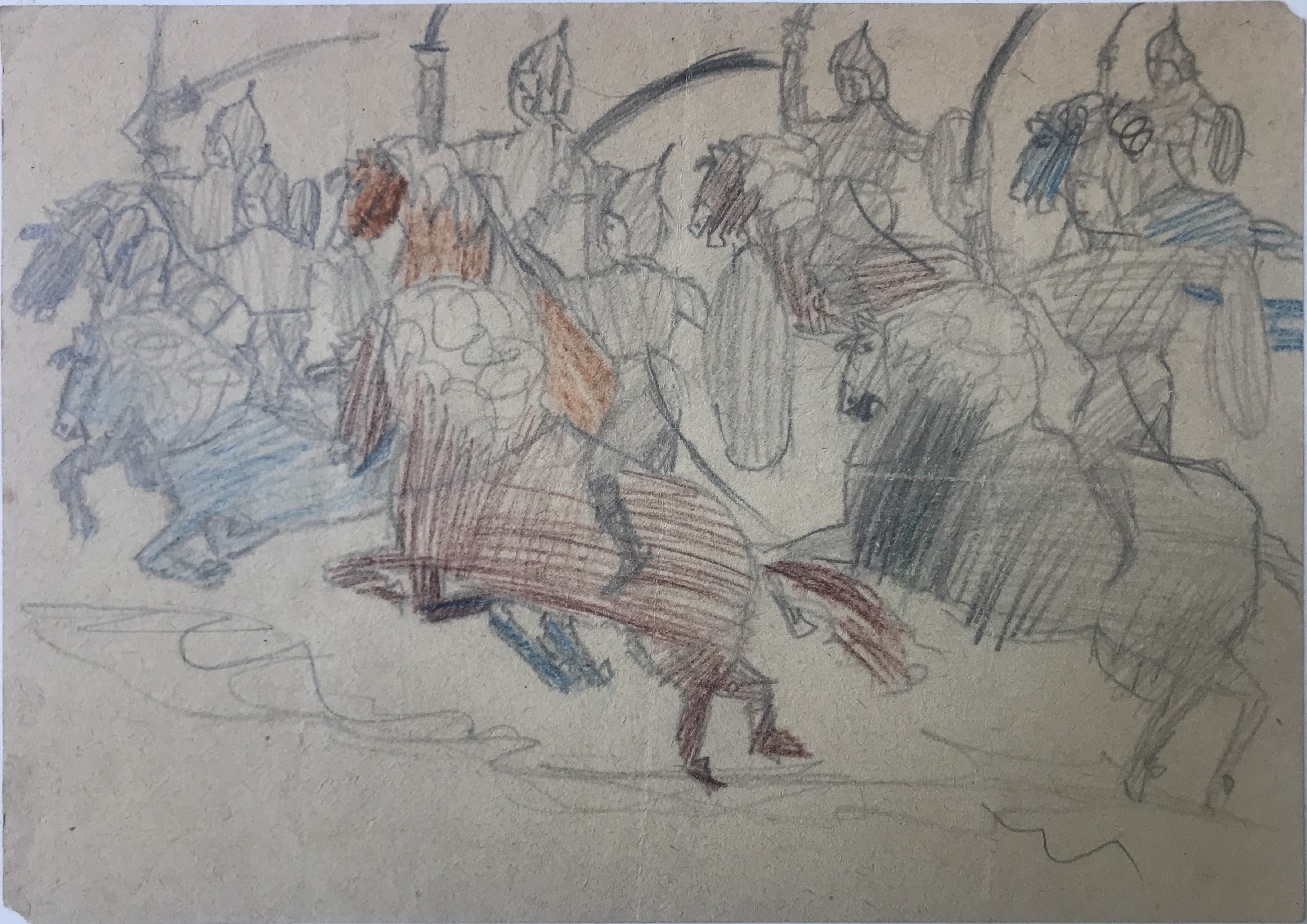
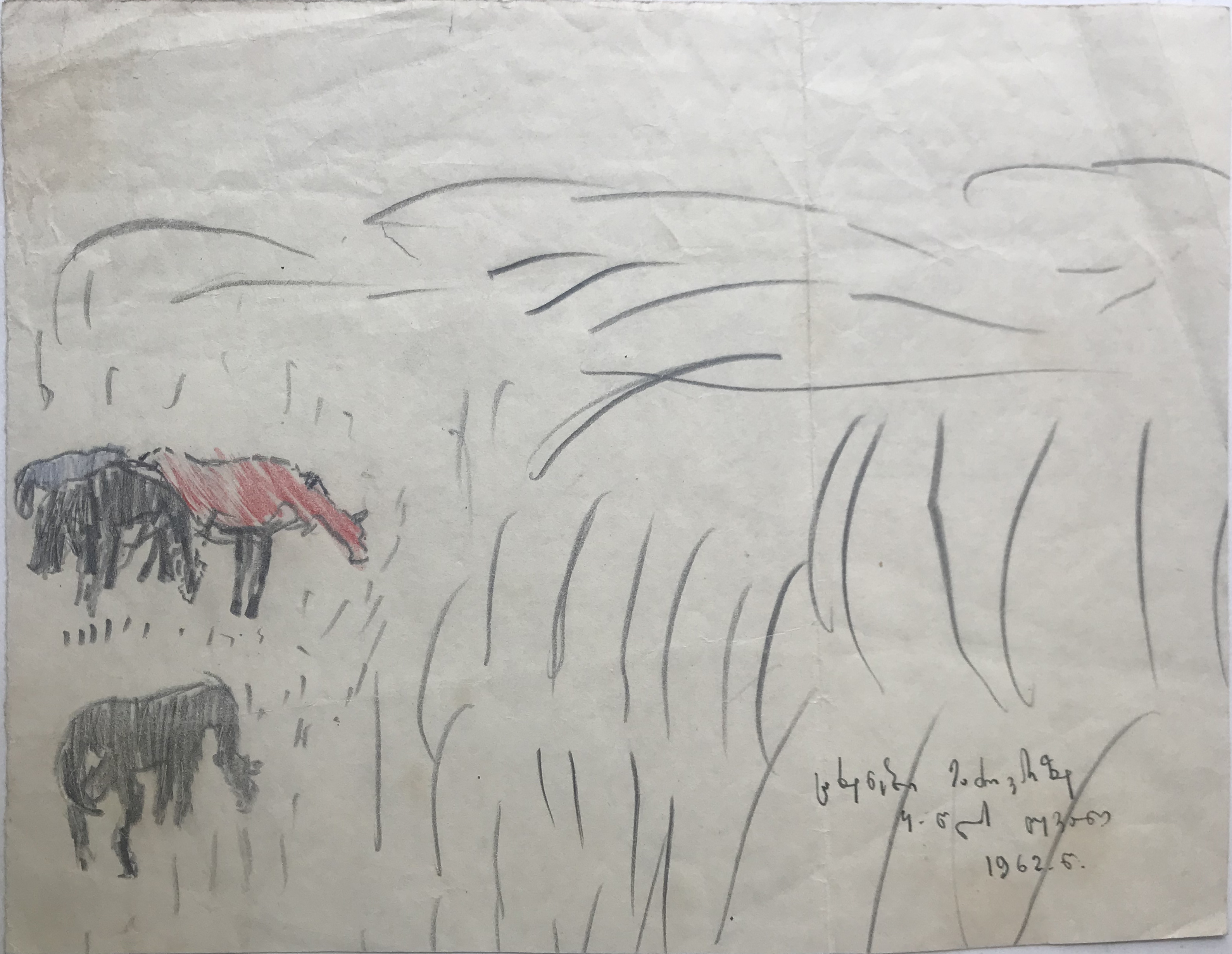
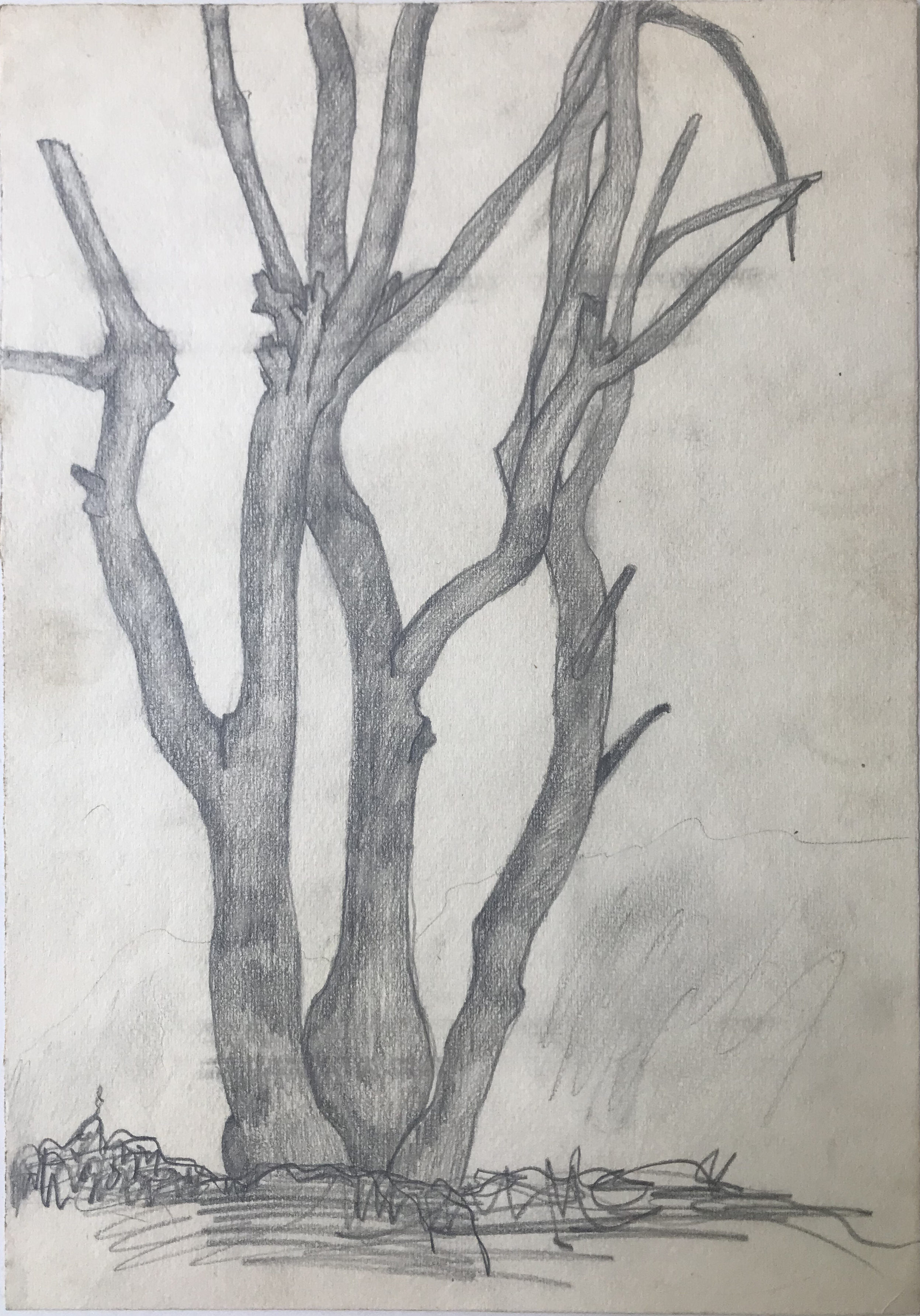
At school, I had conflicts with my teachers: I did not like their teaching methods, and they did not like my means of expression. I was labeled a “poor” (underperforming) student and was eventually expelled from school. I loved reading books and began educating myself independently. I eventually got my high school diploma by completing school externally.
Originally I wanted to become a doctor, but since everyone called me an artist, I decided to apply to the Academy of Arts. I wanted to study painting, but was placed in icon restoration.
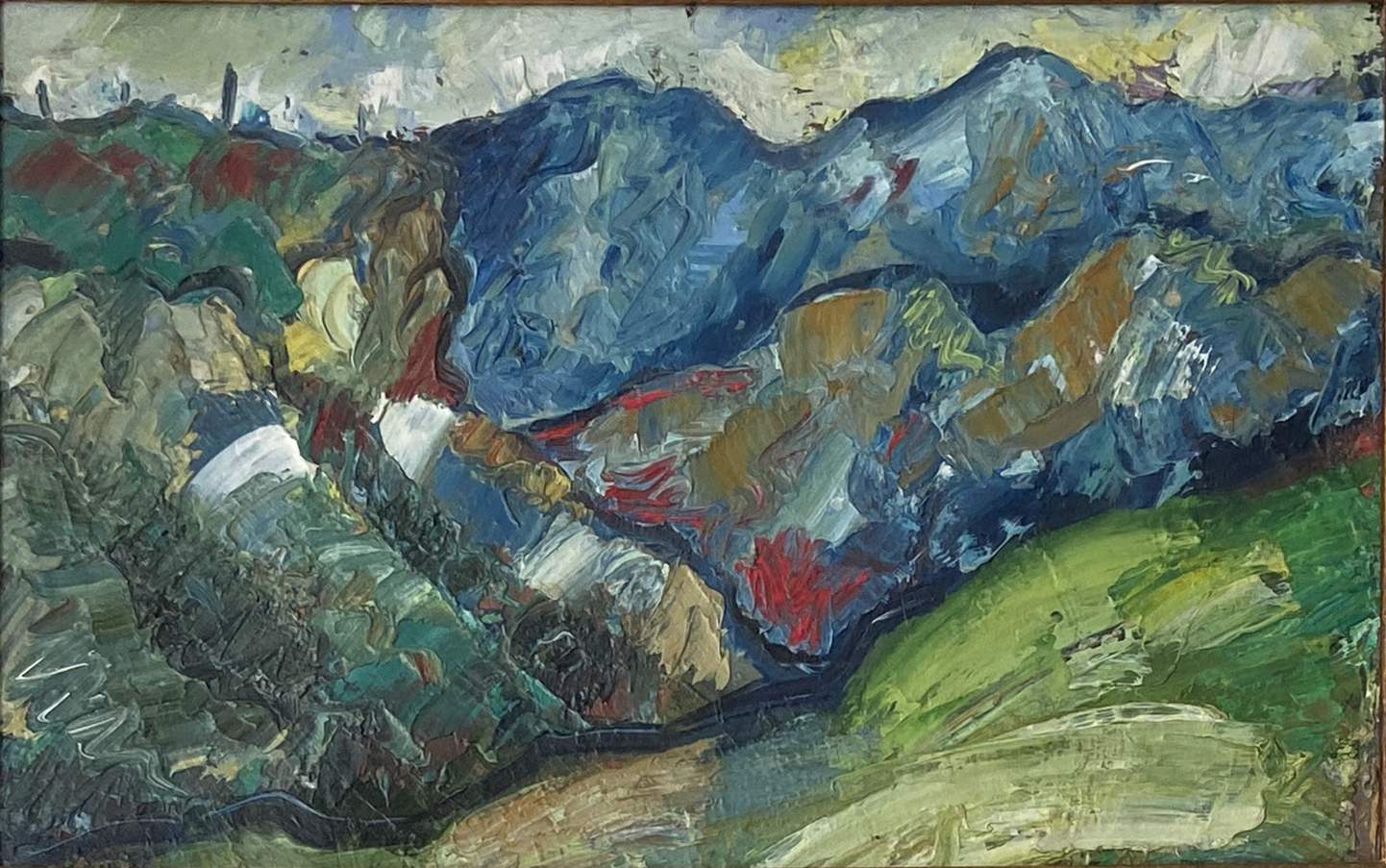
Restoration did not interest me, yet I was not allowed to transfer to the painting department. At the academy, I continued my self-education. I spent most of the time in the library, studying catalogs and learning about various artists and artistic movements. I trained my hand and eye and imagined how a particular artist would paint a specific composition.
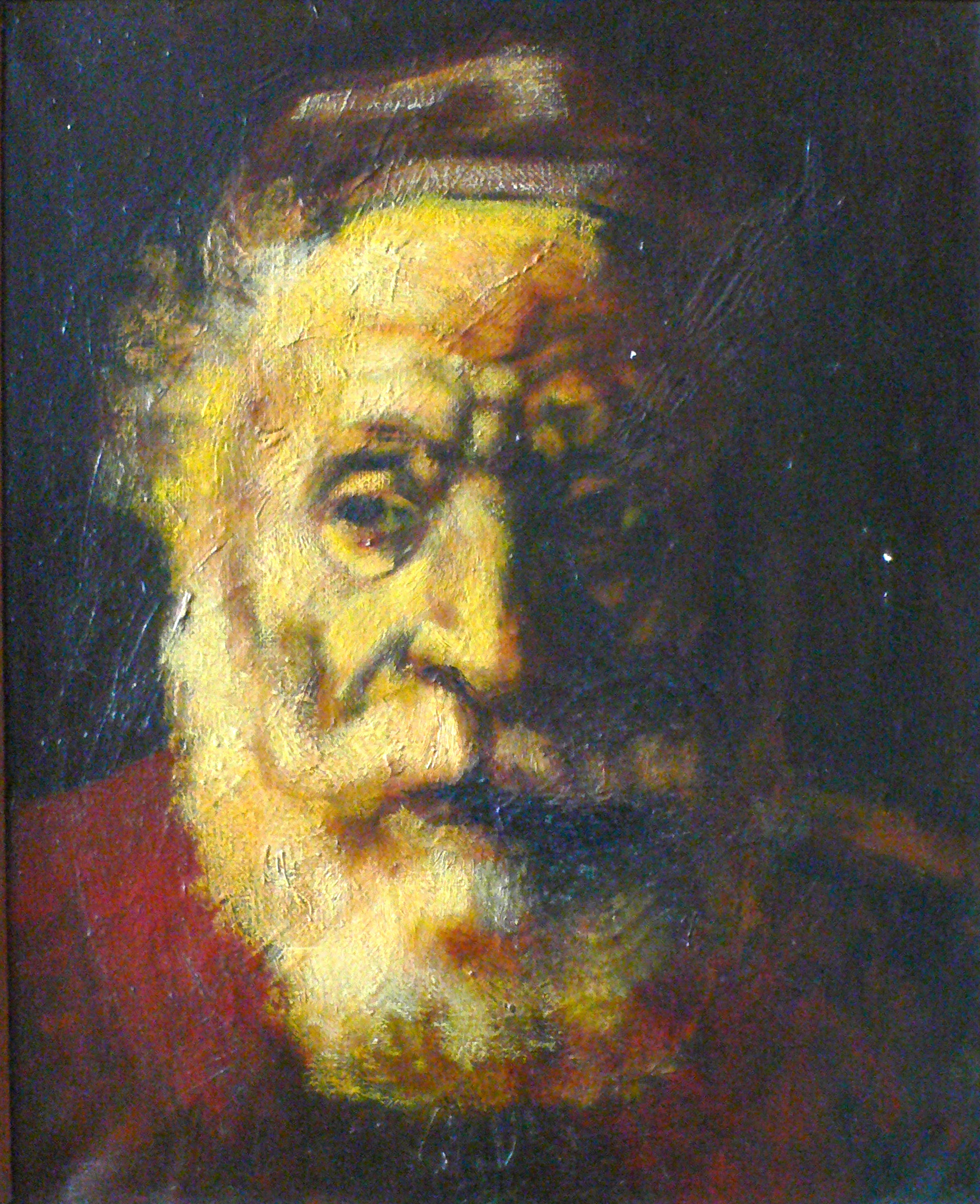
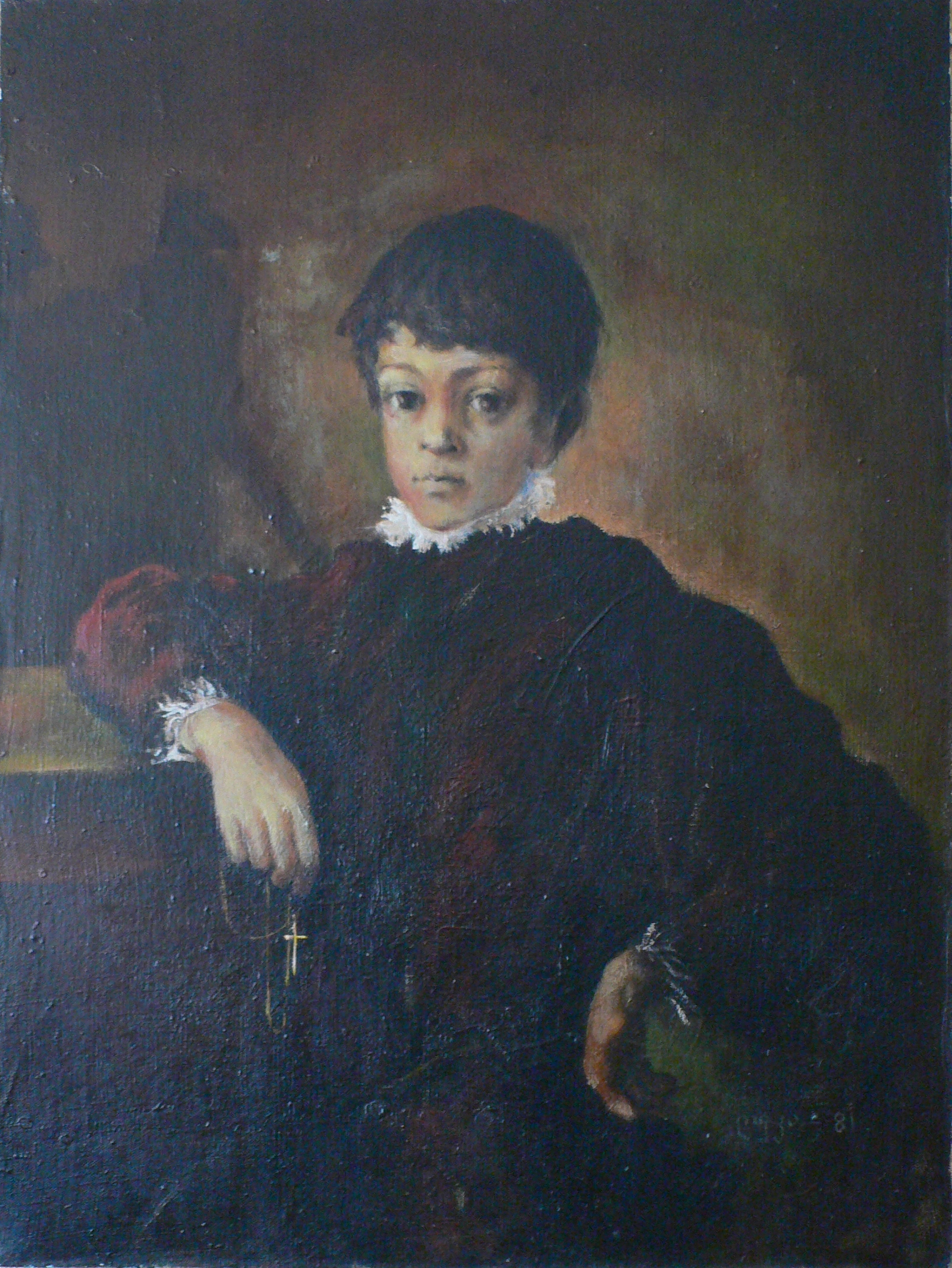
I completed my diploma work from this perspective as well.“How Pieter Bruegel would paint an Imeretian wedding.” (Imereti – Western Georgia)
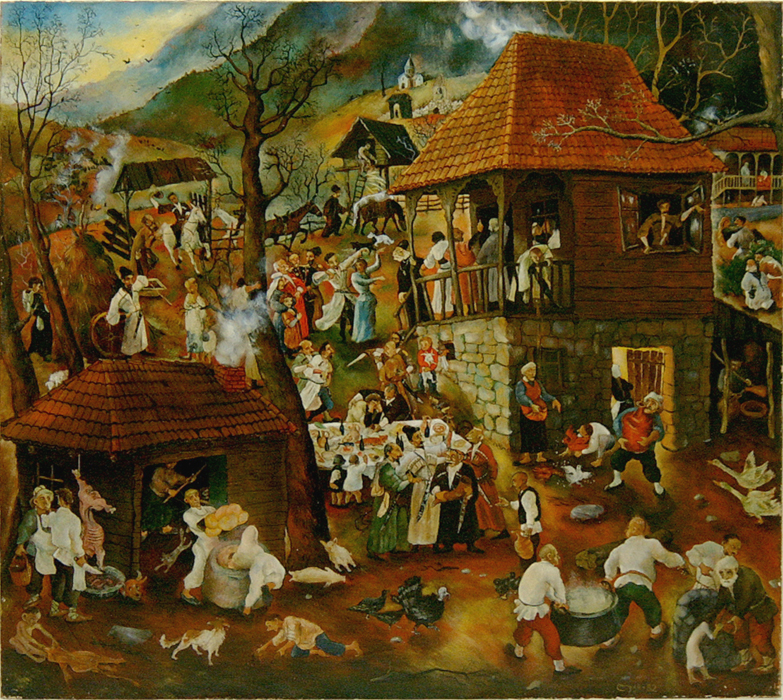
When the diploma commission reviewed my painting, they realized that I could paint after all and I was granted to enter a special post-graduate arts programme.
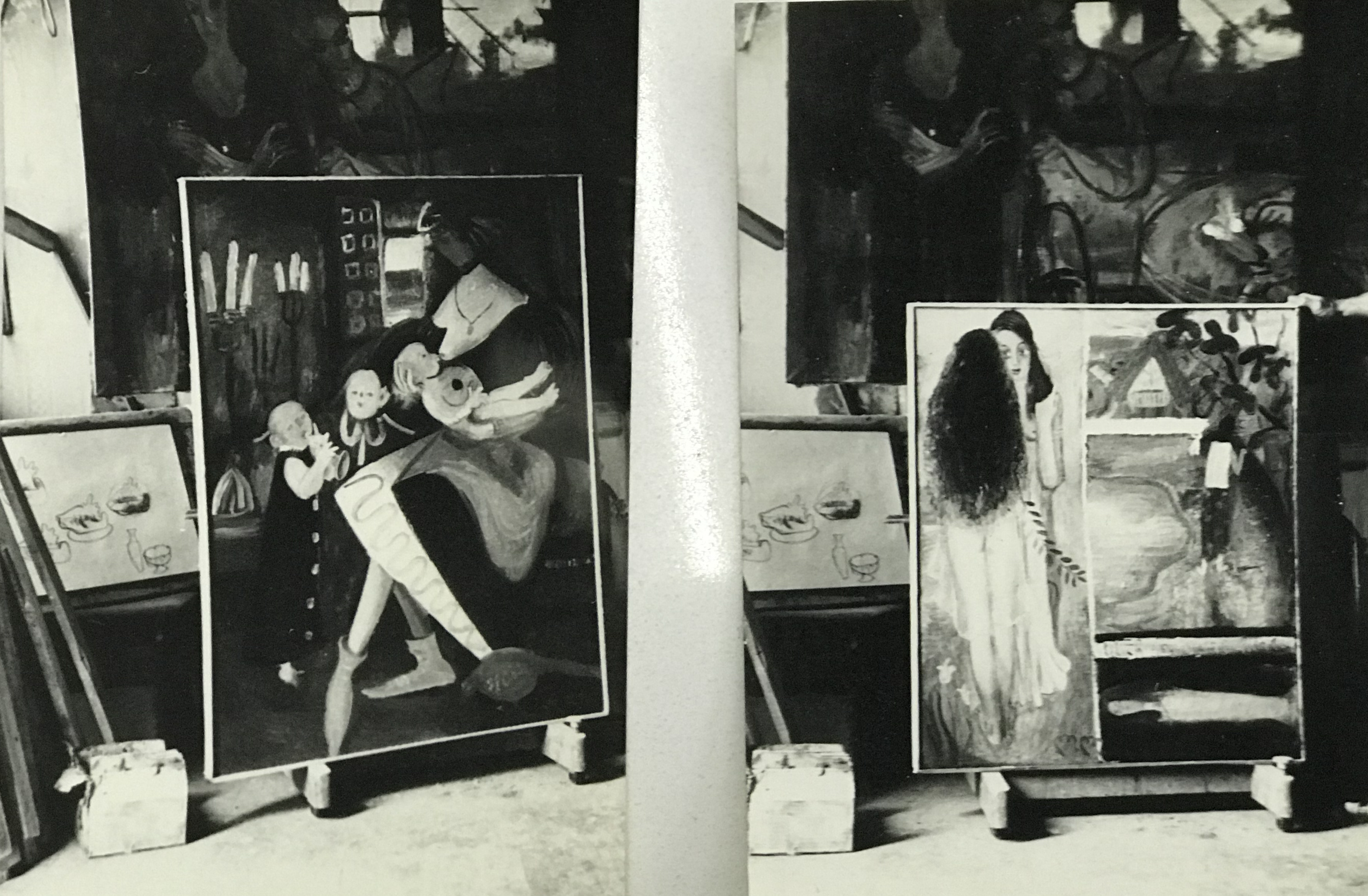
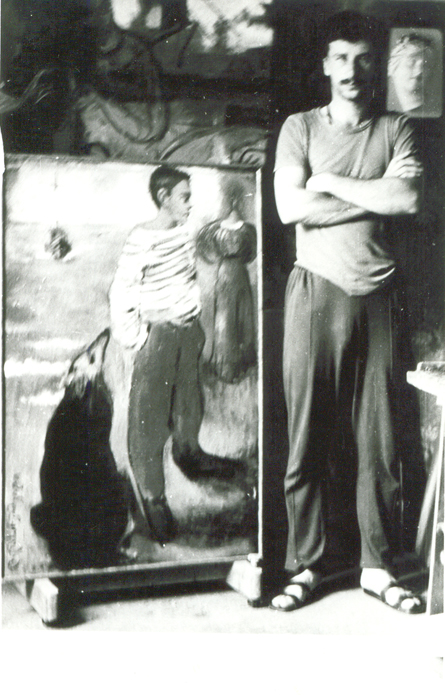
The Beginning of Abstractions – accidental abstraction
In the creative workshop, we participants received a monthly salary. We also had discounts on paints and canvases. In return, a committee monitored our working process. Once, when it was time for the committee to arrive, I started tidying up my work corner. While cleaning in a hurry, the doors propped up on the pumps—which I used as a palette—fell down. Unfortunately, they landed face down and all the paint splashed onto the floor. I quickly grabbed a floor-cleaning brush and started wiping up the paint. There was a lot of it. I felt sorry to throw it away; at the time I was working on one composition. Half of it was painted, half was a blank canvas.
(I still remember it: “A village doctor was pulling a tooth from a patient tied to a chair with ropes. He had his foot on the patient’s shoulder and was tugging at the tooth with a huge pliers to pull it out. Nearby, a small river was flowing, where another patient who had already had a tooth pulled was washing his bloody mouth. Other patients with bandaged jaws were standing in line. Behind the dentist, the neighbor’s yard could be seen: a woman was climbing a tree and picking fruit, and under the tree two small boys were looking up under the woman’s dress. In the distance, a house was visible where an angry man with a comb was banging on the doors. Beside the house, a naked man was jumping out of a window; below the window a large shepherd dog was tied with a chain and barking furiously. Inside the house, a frightened naked woman could be seen.”)
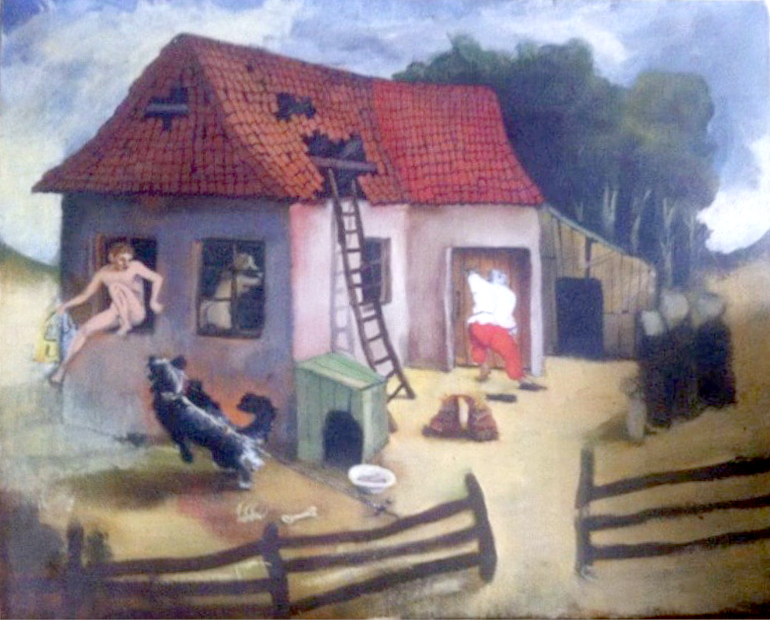
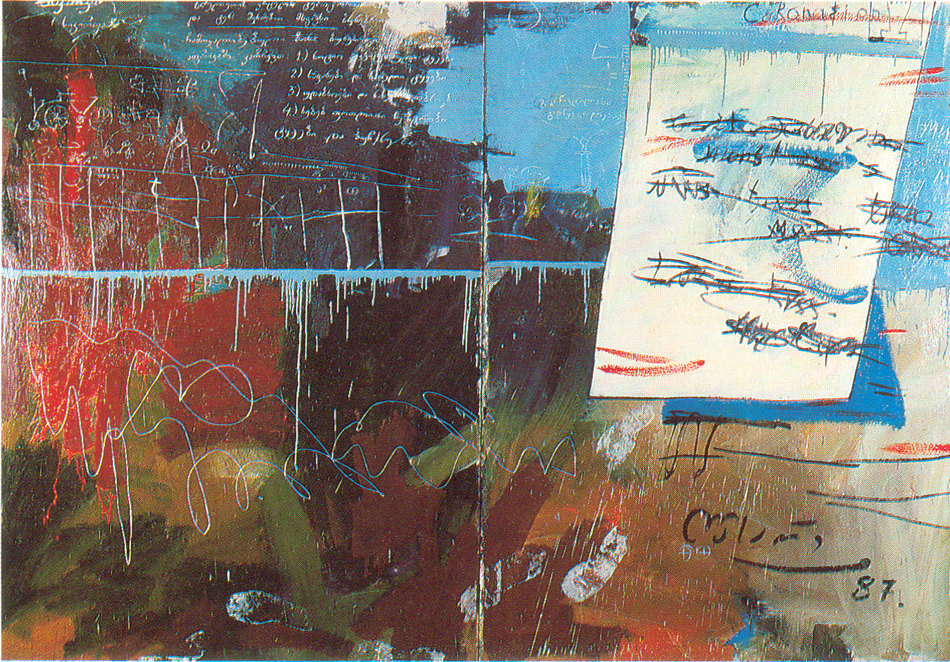
I didn’t think much and spread the collected paint onto the empty canvas. I looked at it and a strange feeling came over me. Below, the entire story was clearly visible; above, there was nothing—just smeared paint mixed together. Yet the chaos at the top seemed more interesting to me than the orderly narrative below. In the middle, a small strip of canvas remained uncovered. I tried to cover this strip with the remaining paint. Since the brush was large and clumsy, some paint spilled onto the painting as well. I clearly saw two opposing things. It didn’t take me long to decide, and I merged the lower part with the upper one. I stepped back and looked at my decision with pride. At that moment, the committee arrived. Apparently, they didn’t like this new creation of mine and told me that I had not been invited there to do such things. They dismissed me from the place—simply put, I was expelled. I felt a sense of happiness. I knew what I had to do. The only thing I regretted was that they didn’t let me take my first abstraction with me, since it had been made on state canvas with state paints.
Opening One’s Eyes
My uncle, my father’s brother, was the chief physician of the 4th Directorate. (Under the Soviet regime everything was numbered, and the 4th Hospital–Polyclinic officially served only the government and the nomenklatura recognized by the government.) As an exception, he received America magazine every month. The magazine was in Russian and described everyday life, politics, and cultural life in the United States. Usually, the last three or four pages were devoted to culture. There were photo reports from concerts and theaters, and for me the most interesting part was visual art—museums and galleries, both general views and reproductions of individual works. There was classical art as well as modern art.
With great affection, I used to cut out the pictures from the magazine and keep them. Sometimes I came across photos that I couldn’t really perceive as paintings; some were black and white and seemed strange to me. Still, since they were placed in the museums and galleries section, I cut them out and kept them anyway. At that time, Soviet education offered very little information about contemporary European and American art. Picasso’s Blue Period was considered a great achievement, and everything he did later was explained to us by saying, “He was a great artist, and then he went crazy.” It turned out that for us only the fourteen-year-old Picasso was considered a significant artist.
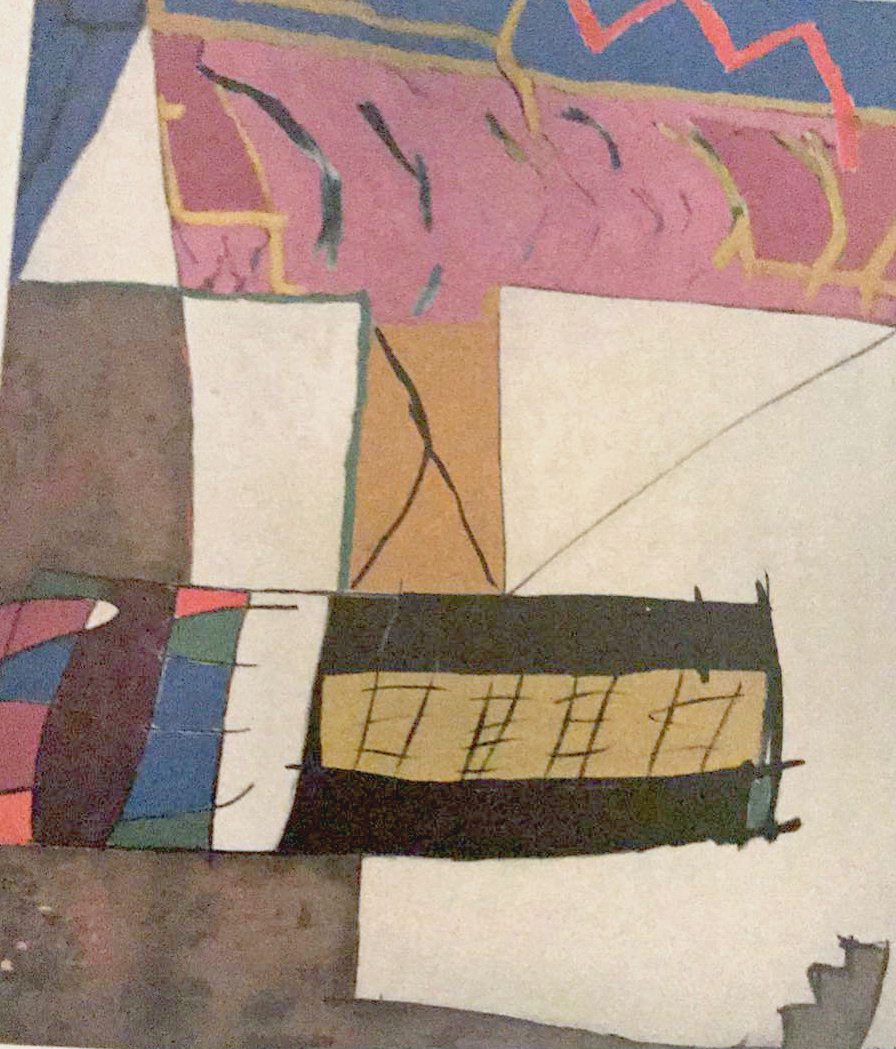
My accidental abstraction reminded me of the black-and-white reproductions I had collected in childhood. I dug them out, examined them carefully, and realized that they were works of contemporary art by modern artists. They were by Mondrian, Rothko, Johns, Rauschenberg, Twombly, Warhol, Beuys, Lichtenstein, and many others. I realized that art was much more than I had imagined. A new stage appeared in my art.
The First Exhibition
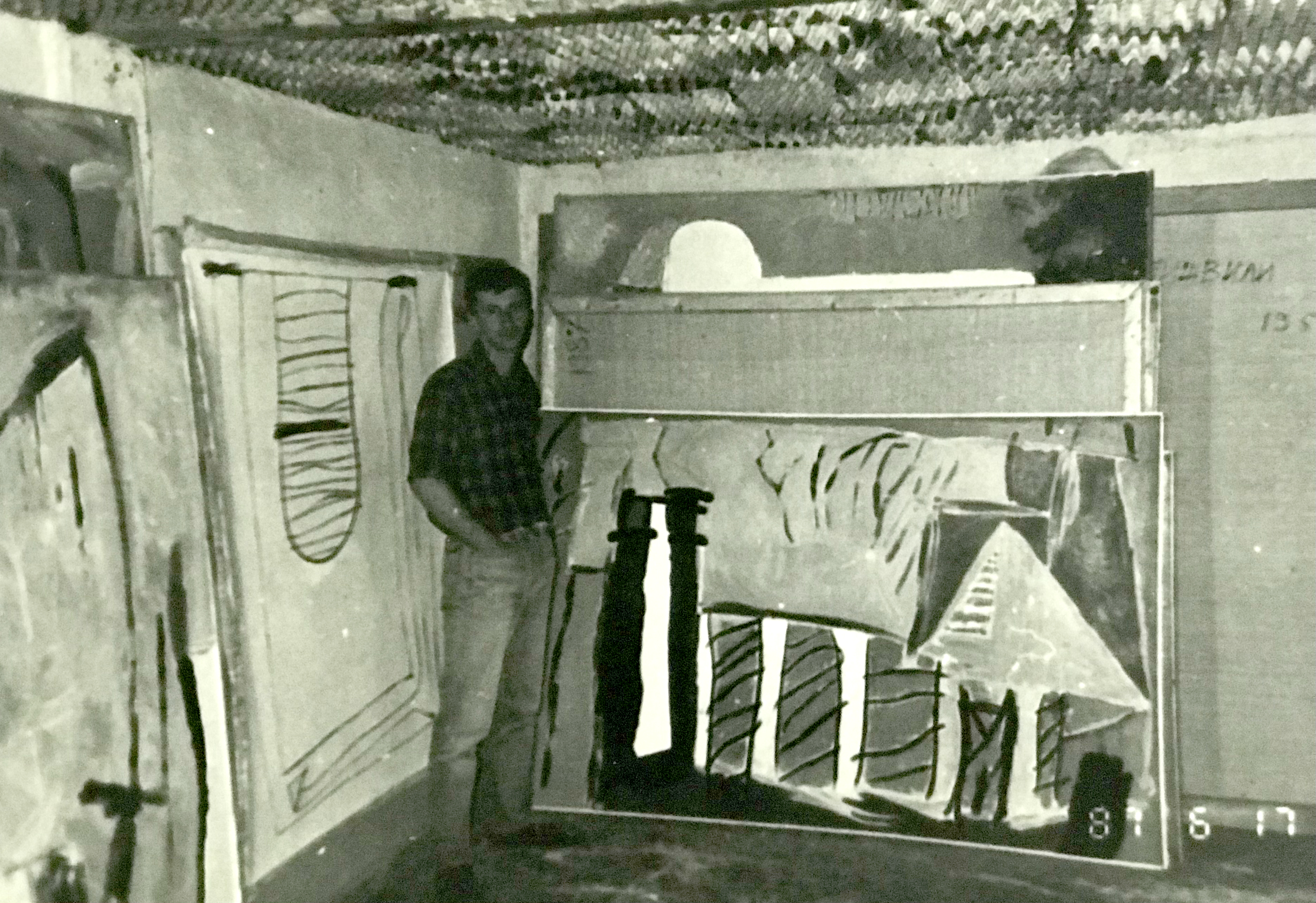
My eyes opened onto a new reality. Under the Soviet regime, the Artists’ Union organized two group exhibitions each year: a spring and an autumn show, as well as thematic exhibitions determined by various circumstances. These exhibitions were considered celebrations among artists, and everyone eagerly anticipated the chance to present their new work. We would line up our exhibition pieces side by side along the wall and leave them there. A commission would come through, and the works they rejected would be turned to face the wall. After the commission finished its review, artists were allowed into the hall. If your work was turned around, it meant you would not be included in the exhibition.
The commission no longer approved of my work and kept turning it back. Somewhere deep inside I was disappointed that I could not show my new pieces to a wider public, but I continued working. “I’m doing what I enjoy,” I told myself, reassuring myself that I was on the right path. Experimentation increased. Along with paint, I used earth, plaster, cement, ash—whatever I could get my hands on. I glued newspapers onto the surface and poured paint over them again. I used every kind of paint available.
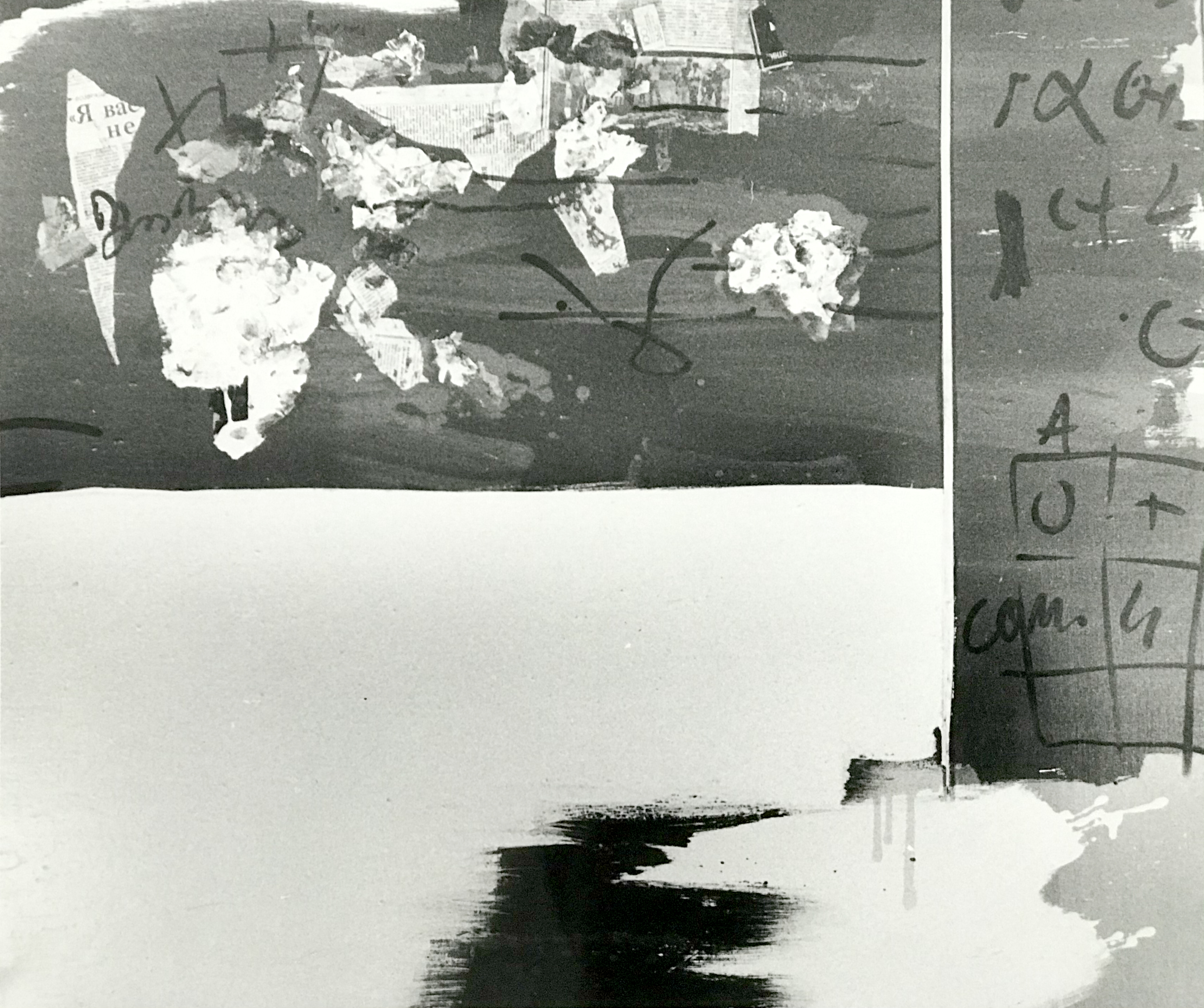
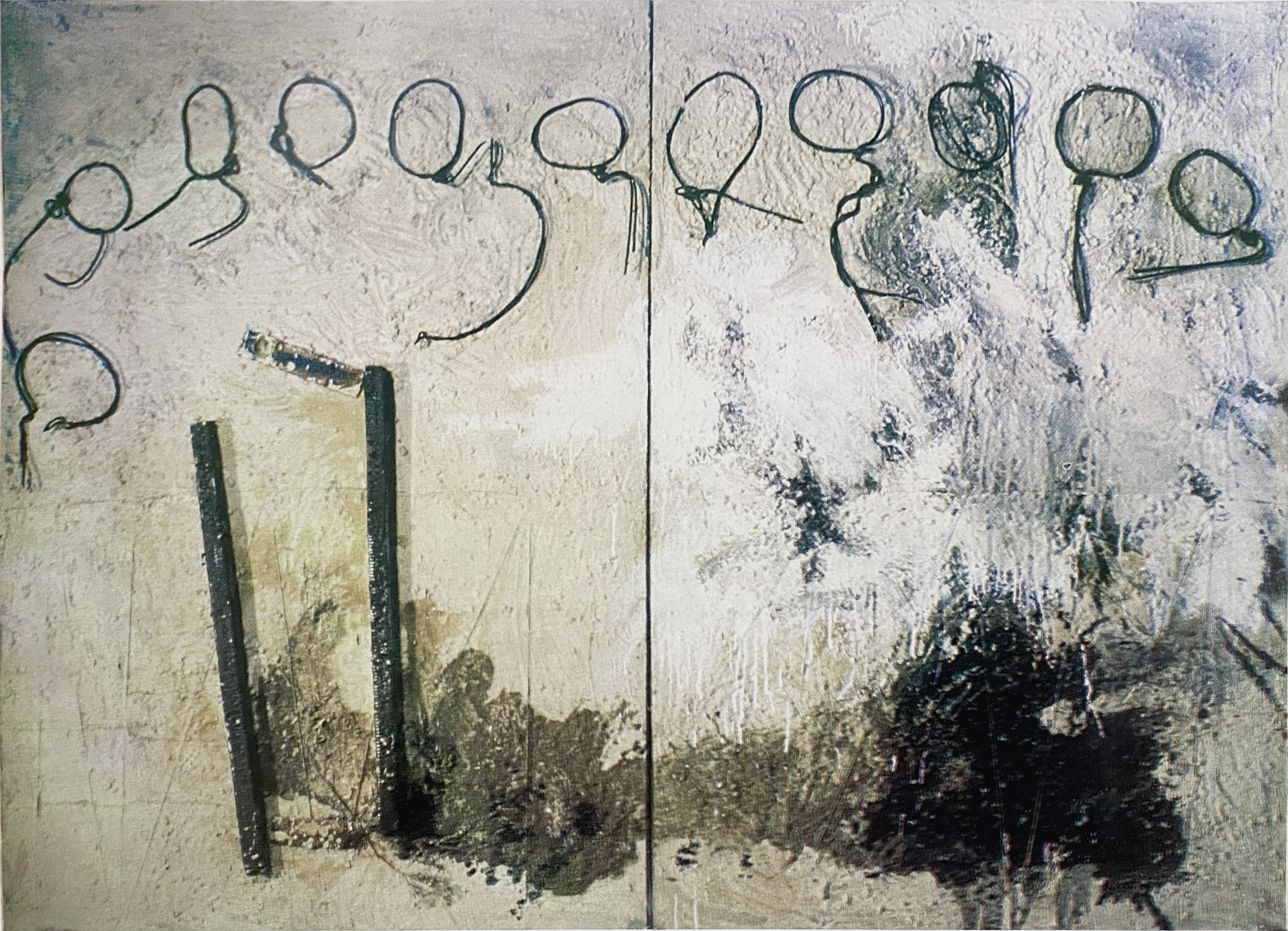
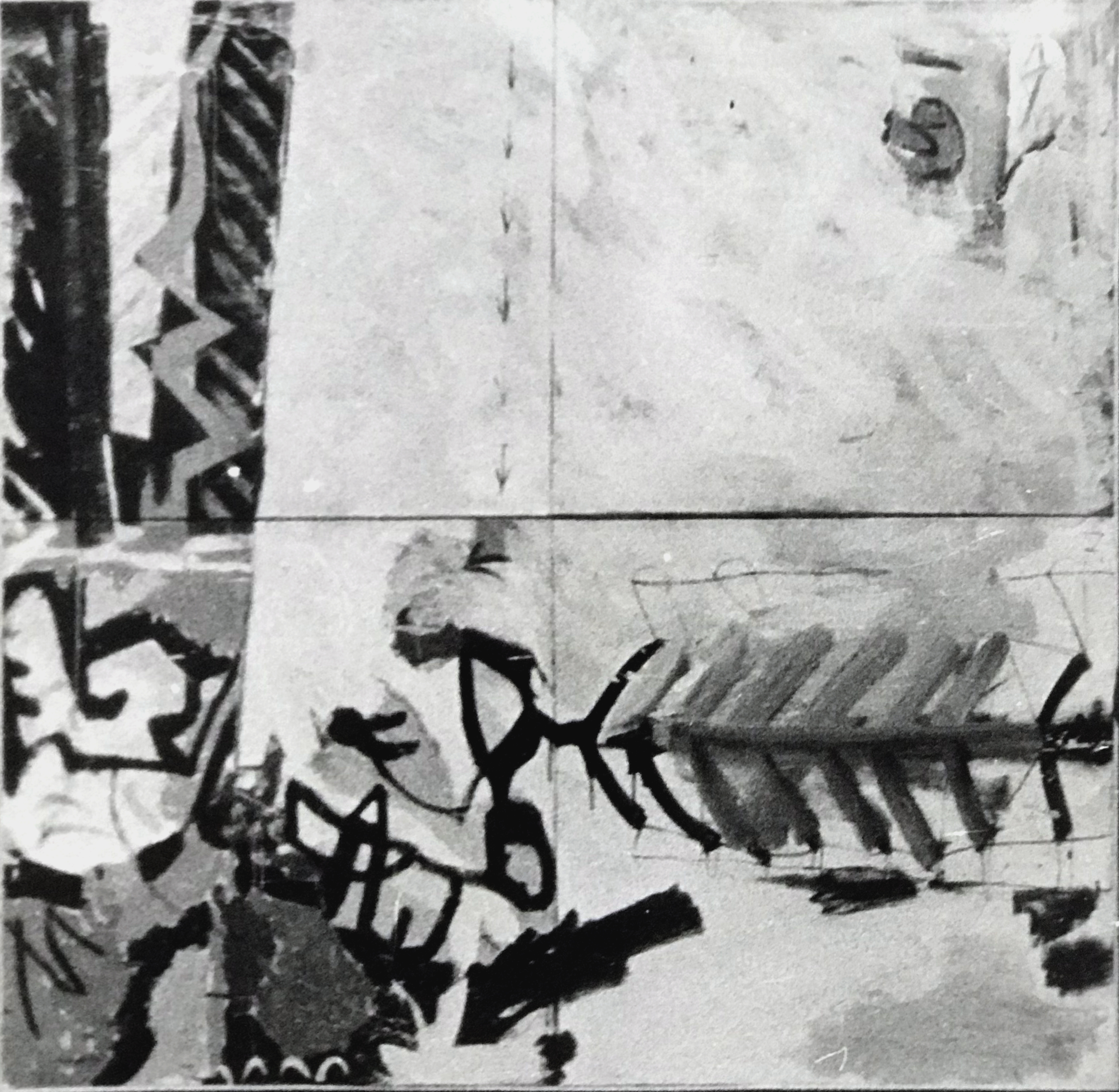
I tried to move as far away as possible from traditional painting. Since my work was not being exhibited anyway, I did not deny myself this pleasure.
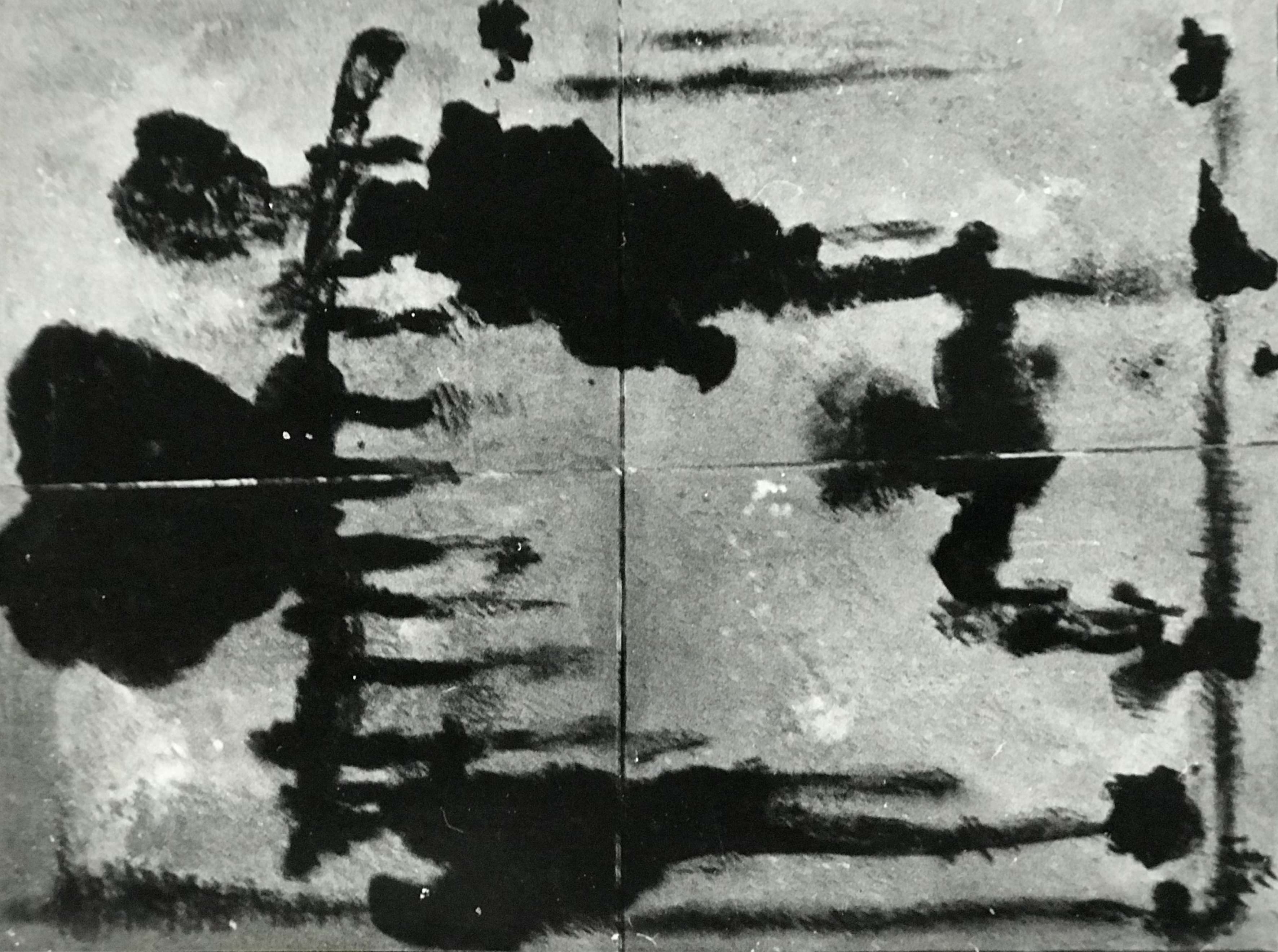
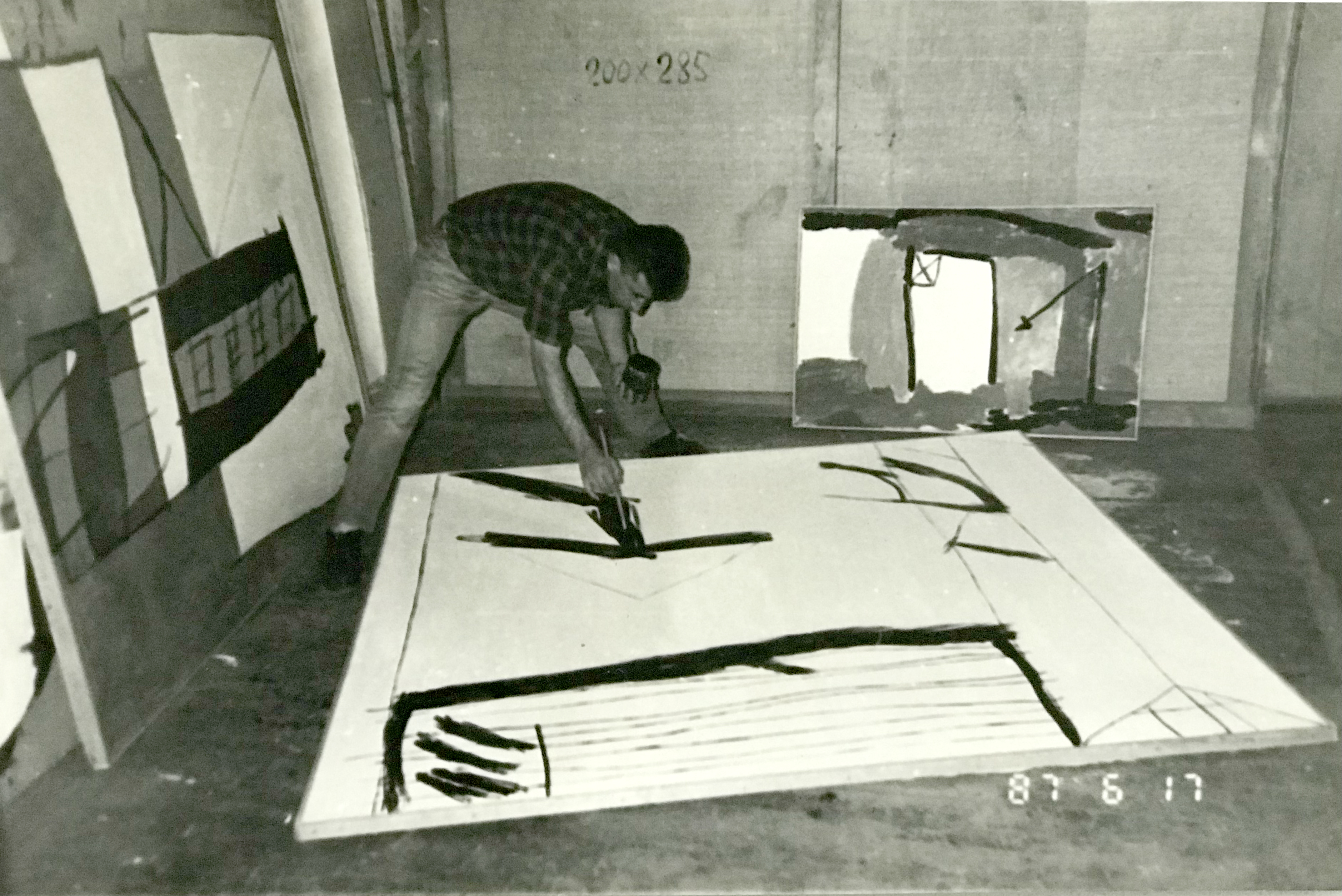
Gradually, like-minded people appeared; I was no longer alone. We talked more and more about Western culture. A new phase opened in my art. If earlier the image had been central, I came to understand that contemporary art gave me greater possibilities for sensation and for expanding ideas. I began making conceptual and expressive abstractions. In my studio, the number of people with dissident views slowly grew. Sometimes foreigners would show up as well.
Since there was nowhere in Georgia where I could exhibit my work, I was advised to go to Moscow and see Leonid Bazhanov, who was involved with avant-garde art. It was the 1980s, and the Soviet regime was undergoing strange tremors. Where once exposure to Western culture meant prison, the pressure had now eased somewhat, and Moscow was becoming a center of contemporary art. Not legally, of course, but there were more possibilities than in Tbilisi.
I photographed my works as color slides and went to Moscow to meet Bazhanov. I called him and asked for an appointment. We agreed to meet the next day. I didn’t sleep all night; I was nervous. The next day I arrived an hour early, and by the time of the meeting I had probably smoked two packs of cigarettes. The closer the moment came, the more afraid I became. I could hardly breathe, as if I were about to hear the most serious verdict of my life. I hesitated, dragged my feet. I no longer wanted the meeting. I forced myself and rang the doorbell.
Leonid opened the door and invited me in. He was talking on the phone. Thank God, it gave me a little time to calm down. I listened to him, got used to his voice. He finished the call and asked for the slides. I handed them over and relaxed. Leonid examined the slides carefully, looked at me with satisfaction, and exceeded all my expectations. He offered organizing an exhibition.
“In summer we’re opening a new exhibition hall in Belyaevo,” he said. “It’s a historic place—the site of the Bulldozer Exhibition.”
(The first exhibition of Soviet avant-garde artists, which the authorities destroyed at night with bulldozers.)
The proposal was so unexpected that it frightened me. Until then, not a single one of my abstractions had ever been exhibited, and now a solo exhibition— in Moscow, and at such a significant site. I suggested a group exhibition of Georgian abstractionists, together with the like-minded artists fate had brought together. Leonid said, “Show me their slides, and if their works are as good as yours, I have no objection.”
I left Leonid’s place happy. Leonid and I became friends. I returned to Tbilisi, contacted my colleagues, and shared the news of the exhibition with them.
The Moscow exhibition was highly successful. It was crowded with people, and there was a line outside to get in. I made a poster for the exhibition.
(When I was taking slides in Moscow to bring them along, a friend was helping me. He accidentally pressed the camera shutter and captured the moment when I was carrying my work. Later, I used that accidentally taken shot for the poster.)
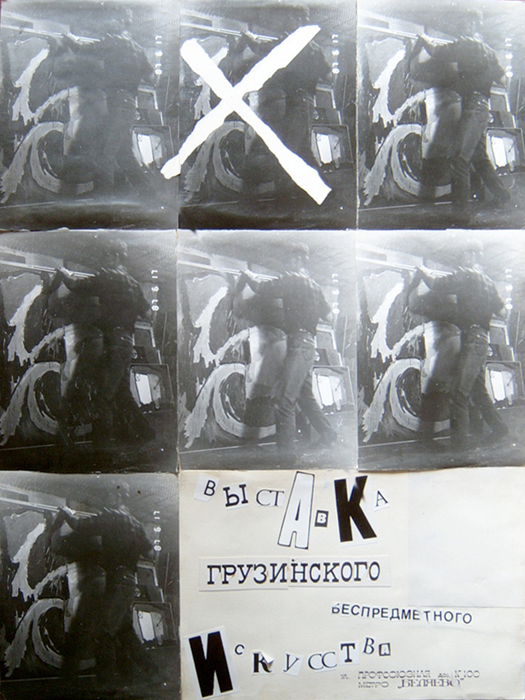
People who came to the exhibition took these posters down from the streets, brought them with them, and asked the participating artists to sign them. When news of the successful Moscow exhibition reached Tbilisi, the Artists’ Union decided to organize an exhibition of Georgian abstractionists in Tbilisi as well.
Recognition in Tbilisi
Six months after the Moscow exhibition, the halls of the House of Artists and the National Gallery were made available to us for the show. It was such a great success that the exhibition was extended for another month.
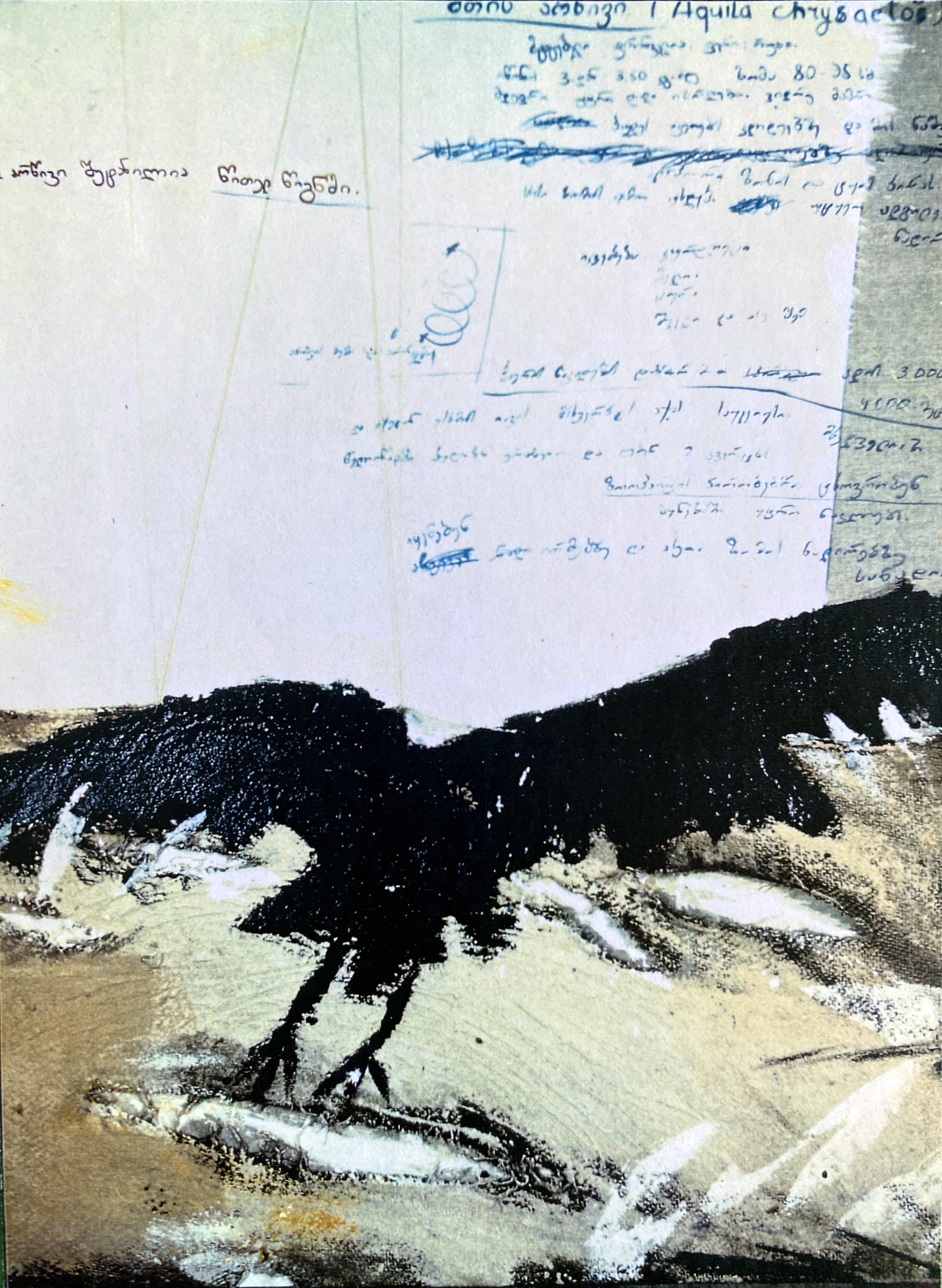
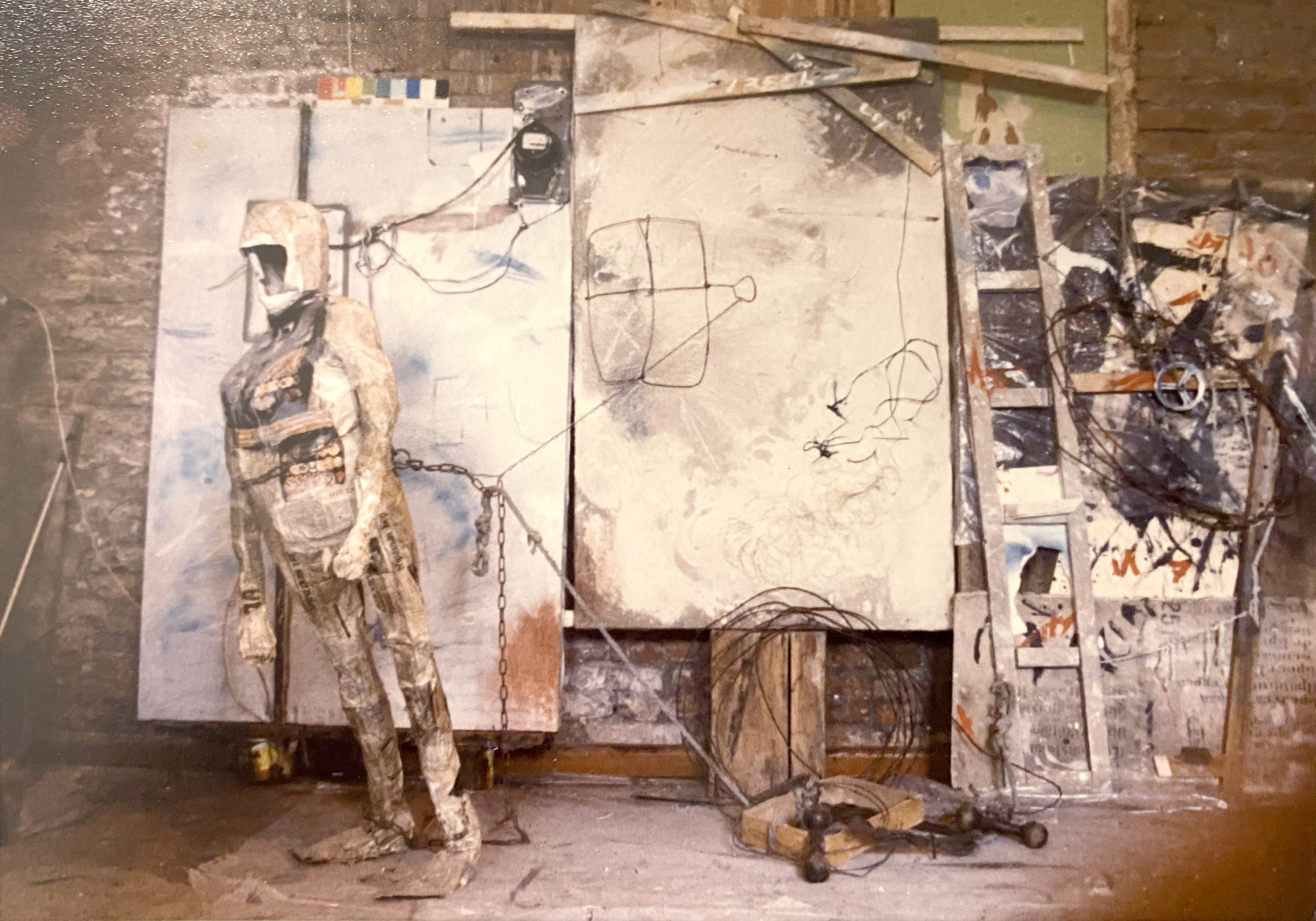
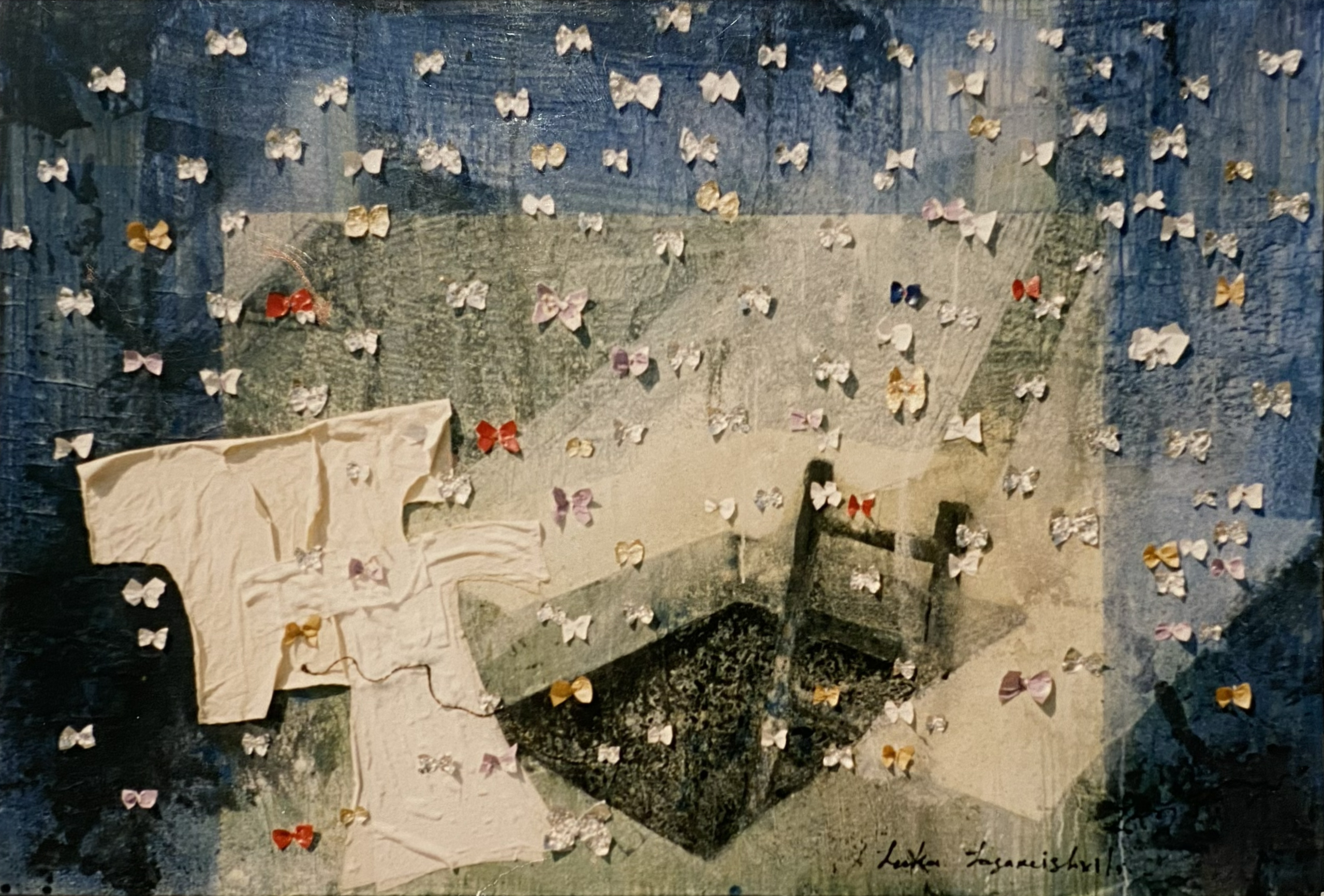
After returning from Moscow, my energy had increased, and I added new elements to my works. I collected discarded pieces of metal, fragments of wood and plastic, and used them both as color and as line. In short, the works began to resemble objects more than paintings.
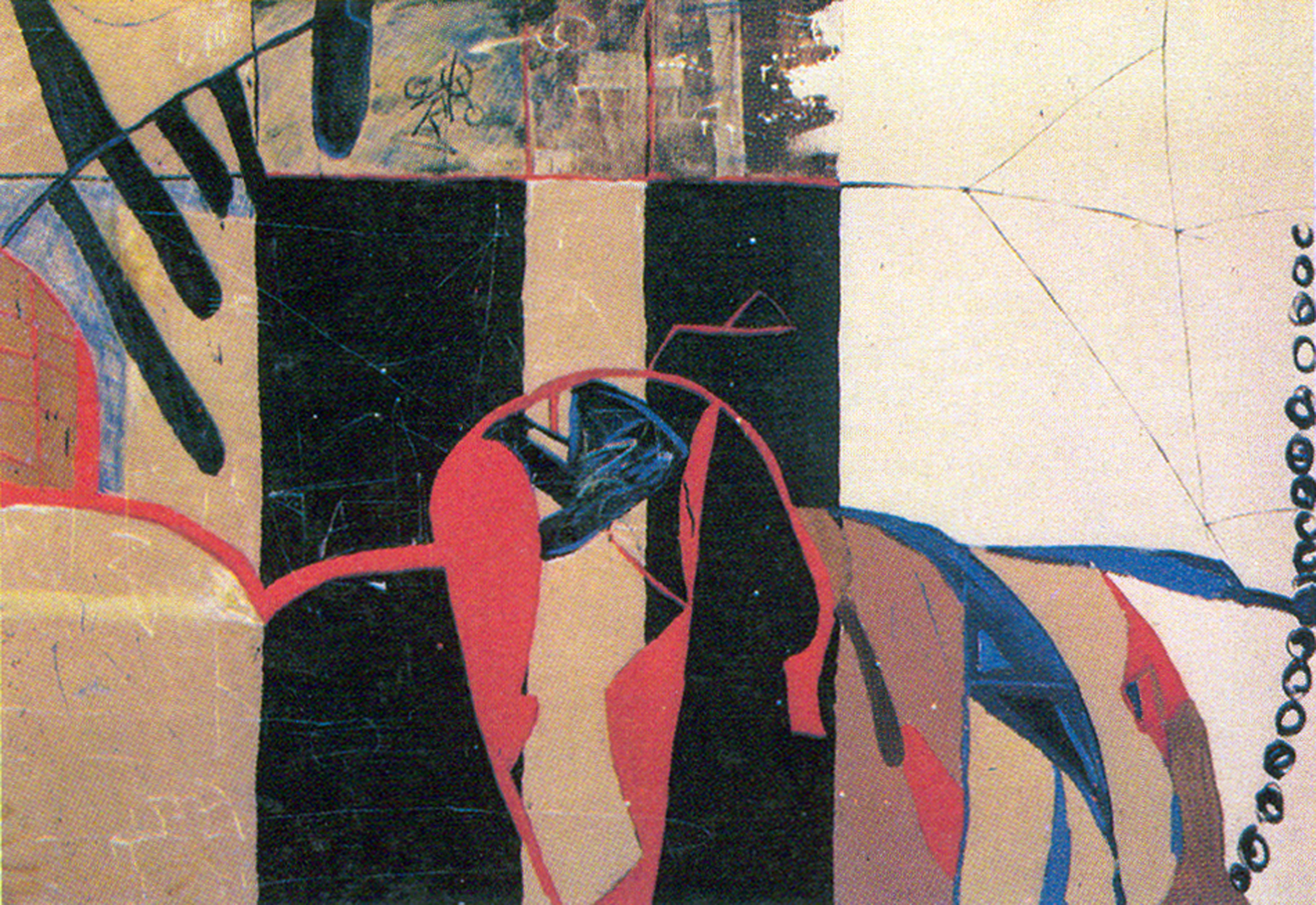
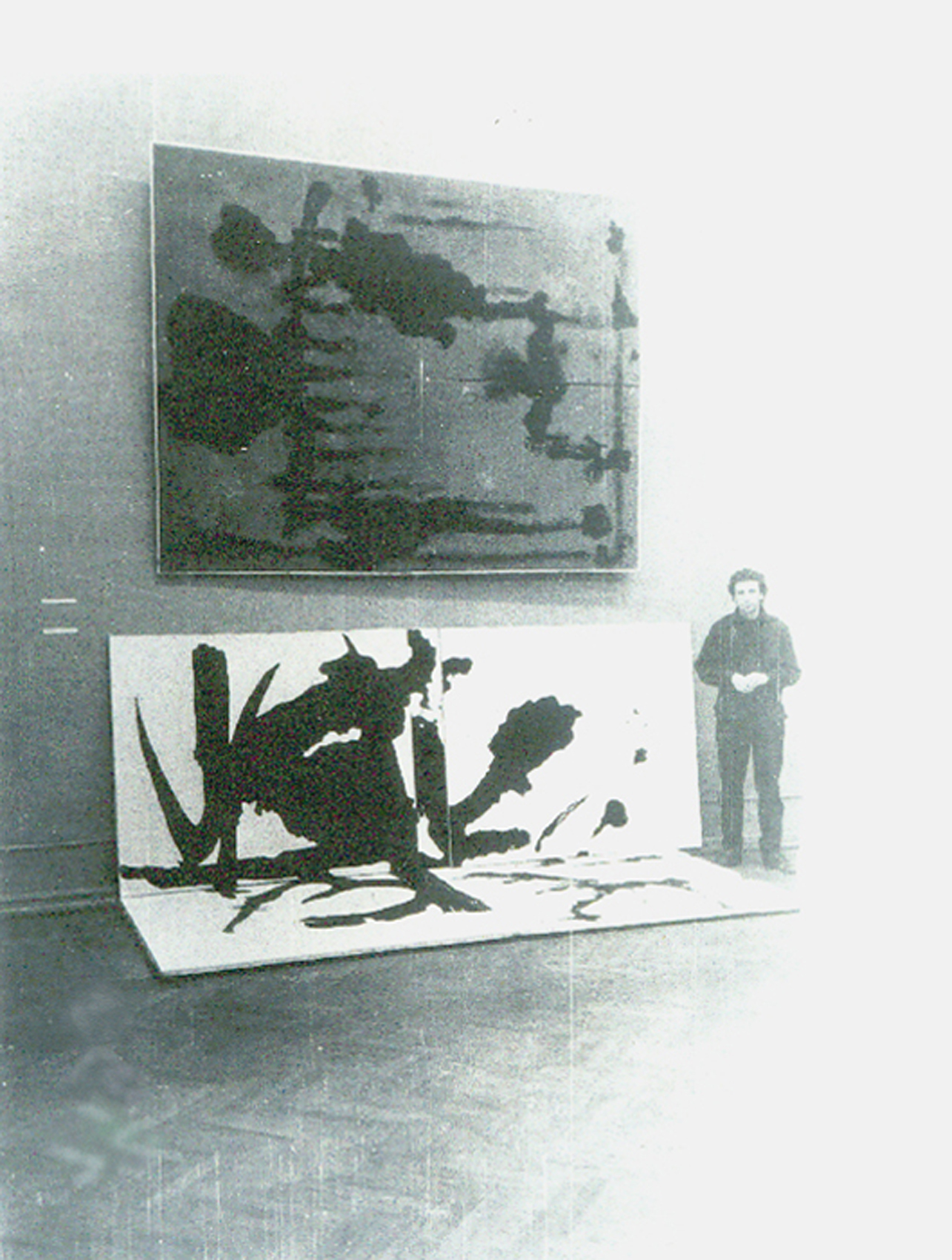
At that time everyone was talking about “perestroika.” At the House of Artists I installed an installation called “The Wall of Perestroika“, where I expressed my skepticism. I did not believe that the Soviet “Homo Sovieticus” could become a democrat and an independent European (which later proved to be true).
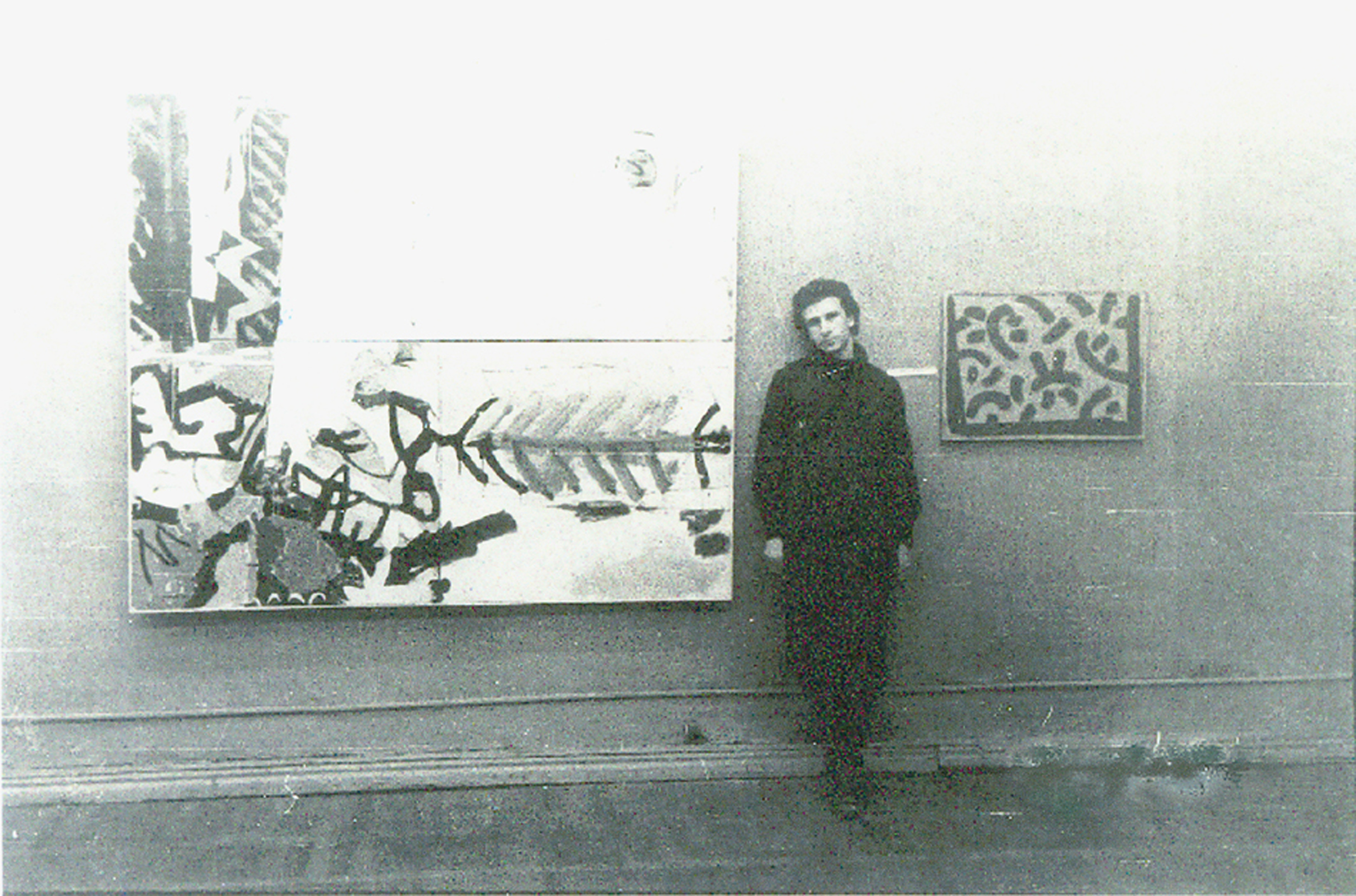
In both Moscow and Tbilisi, many foreigners came to the exhibitions. I received invitations from France—the Bernard Felli Gallery in Paris—and from Germany—the Fridericianum Museum in Kassel. I met people I never could have imagined meeting in my life, including Margaret Thatcher, the Prime Minister of England (the Iron Lady). I became acquainted with many diplomats, ambassadors, cultural attachés, and other ordinary foreign citizens. Some bought paintings, others conducted interviews. In Georgia, I was invited to various exhibitions. The Ministry of Culture even purchased some of my works in Moscow and in Tbilisi.
I was preparing to travel to Europe. I obtained a foreign travel passport in Tbilisi, and French and West German visas were stamped into it in Moscow. Then I rolled up the works selected for exhibition and set off by train from Tbilisi—first to Moscow, and from Moscow toward Paris—in February 1989. I spent a week on the road. I could hardly believe it; every time the train stopped, I expected inspectors to come aboard and make me get off. At that time, traveling abroad was not easy.
France
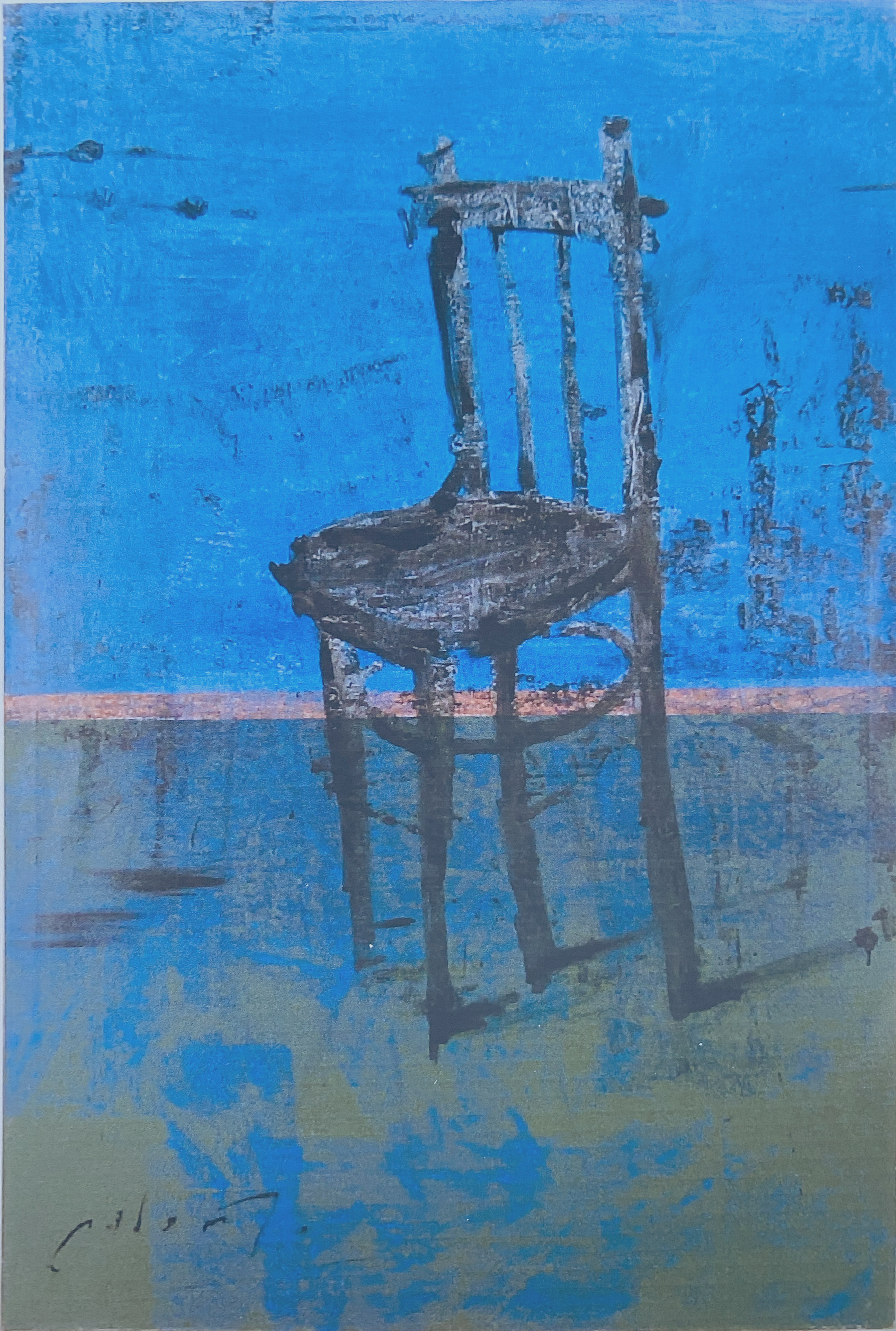
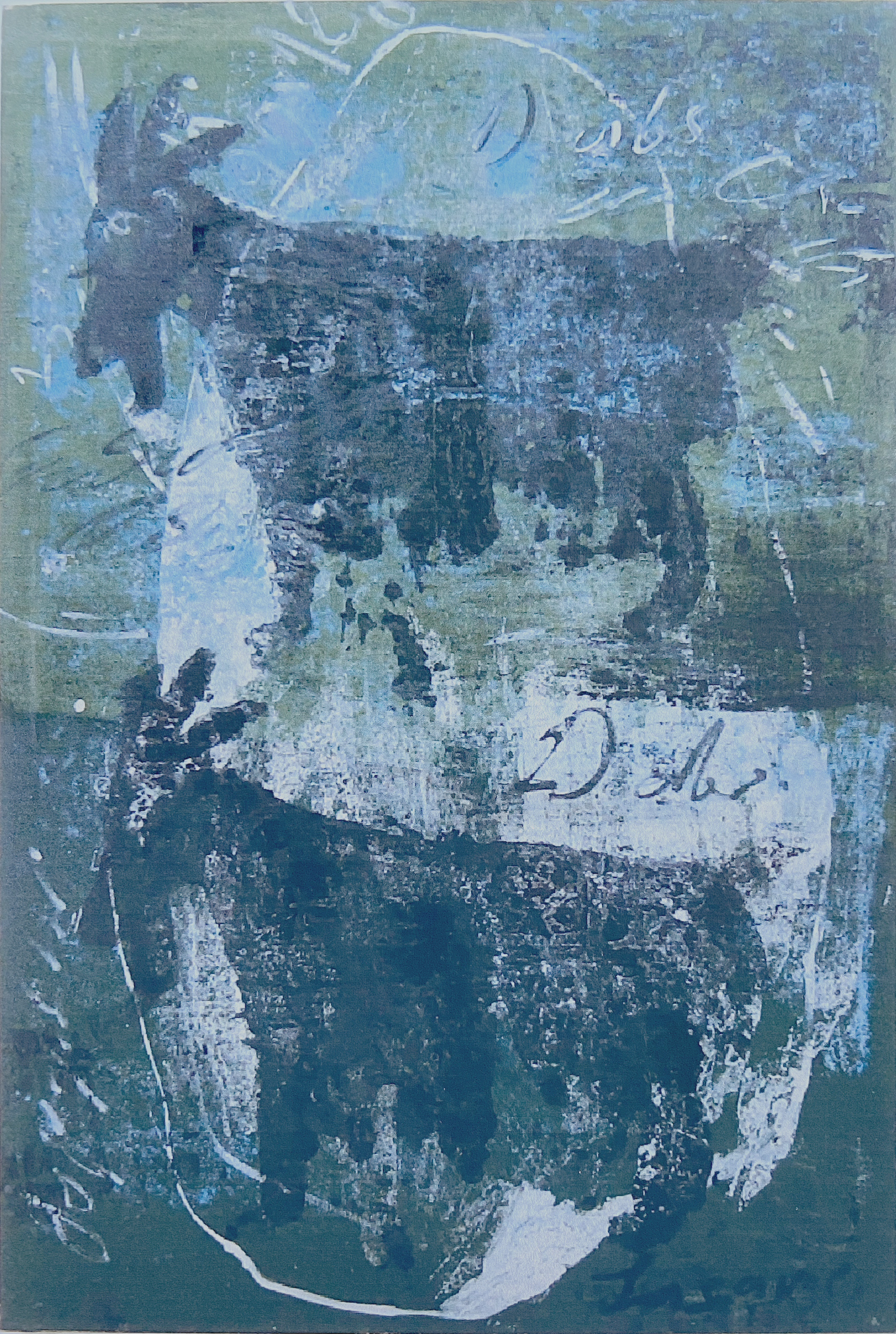
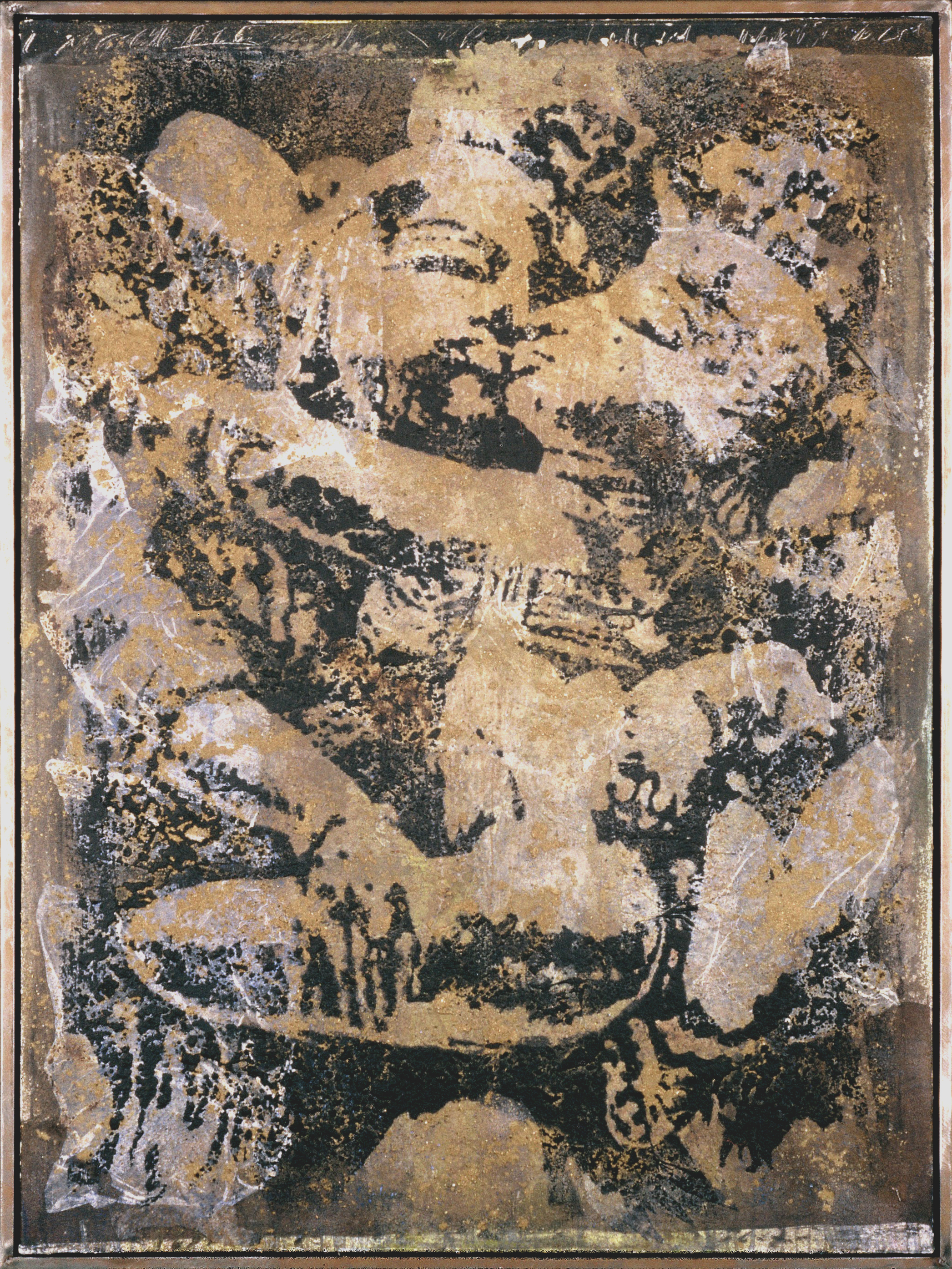
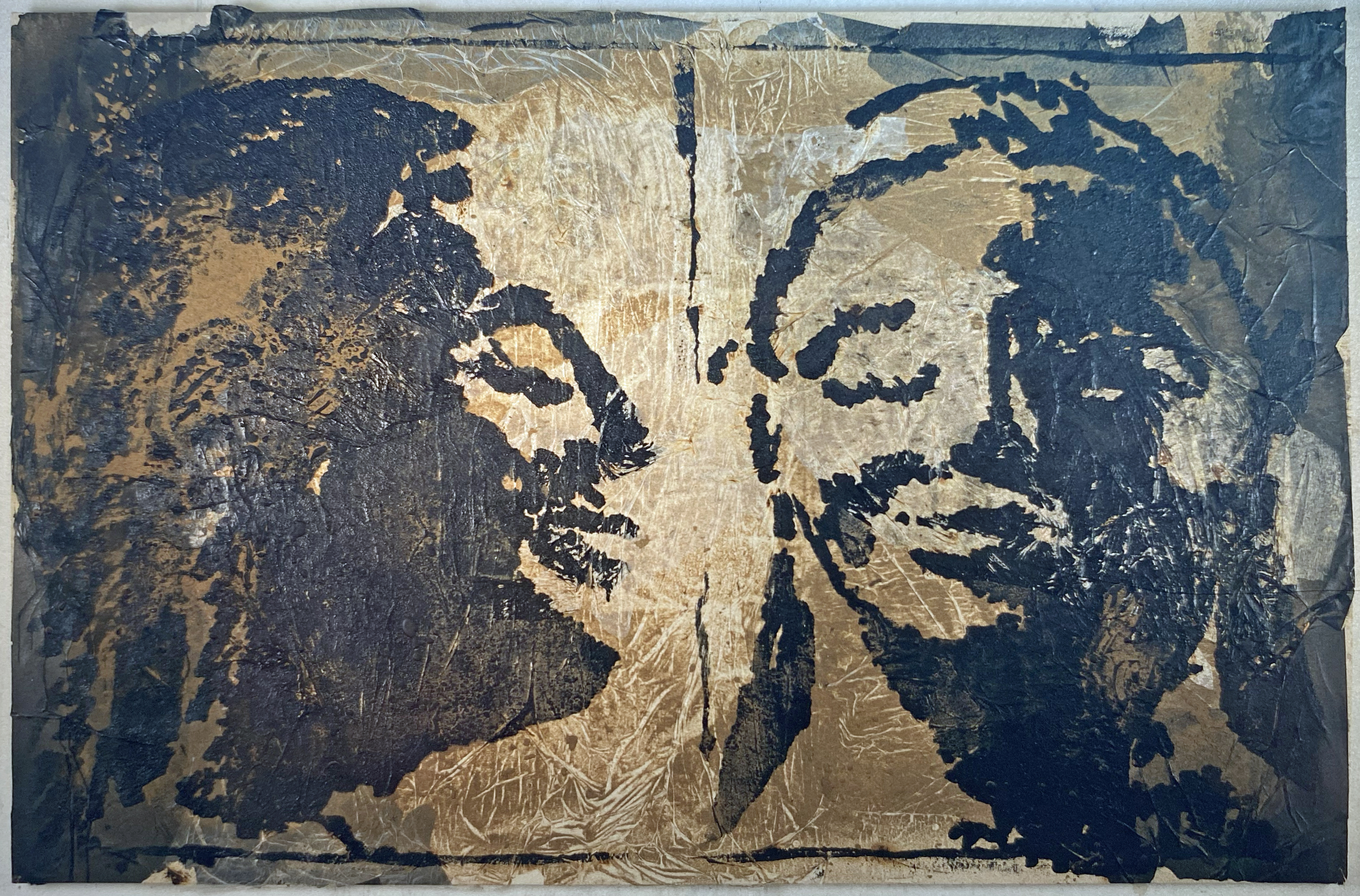
I don’t know why, but in France I returned to figuration, where there was more room for conceptual work. Form, text, and color evoked completely different emotions. I had tried earlier to work with expressive abstractions, but in those cases the titles carried more weight. I also did not want to paint in a traditional manner, so I invented a new technique for myself and called it monoprint. I painted on one canvas with a thick layer of paint, then placed another canvas on top and transferred the imprint. I applied color in the same way, by imprinting. The painted form would lose its original shape and begin to look like something else—blurred, indistinct. I liked it very much. Besides, I had already experimented with monoprint once before.
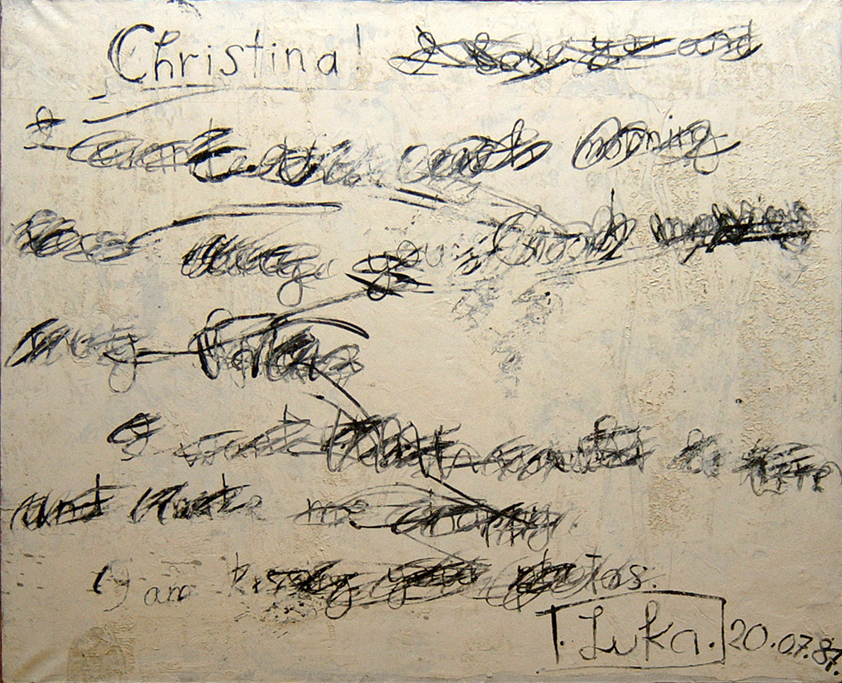
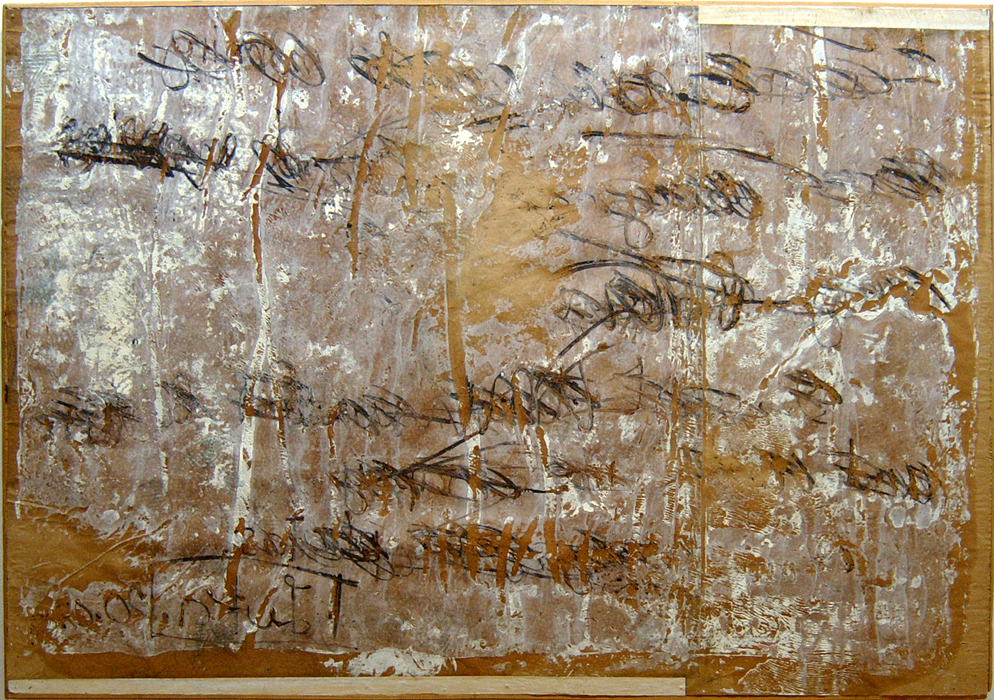
During an exhibition in Moscow, I met a German woman and later tried to write her a letter. At that time, sending anything abroad felt almost impossible. I filled pages with words, crossed them out, rewrote them, and in the end sent nothing at all. Back home, frustrated, I looked through the notebook and chose one text that felt right visually. I painted it onto canvas in black and white, simply so the moment wouldn’t disappear entirely.
Because I worked in a very small apartment, I wrapped the still-wet canvas in brown paper. When I later removed the paper in the studio, its imprint revealed something unexpected. The work shaped itself through this accident. I titled it “A Letter to Christina and the Reply.”
From that moment on—especially later in Paris—my process changed. I began to think first about the idea, then the title, and only afterward about form and the means of expression.
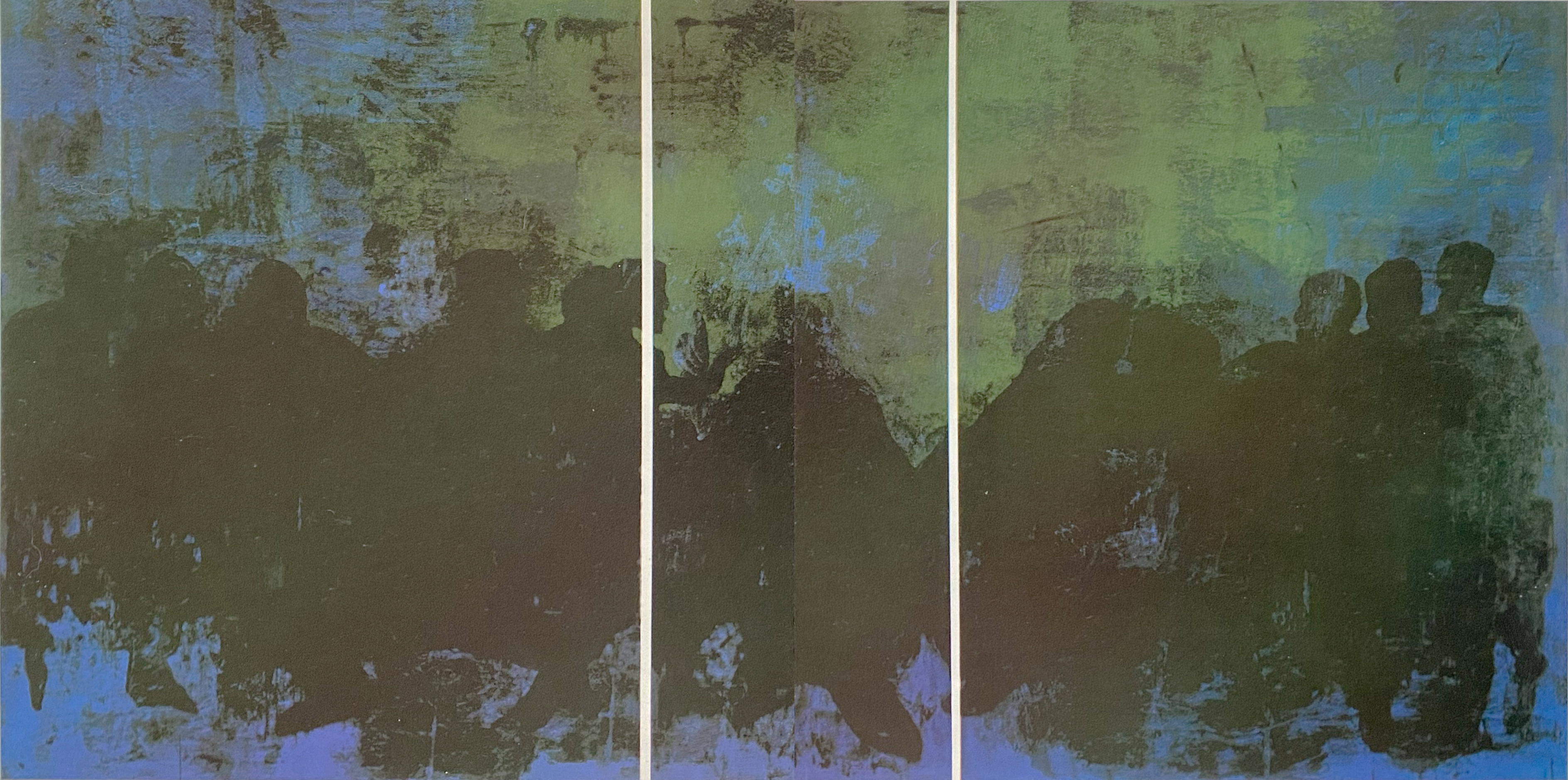
In 1989, an exhibition of contemporary Soviet art was held in Strasbourg at the Hôtel de Ville. I took part in it together with Ilya Kabakov.
In 1990, the Mona–Bismarck Foundation in Paris opened the exhibition “Painting from Georgia“. After the exhibition, my work “Escape from Oneself “ was sent to an international exhibition at the Maison des Arts in Cannes (France), where it received the Art Critics’ Jury Prize.
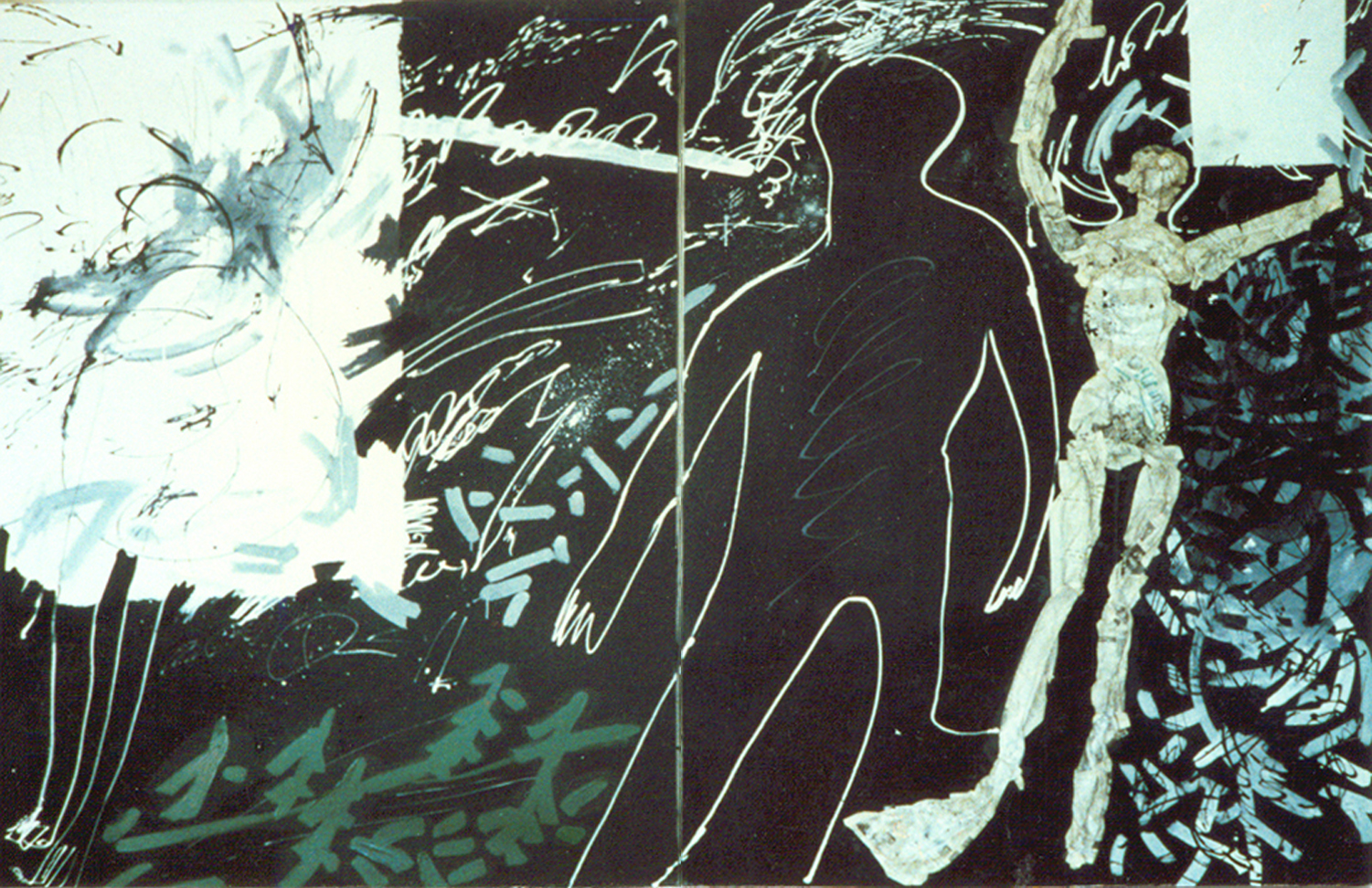
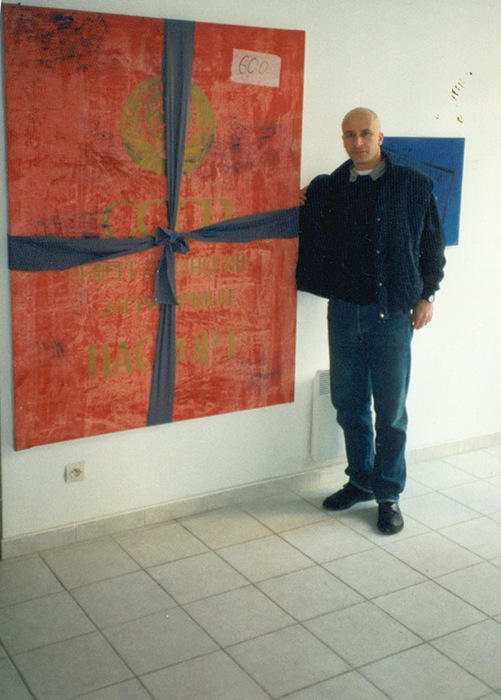
Passport
In August 1989, while I was in Paris, I was contacted from Germany and asked to come to Kassel in connection with an upcoming exhibition at the Museum Fridericianum. I already had a German visa, so I set off for Kassel by train.
At the German border city of Aachen, border guards boarded the train and asked for my passport. It turned out that the validity of my visa for Germany began only in September. They stamped my passport with a return mark, removed me from the train, put handcuffs on me, and locked me in a detention cell at the border post.
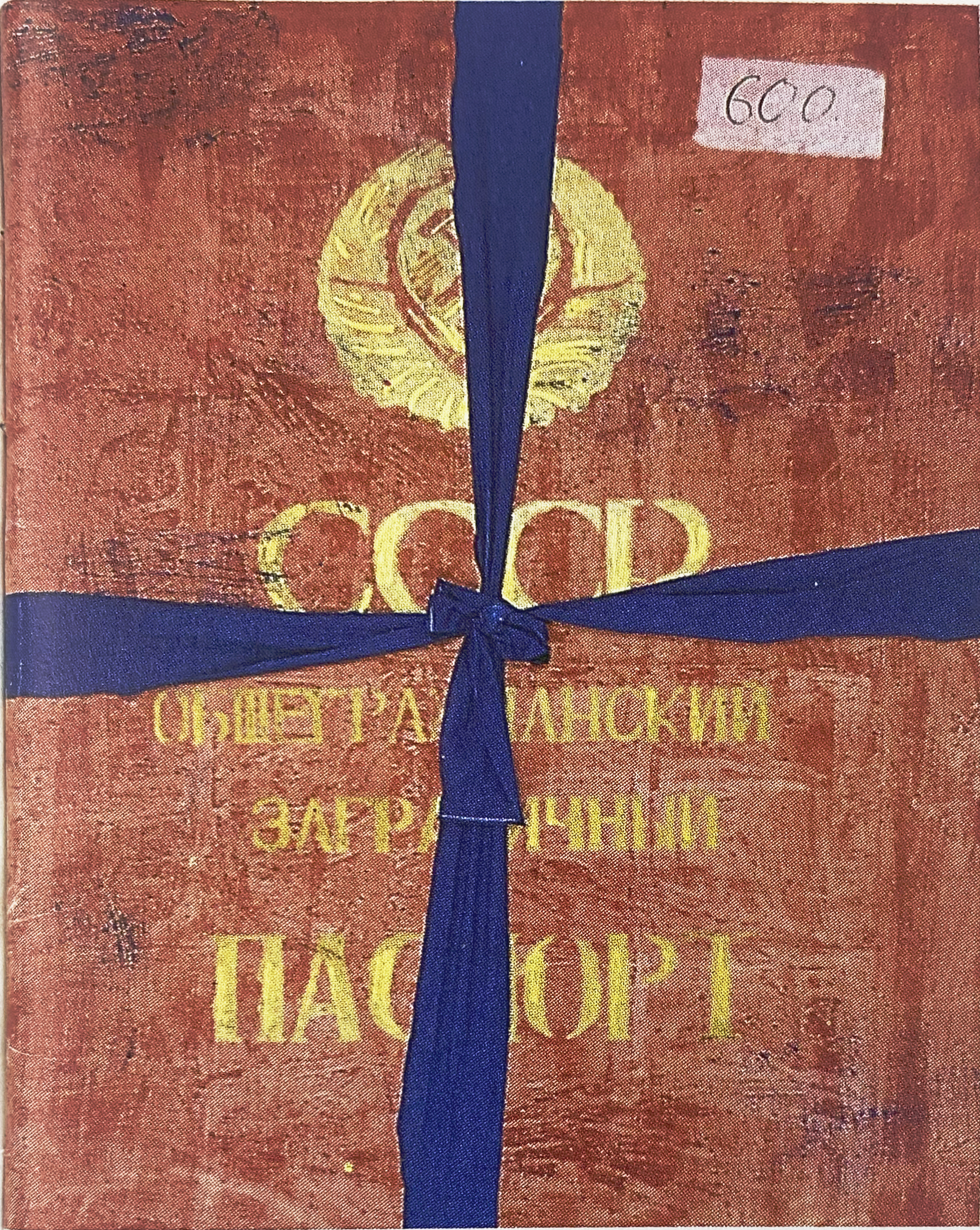
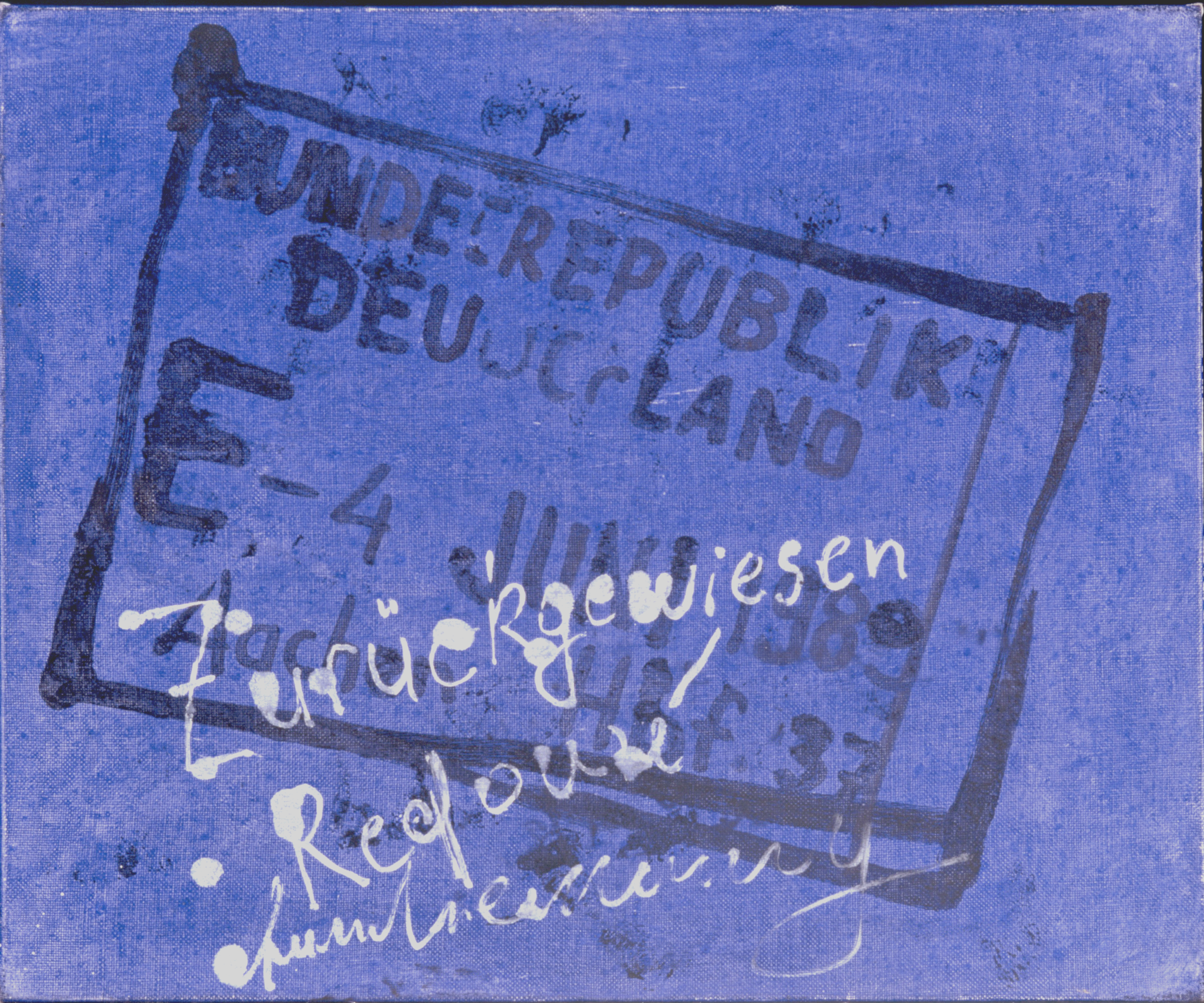
My protest over the violation of human rights had no effect whatsoever. At that time, very few people traveled with Soviet passports, and as a rare case I seemed to leave them somewhat confused.
After several hours, they took me out of the cell and asked about the reason for my trip. I explained that I had a meeting at a museum in Kassel and that I also had an official invitation from Germany. They called the museum to verify this, and once they were convinced that I was telling the truth, they released me and told me that on my return I should cross the border through a different border city.
Two days later, when I returned to Paris, I dedicated an artwork to this story.
Germany
In September 1989, I officially moved from France to Germany. My manner of expression became increasingly critical. I began to focus more and more on ecological and social issues, on humanity’s thoughtless attitude toward the world and, as a result, toward its own life. I linked political situations with historical facts. I used folk sayings and jokes from my childhood. I looked critically at the influence of religion on the development of humankind. I employed various forms and media of expression.
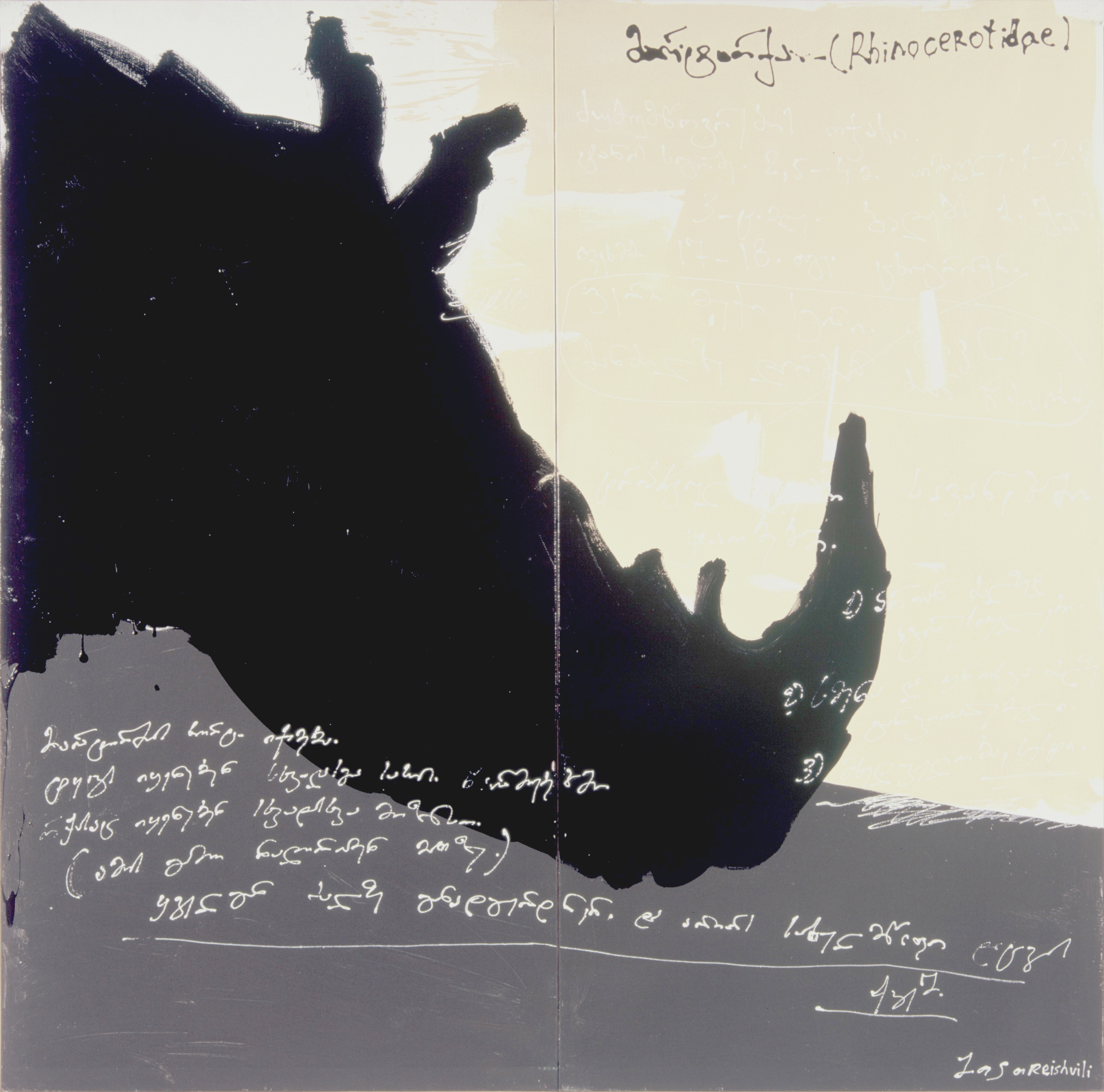
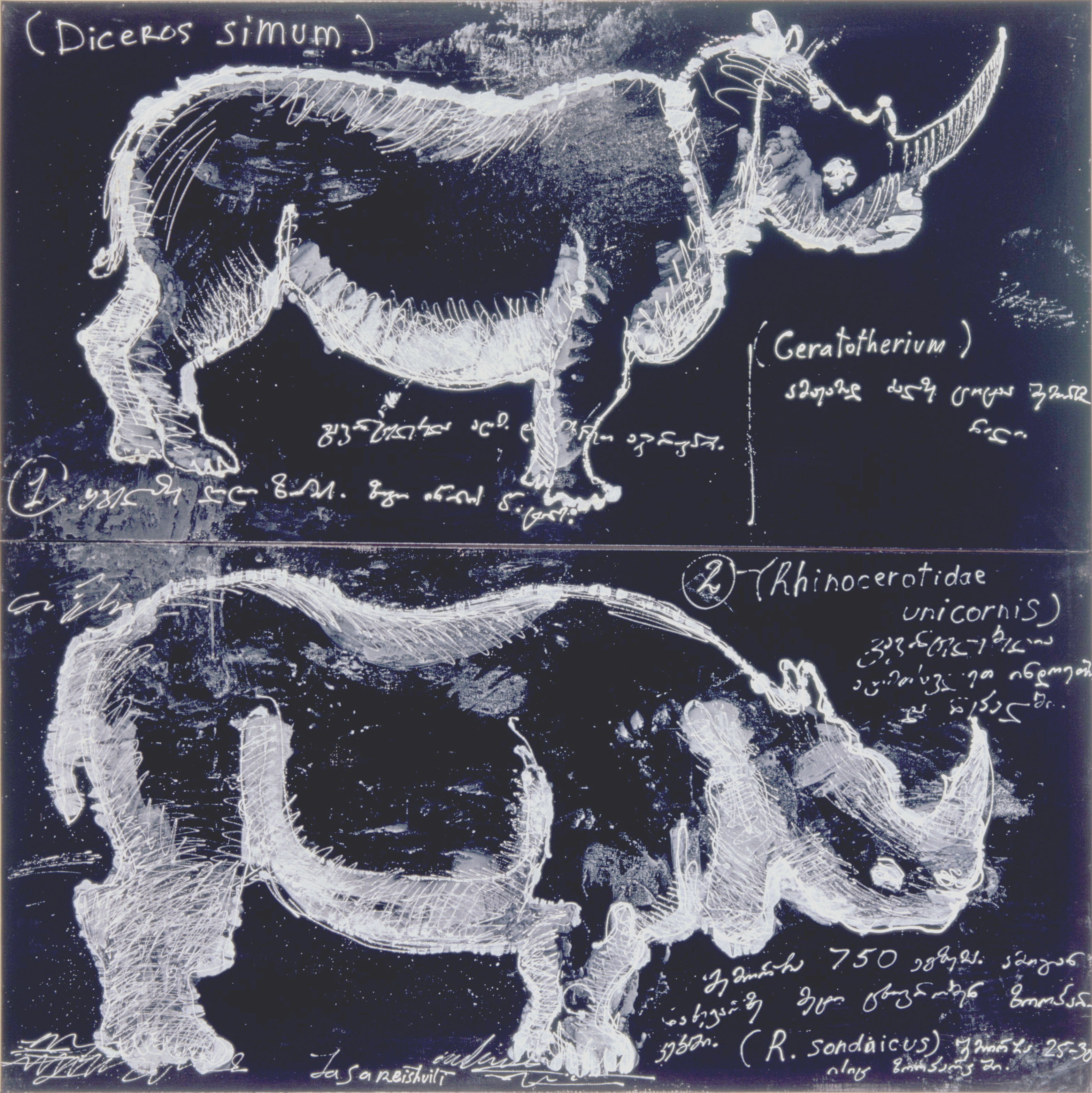
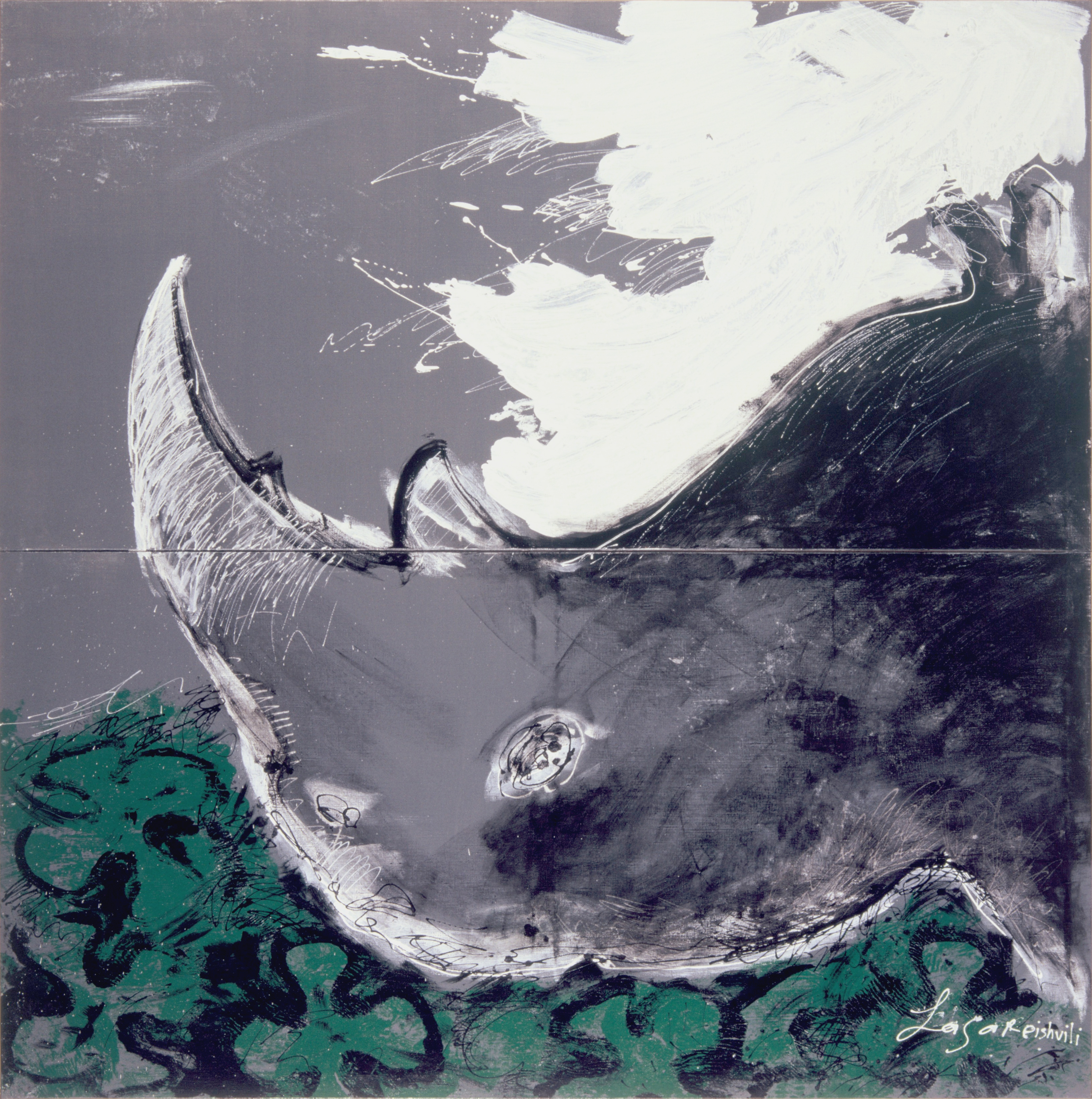
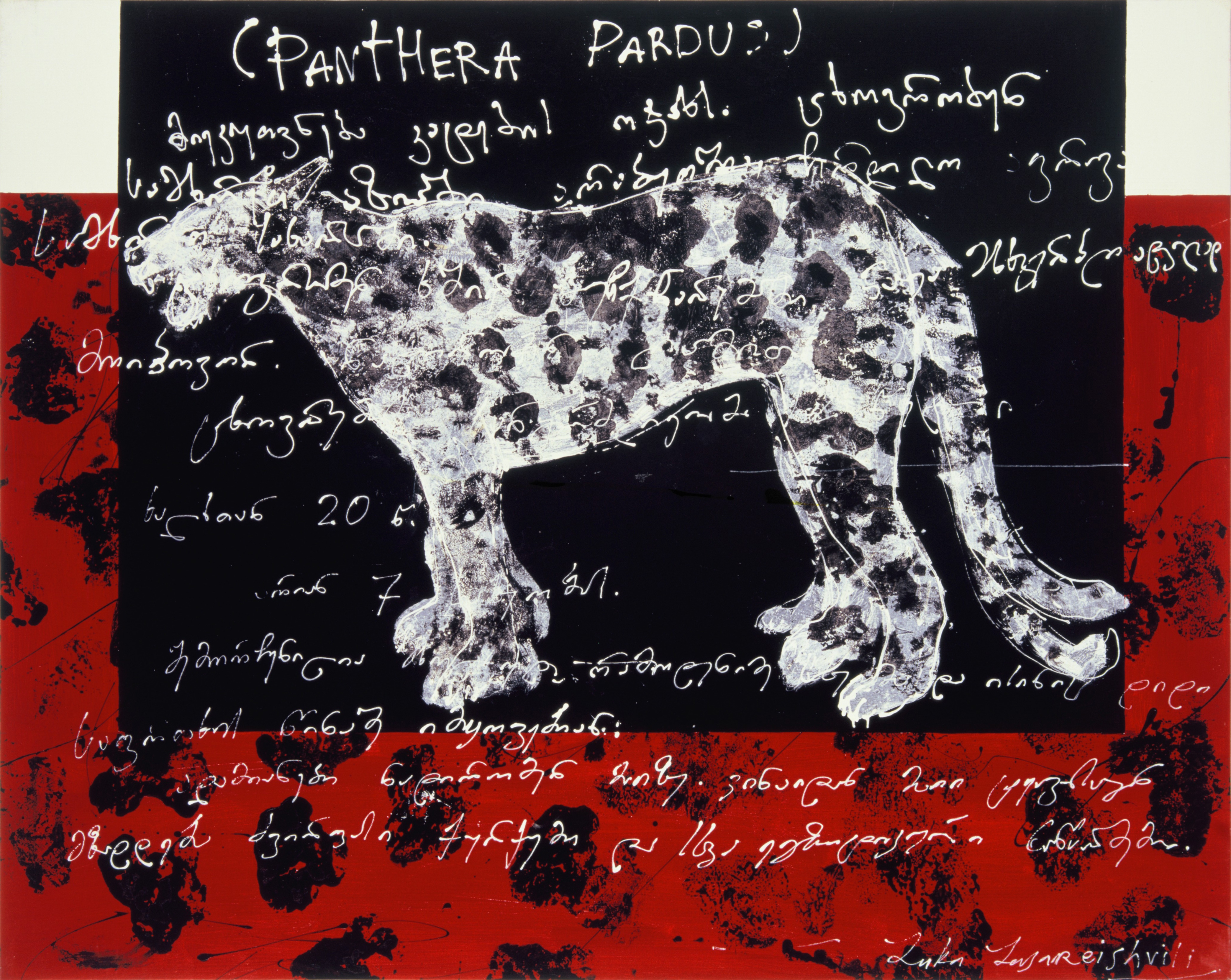
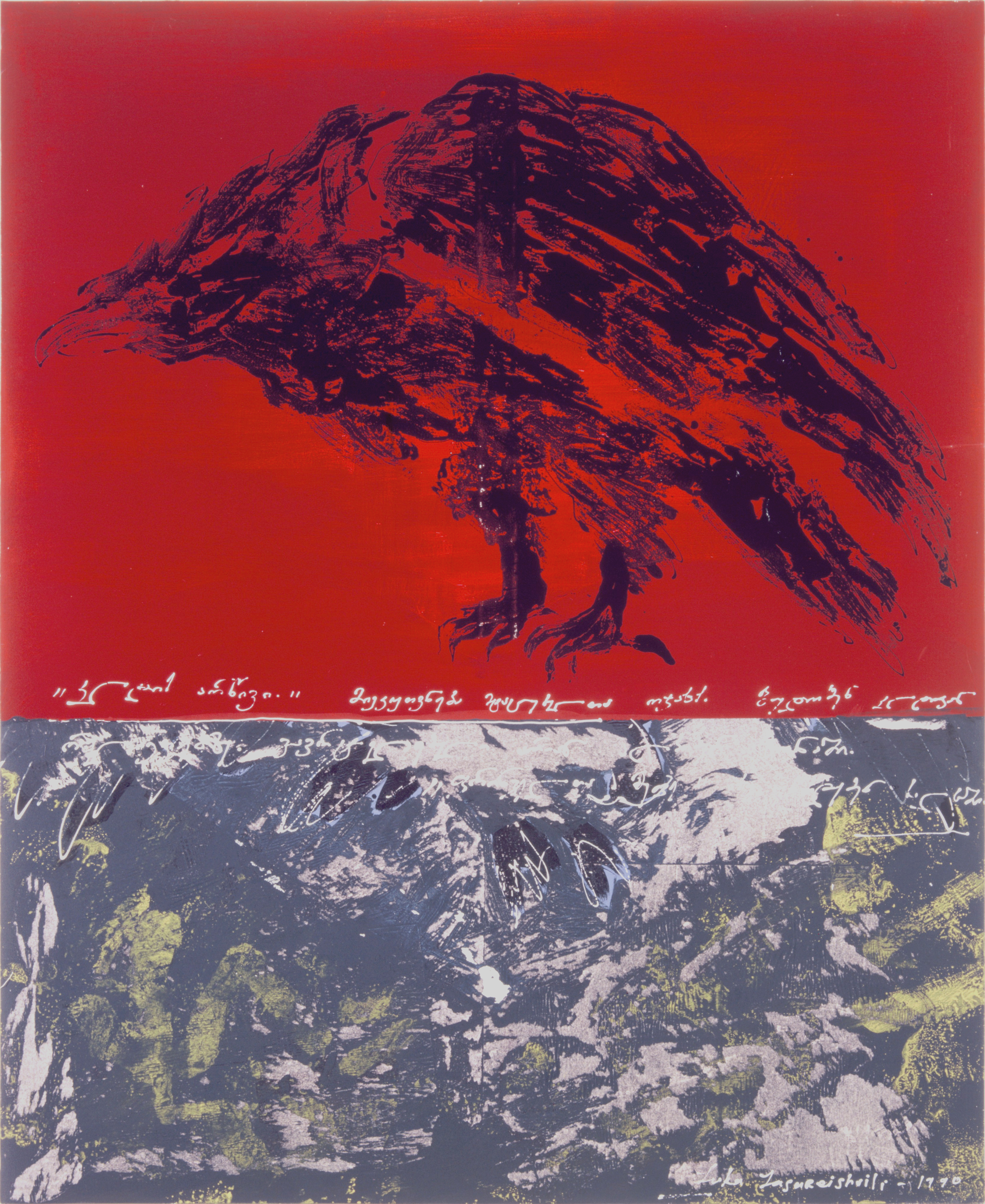
One of my first serial works was devoted to animals on the verge of extinction, whose endangerment was caused by the great human demand for their bones, tusks, fur, taste, or other exotic reasons.
In 1991, I devoted a series of works to the war that began in Kuwait, titled “The Eight Wonders of the World.” (The Seven Wonders—created by humans, regarded as wonders by humans, and destroyed by humans.)
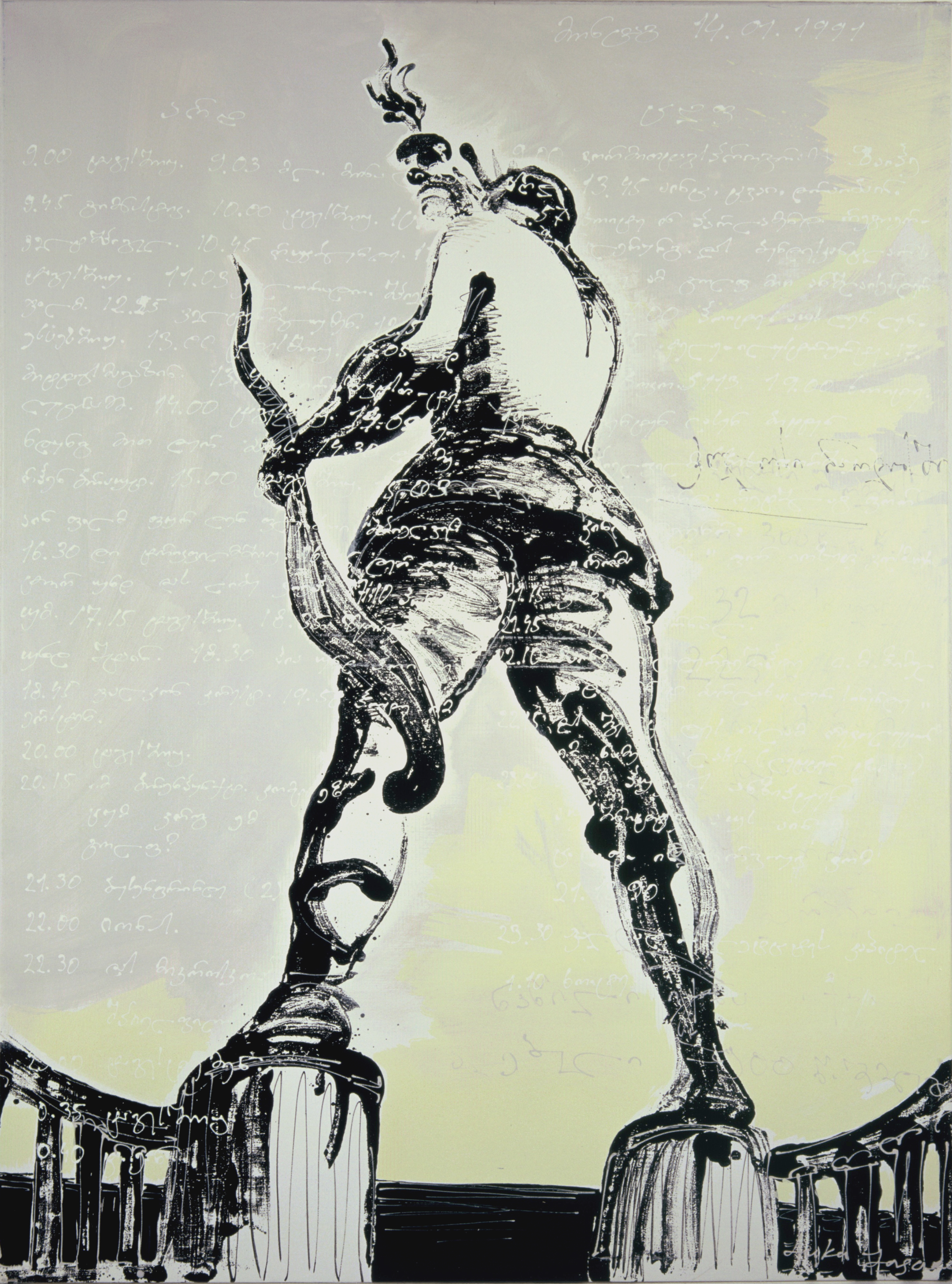
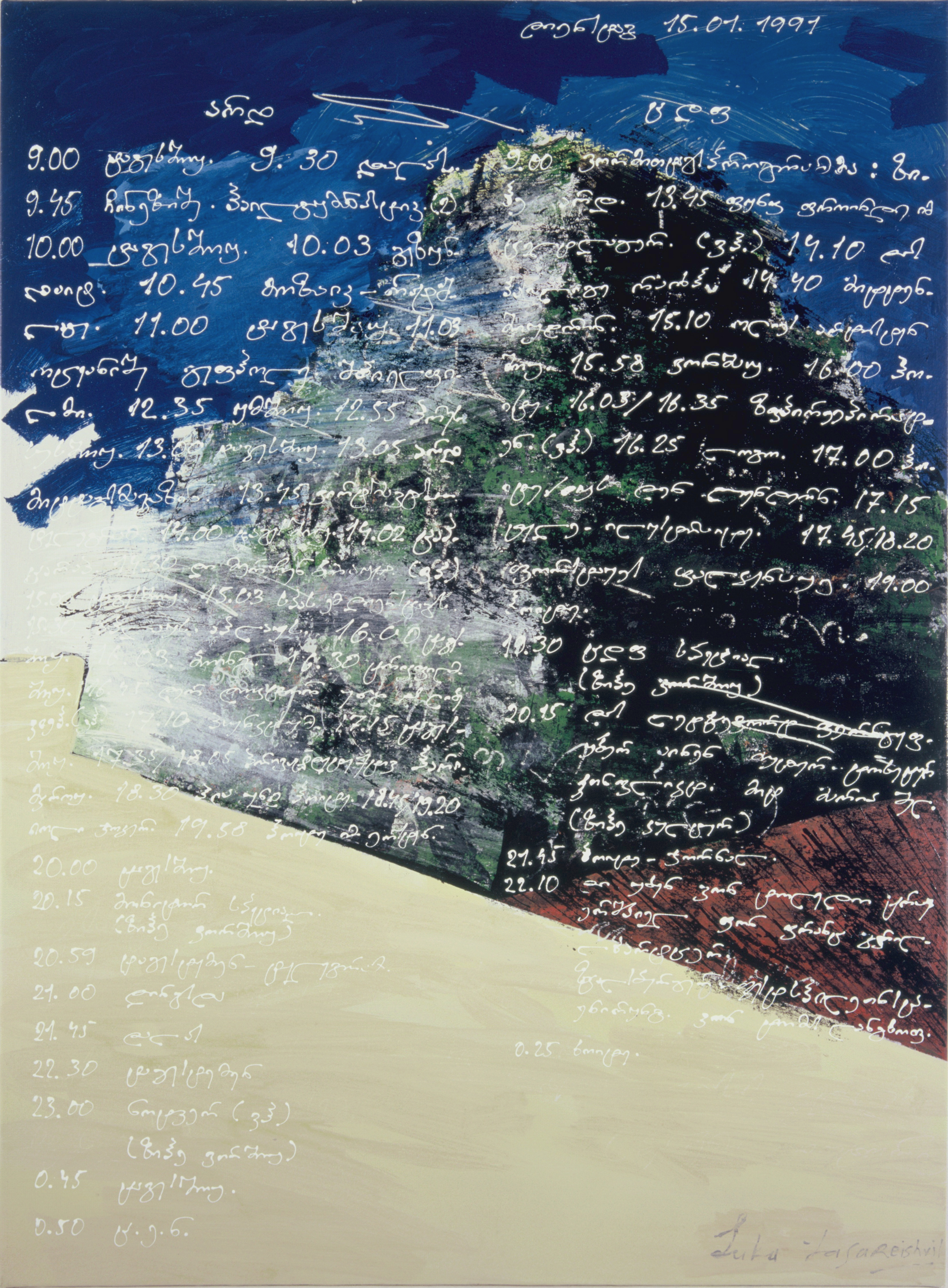
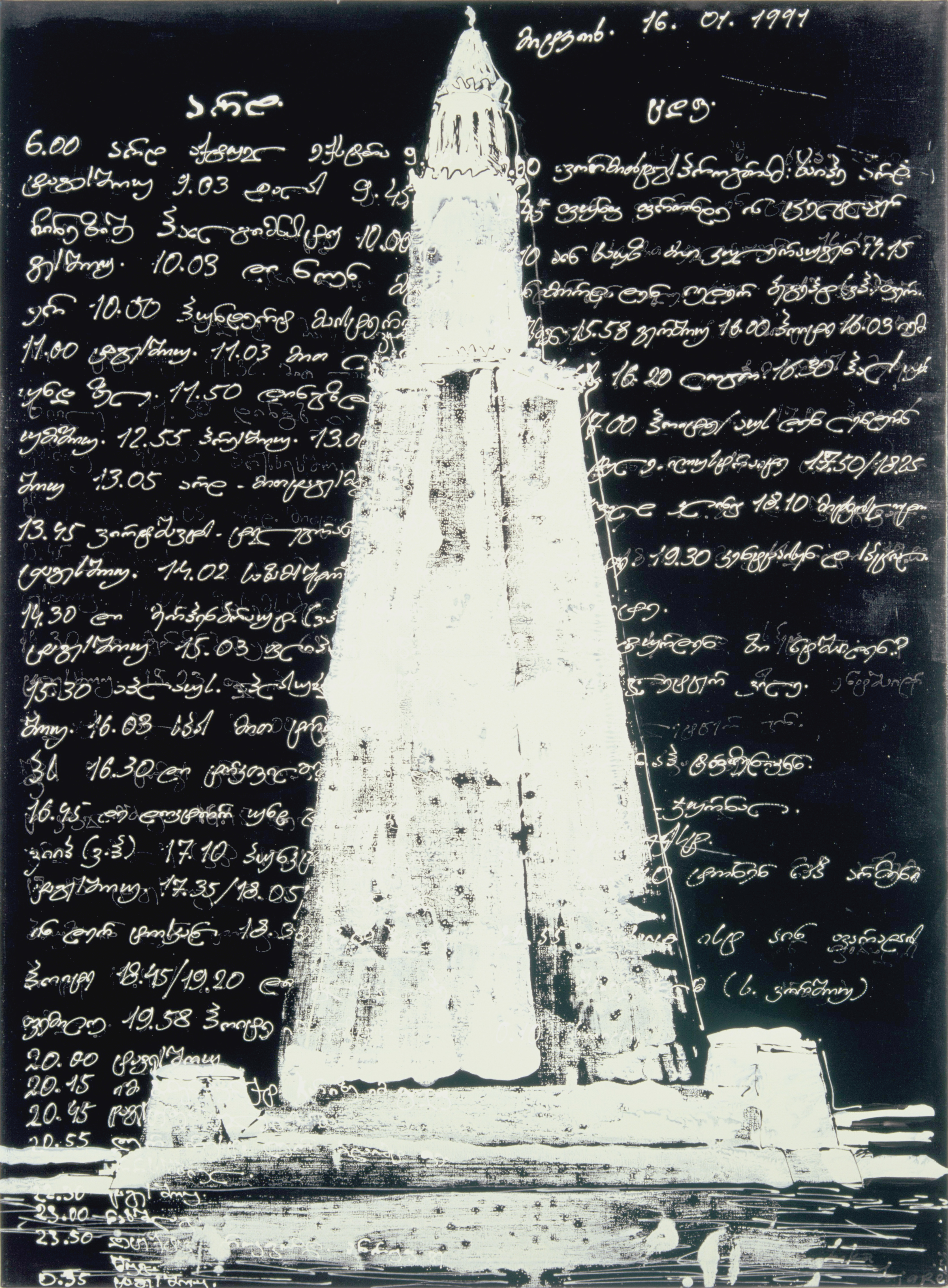
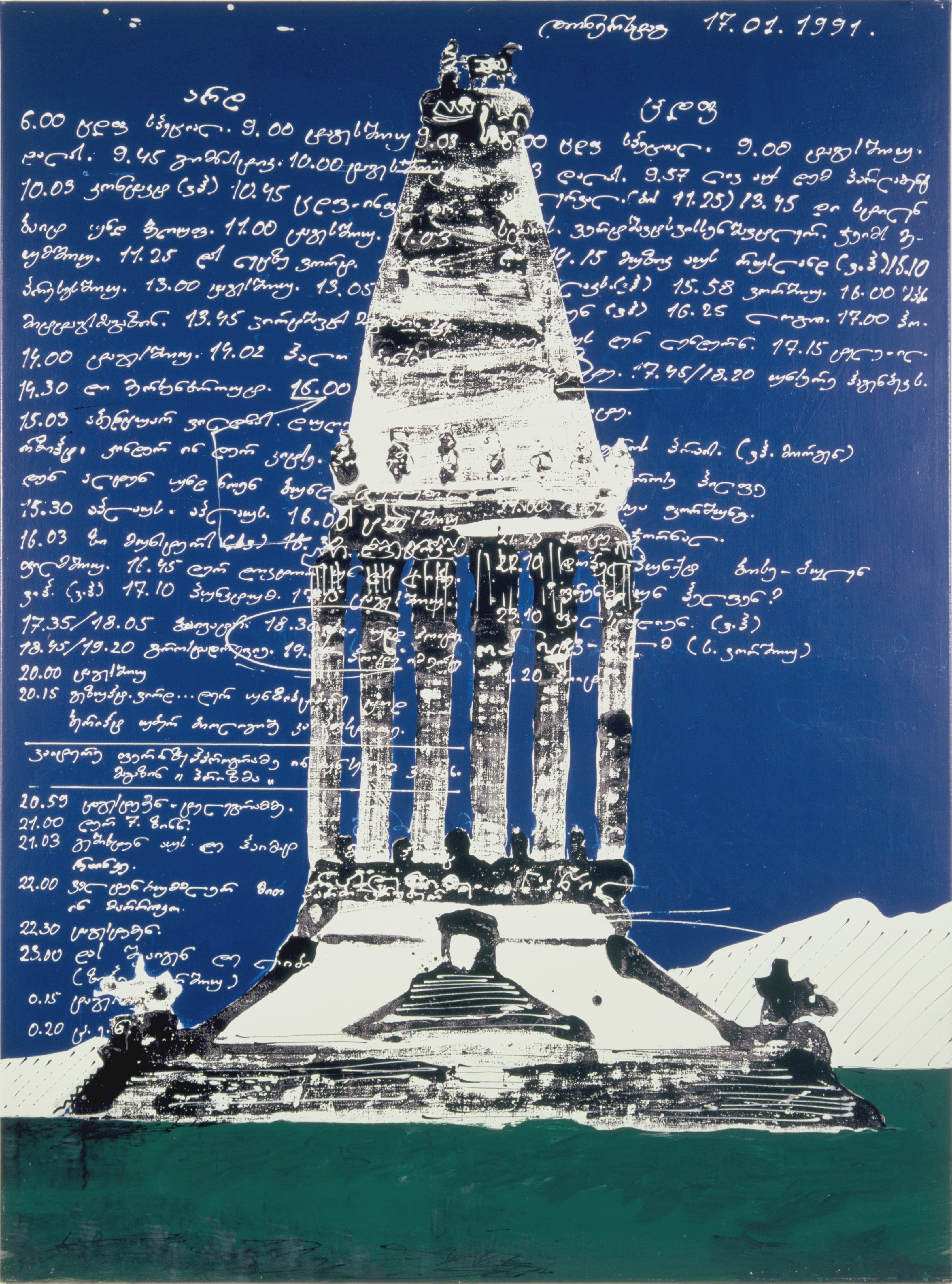
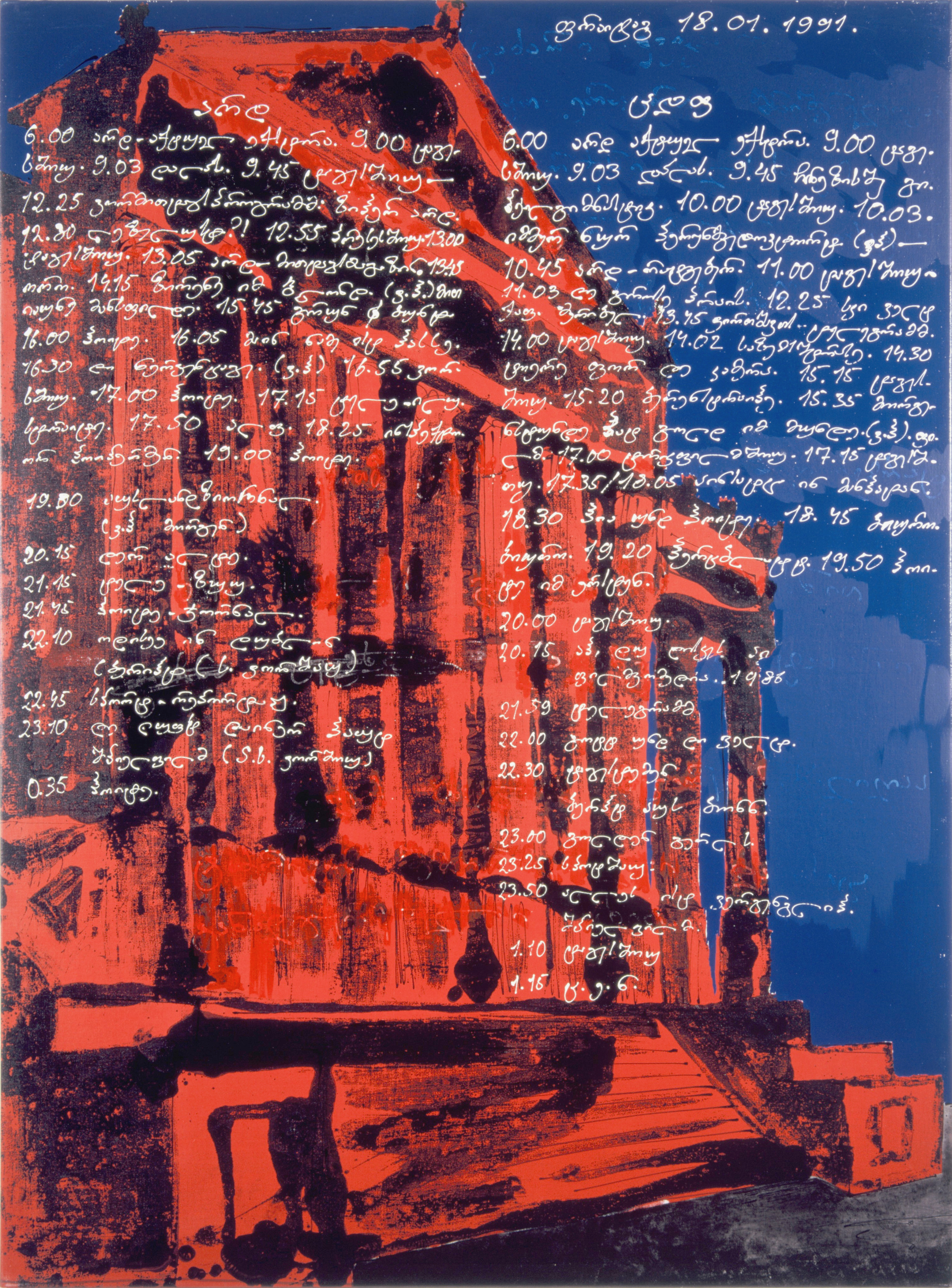
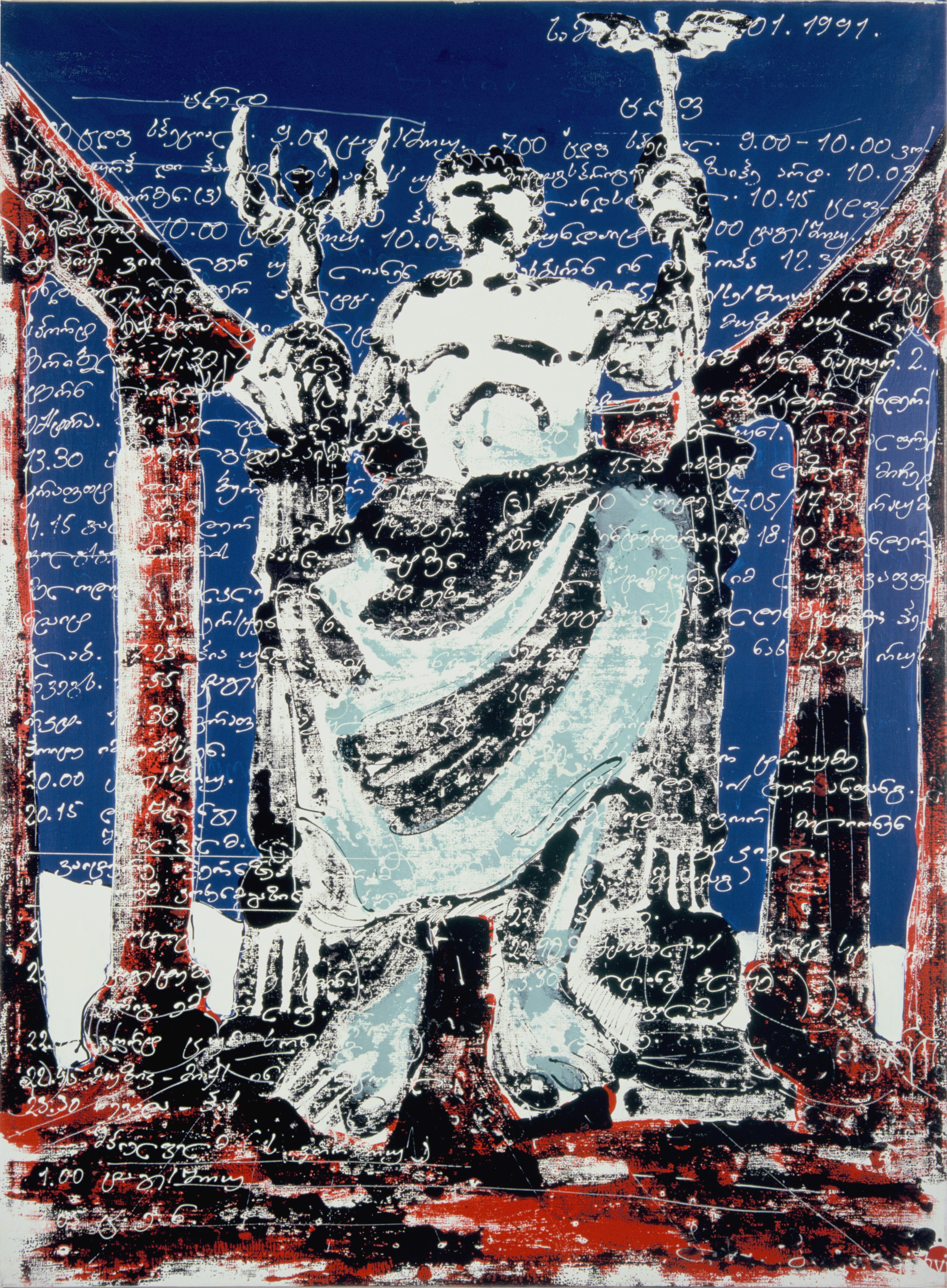
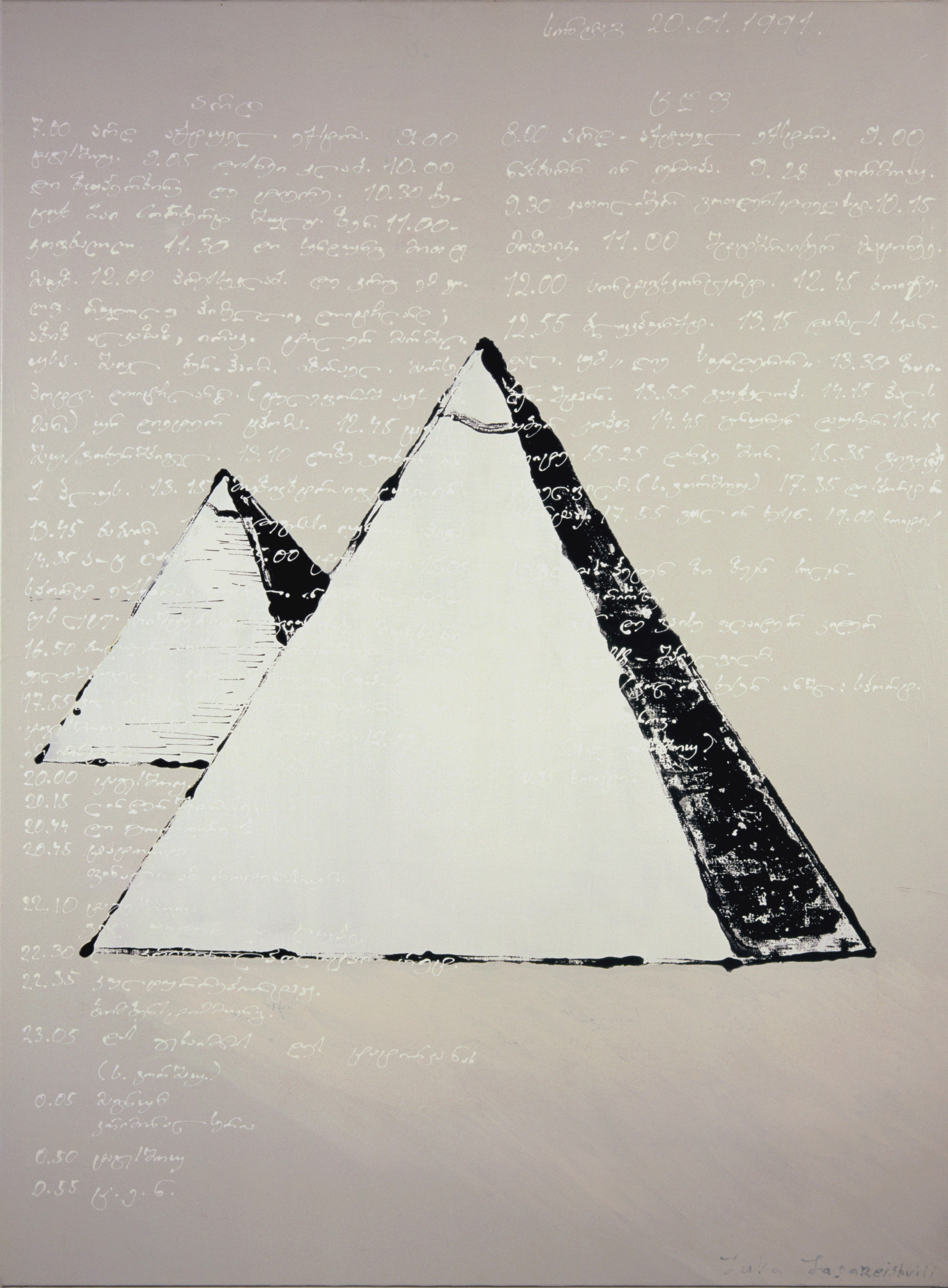
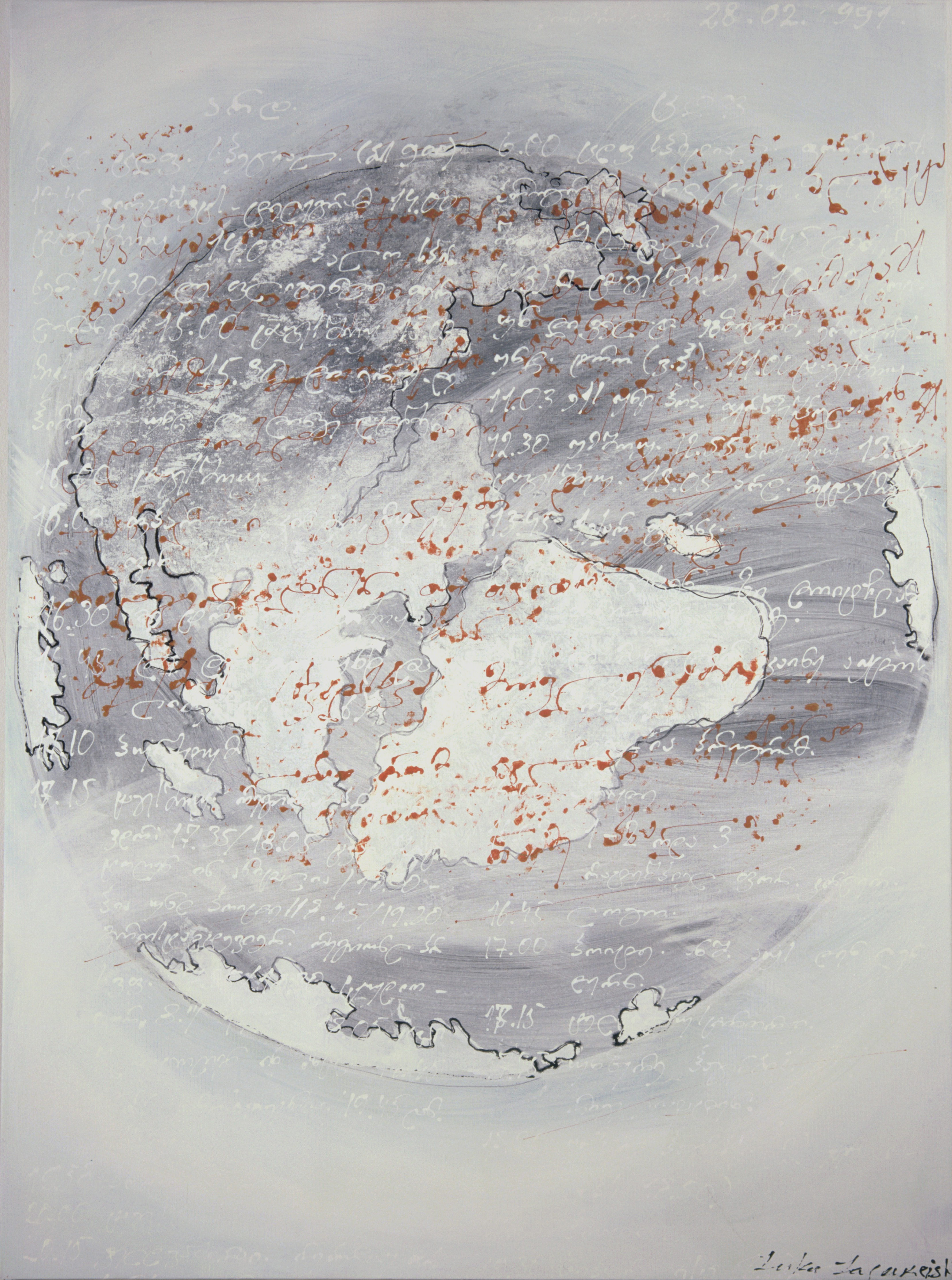
Before the outbreak of the war, there were constant discussions about the apocalyptic danger this war might bring. Despite many warnings from experts, the war nevertheless began on Tuesday, January 16, 1991. All of humanity followed the approaching threat of destruction with fear. German newspapers, magazines, and television covered every detail extensively. Viewers could watch live footage of the ongoing war. Special news programs on the central television channels began at six in the morning instead of the usual nine. Other entertainment programs and films remained unchanged, exactly as scheduled.
On the canvases depicting the Seven Wonders of the World, German text is written above them in Georgian script. This text reproduces the central television program schedule from the first week of the war. (A Georgian reader can read it but cannot understand it, while a German can understand it but cannot read it—serving as a symbol of the Tower of Babel.)
On the eighth canvas, the Earth is depicted, also accompanied by the television program schedule, dated February 28, 1991—the final day of the war.
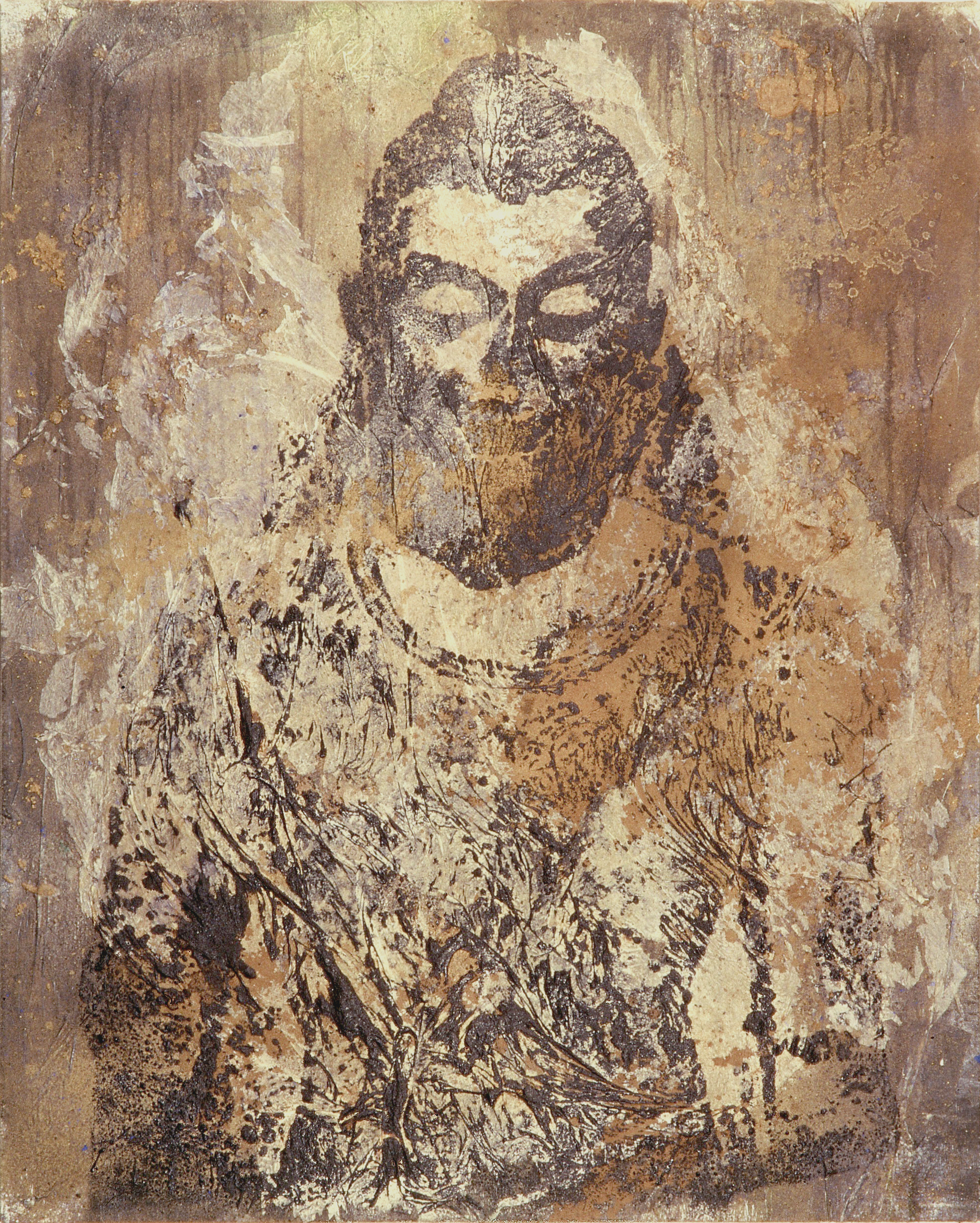
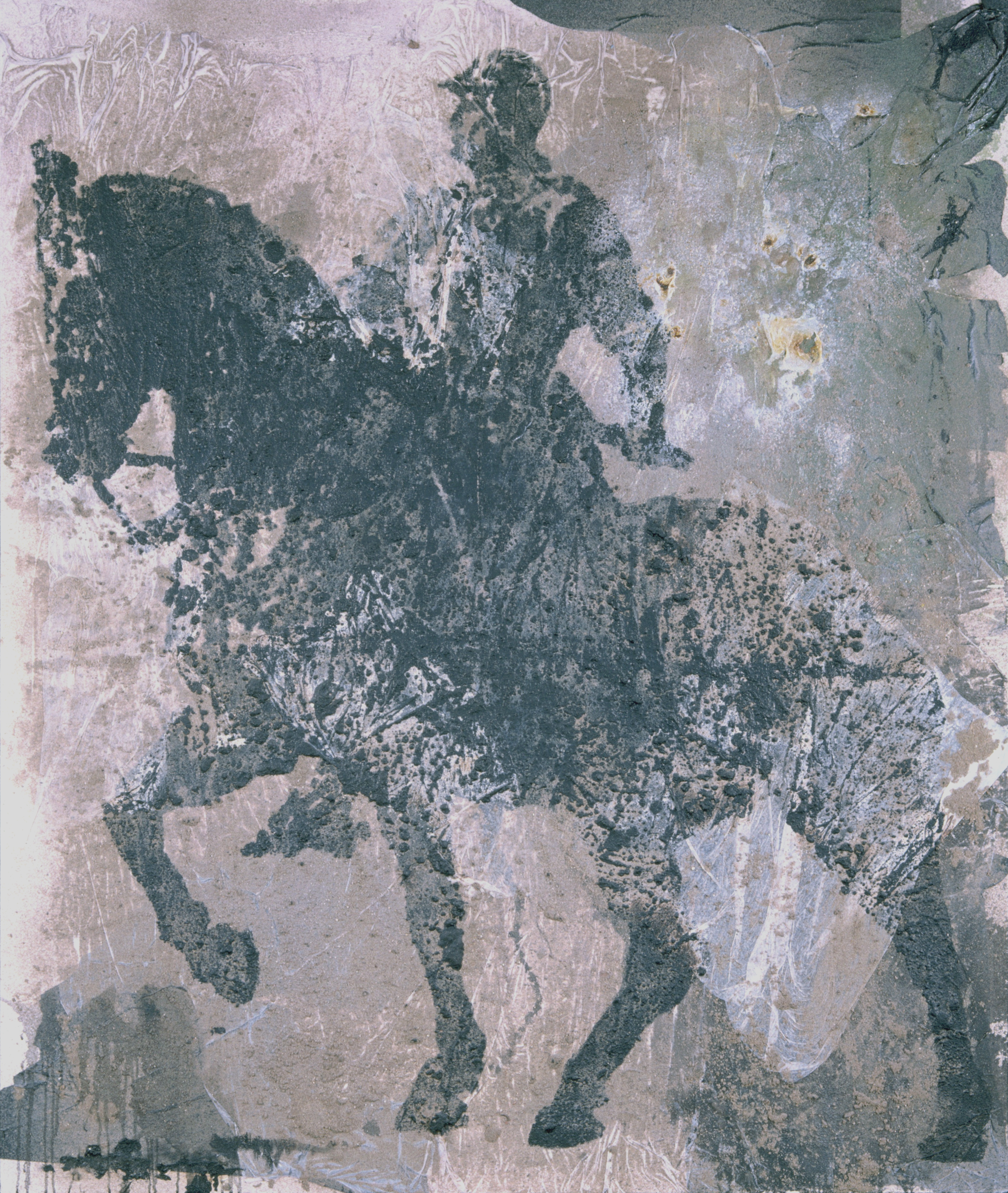
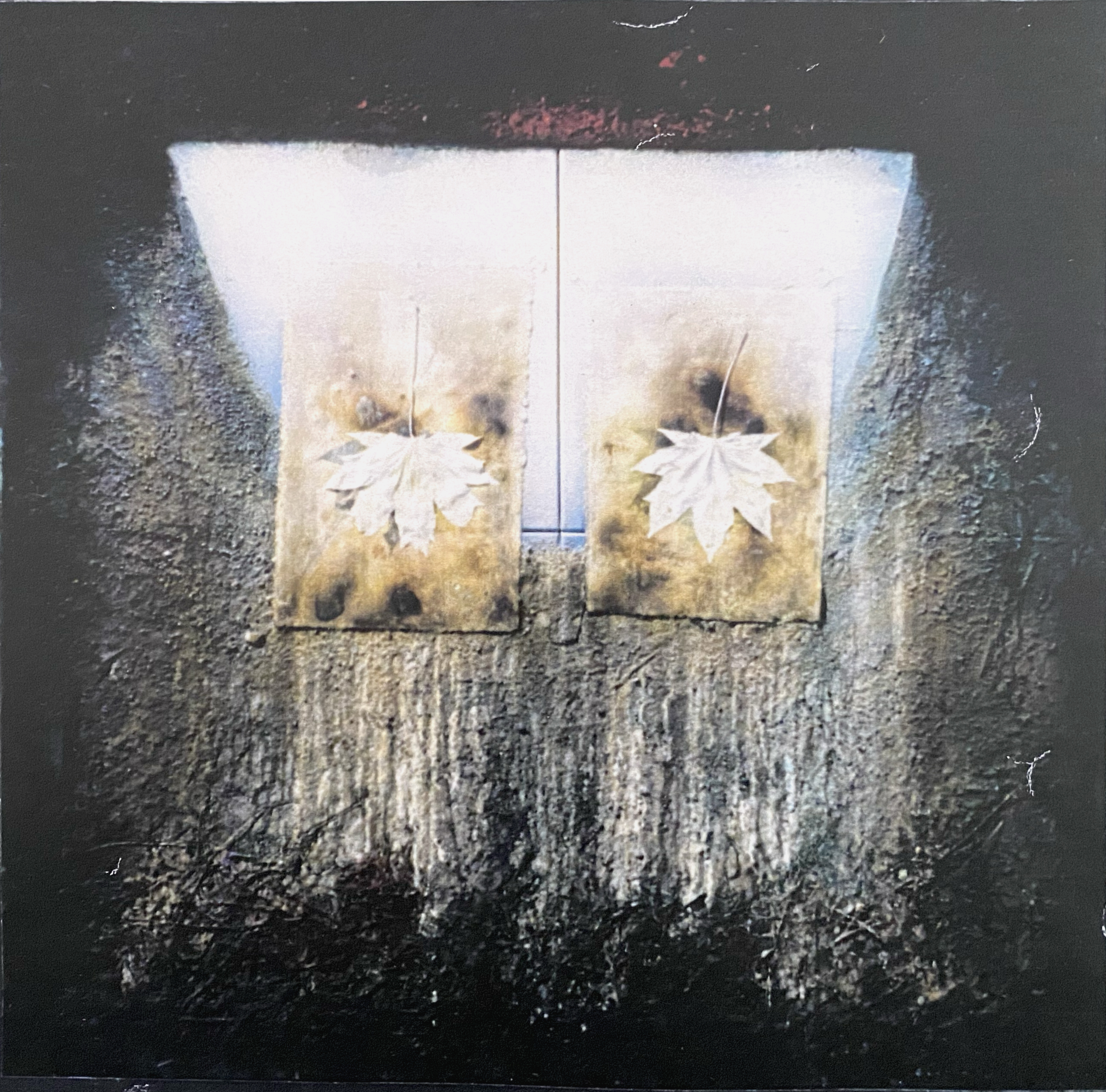
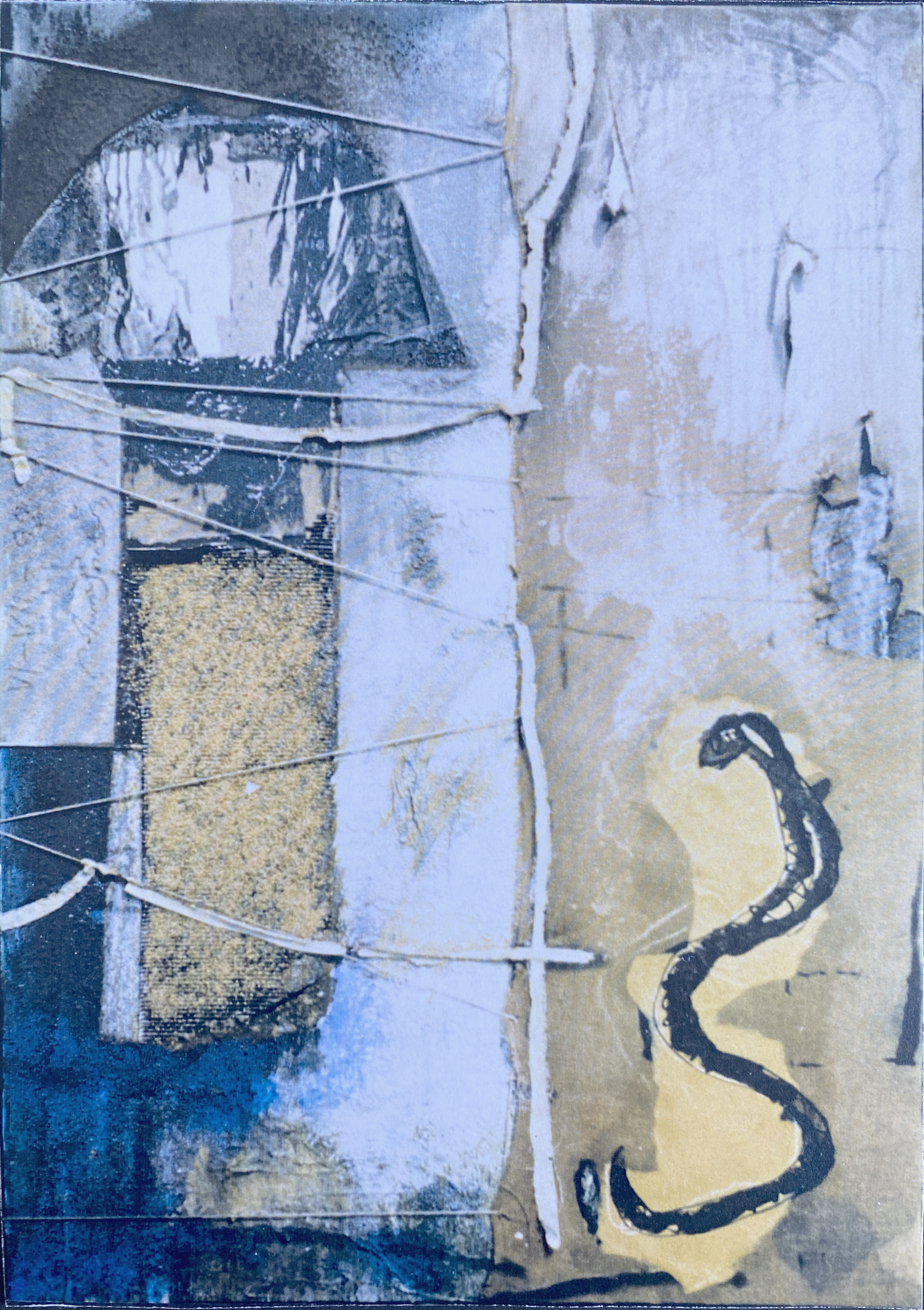
Biblical themes, mythologies, symbols. These themes became the subject of subsequent works.
At that time, I paid a lot of attention to symbols. I especially liked the shark. Both in its form and in its meaning. I identified with the Christian religion, because of the resemblance to a fish and the fish as a symbol of Jesus. Its danger, teeth. Character, aggression and greed. I had my first attempt back in Moscow.
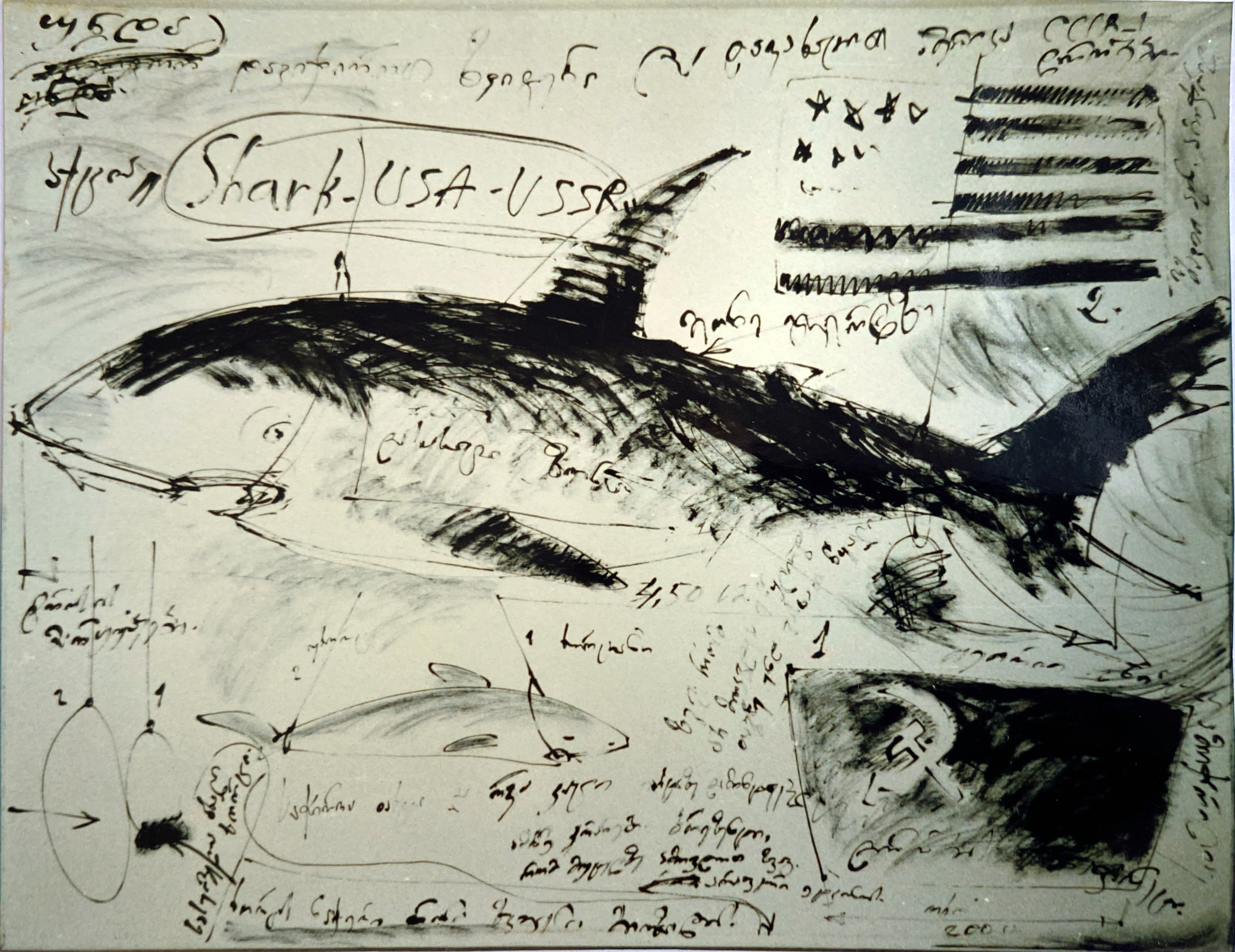
(I drew a shark on the canvas and wrote a plan for a future performance.)
We were supposed to catch the shark and, without causing any harm, attach the flag of the Soviet Union to one side and the flag of the United States of America to the other, and release it back into the ocean to continue its characteristic, dangerous life.
(Two great opposing forces who were as one in their idea as a shark.)
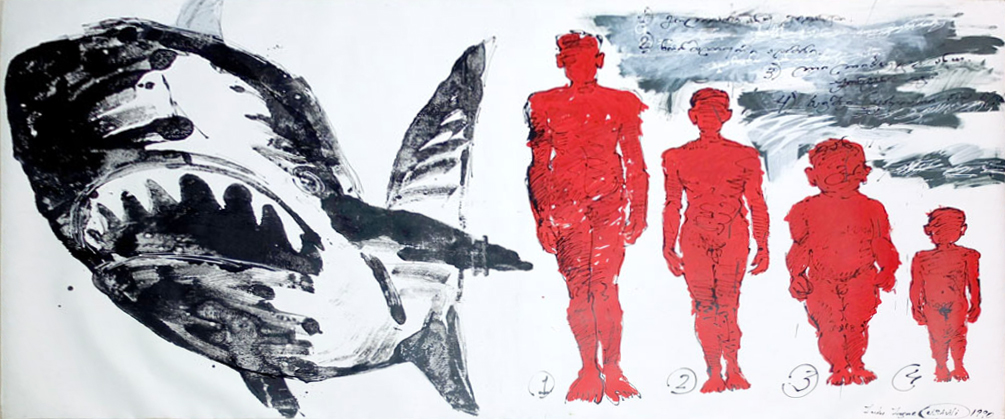
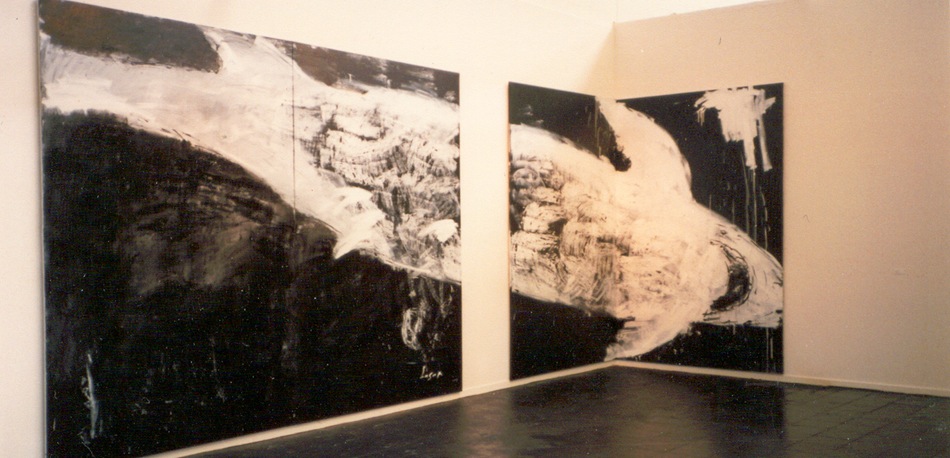
My second installation was also symbolically dedicated to the theme of war. “Crusade III”
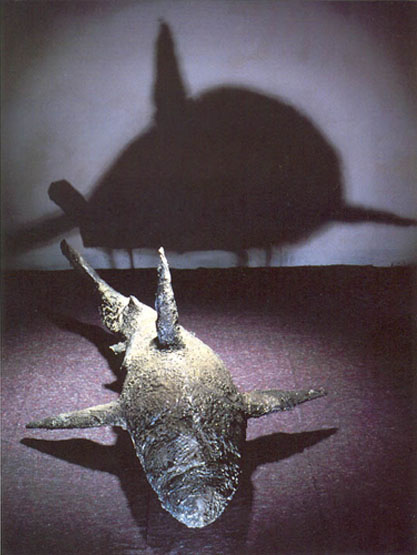
As for the installation, Crusade III Shark became the main connecting form between the past and the present. Between religion and politics created by power wars. In this case, the shark was specially lit so that its shadow on the wall represented a military fighter jet. The exhibit was also accompanied by audio recordings of helicopters and military jets.
With this installation, Ilya Kabakov recommended me to participate in an exhibition at the Ursula Blickle Foundation, where I won first prize 1995.
The subsequent installation “The Last Supper” was also dedicated to the deplorable consequences of human progressive development, which threaten not only humanity but also the global world with destruction. Here too, the religious, Christ’s Last Supper as a title was used in a figurative sense.
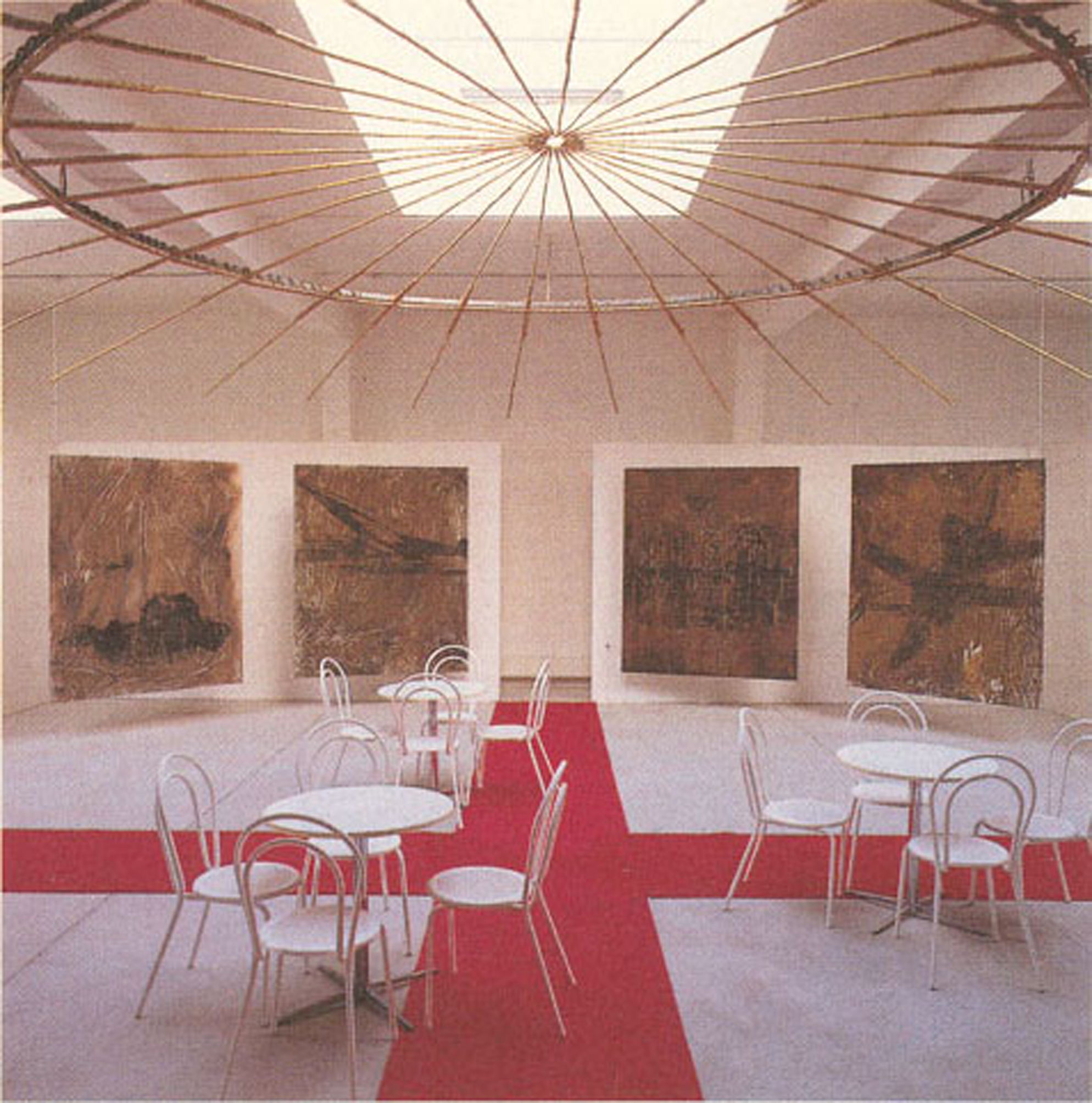
I also created objects, video installations. I connected all the techniques I had learned. That I had accumulated over the years. I was looking for what I could not see. I made the works with great enthusiasm, but after finishing I felt dissatisfied. Everything started from the beginning. Enthusiasm – dissatisfaction
For a while I withdrew from making art and spent my time mostly reading books, particularly psychology and philosophy books, with the main aim to find out why I should be making art in the first place, when everything has already been done, and what it was that I was looking for or what I could offer through my works. Contemplating these larger questions, I became drawn again to exploring abstractionism in my work, because of its reflective and meditative nature which fit very well with my personal experience and the way I had matured as an artist. Over time these explorations led to the development of various minimalist abstract series, including “White Curtain”, “One Liners”, and “Moving Stills, I, II and III.”
The White Curtain
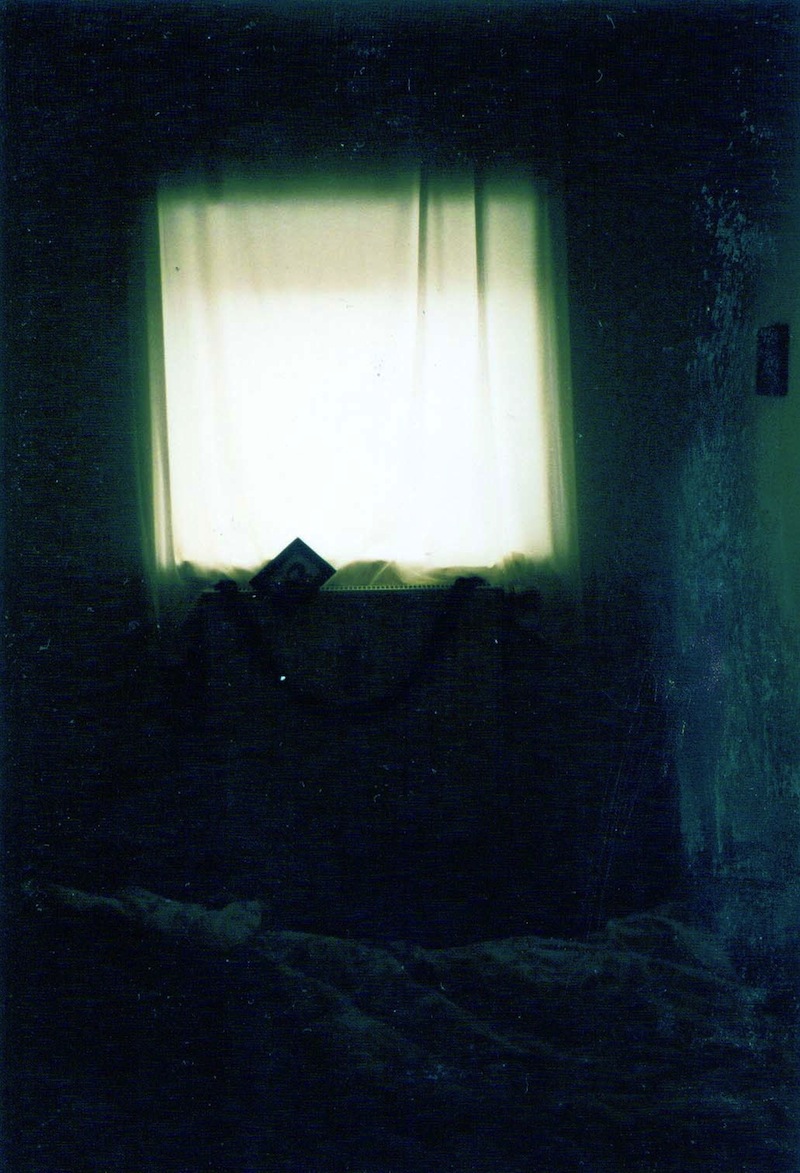
“The inspiration for this series originated from the white curtain that covers my window. Beyond that curtain: the outside world. I can’t see the outside world because of the white curtain. But I know it is there. I sense what is there or could be there. And when I am watching this, the process of painting starts. Each of the works in this series is an absolute minimal beginning. Because the beginning contains everything. It’s not in the end that something is happening. If not this beginning, if not the existence of one point, this one singular yellow square, or red square or form, this structure, this one and it’s shadow -so it means there are already two tones, sometimes even three, four, ten, meaning that from one point you already have a lot- It all lays within the beginning. The works in this series are elementarily holistic and unitary. They portray a profound compository simplicity. Whereas contemporary life dictates that we are surrounded by an abundance of details, looking at this abundance, this chaos at once, means that one sees almost nothing. On the other hand in these works, in which there is almost nothing to see, it is here one starts to see everything. In the emptiness of these works, one never knows what is behind this emptiness. Behind this emptiness is your idea. And if you are intelligent enough, than with your mind and ingenuity you will transcend this emptiness and have a comprehensive, fulfilling experience. I love this quietness, to go inside the color of a painting, this meditative quality. When you are standing in front of a painting, looking at it –I found out- it gives the best satisfaction for me. Every time I look at my window, I know that this is the same window, and that it will never, never change. Yet I see difference every day, not only because the color or light might change, but because my ideas change. I am thinking differently today and looking at this window, I see something different.”
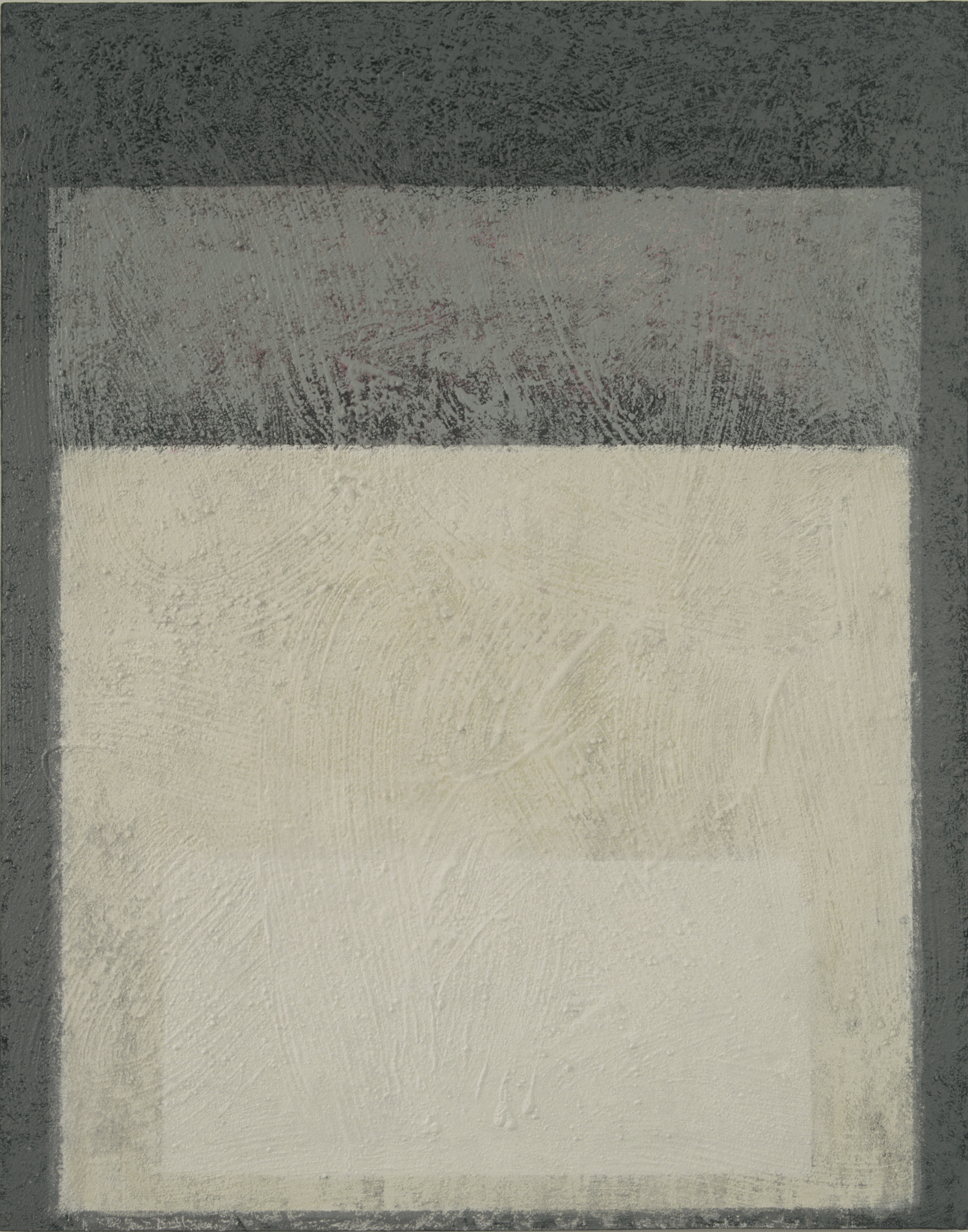
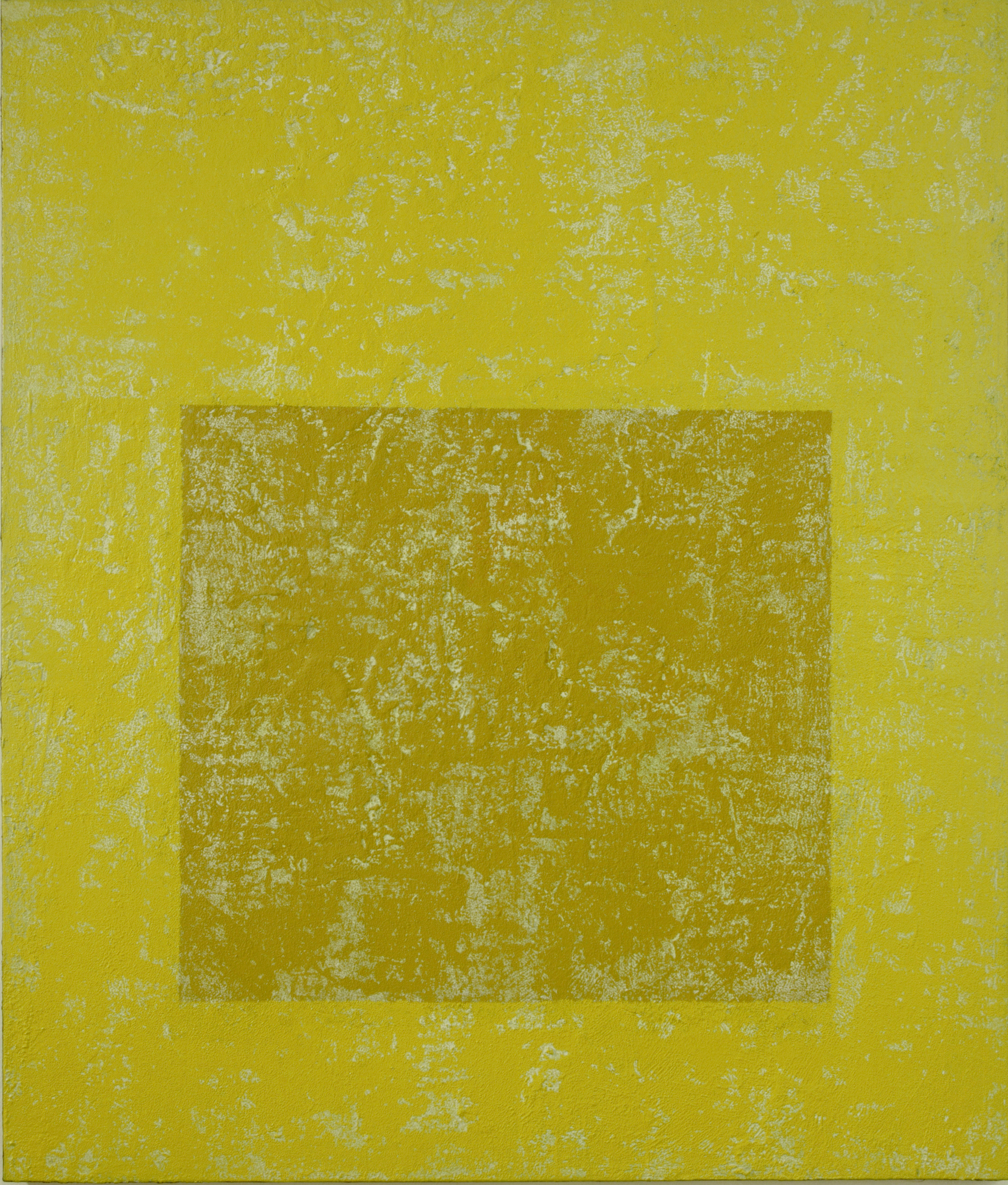
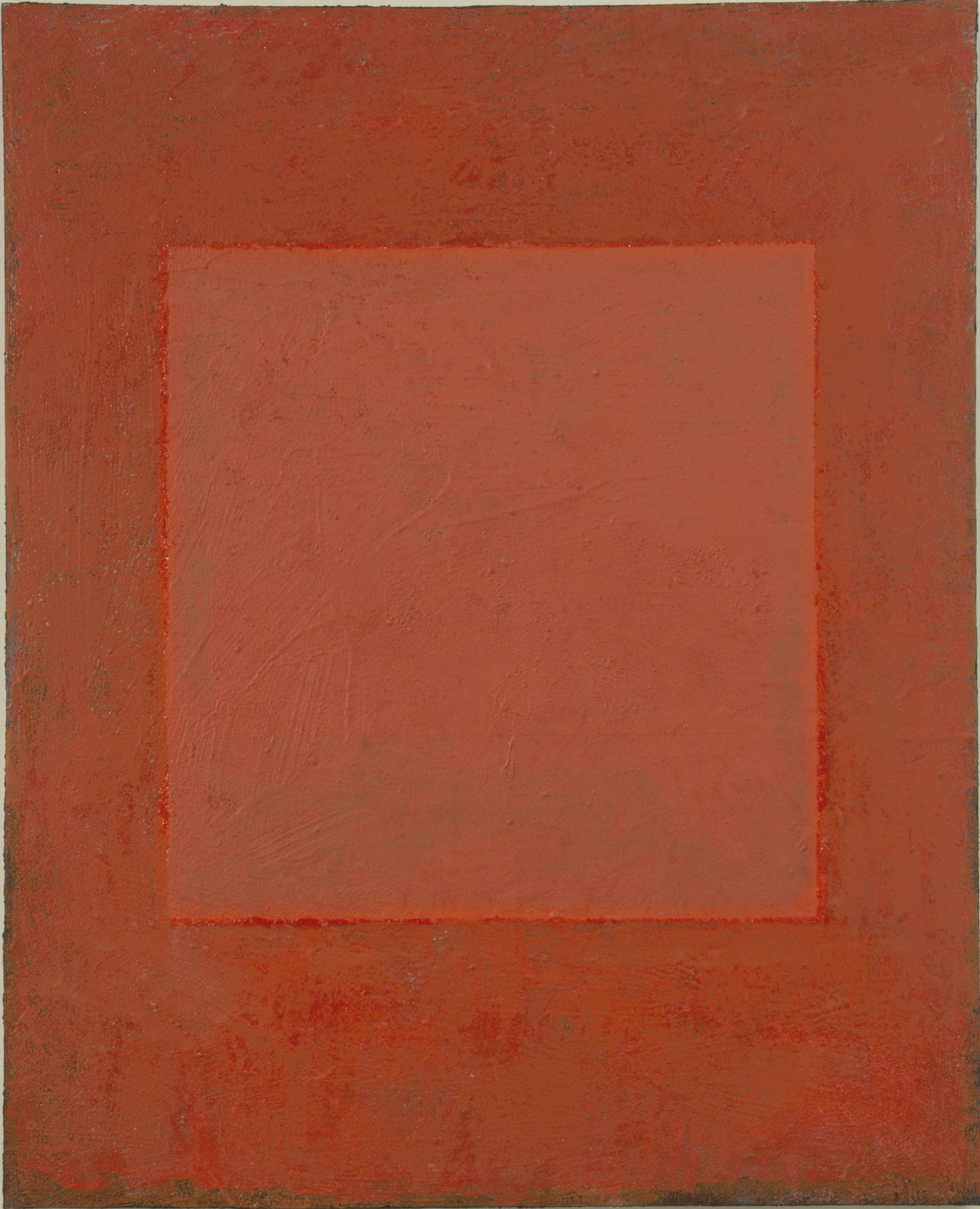
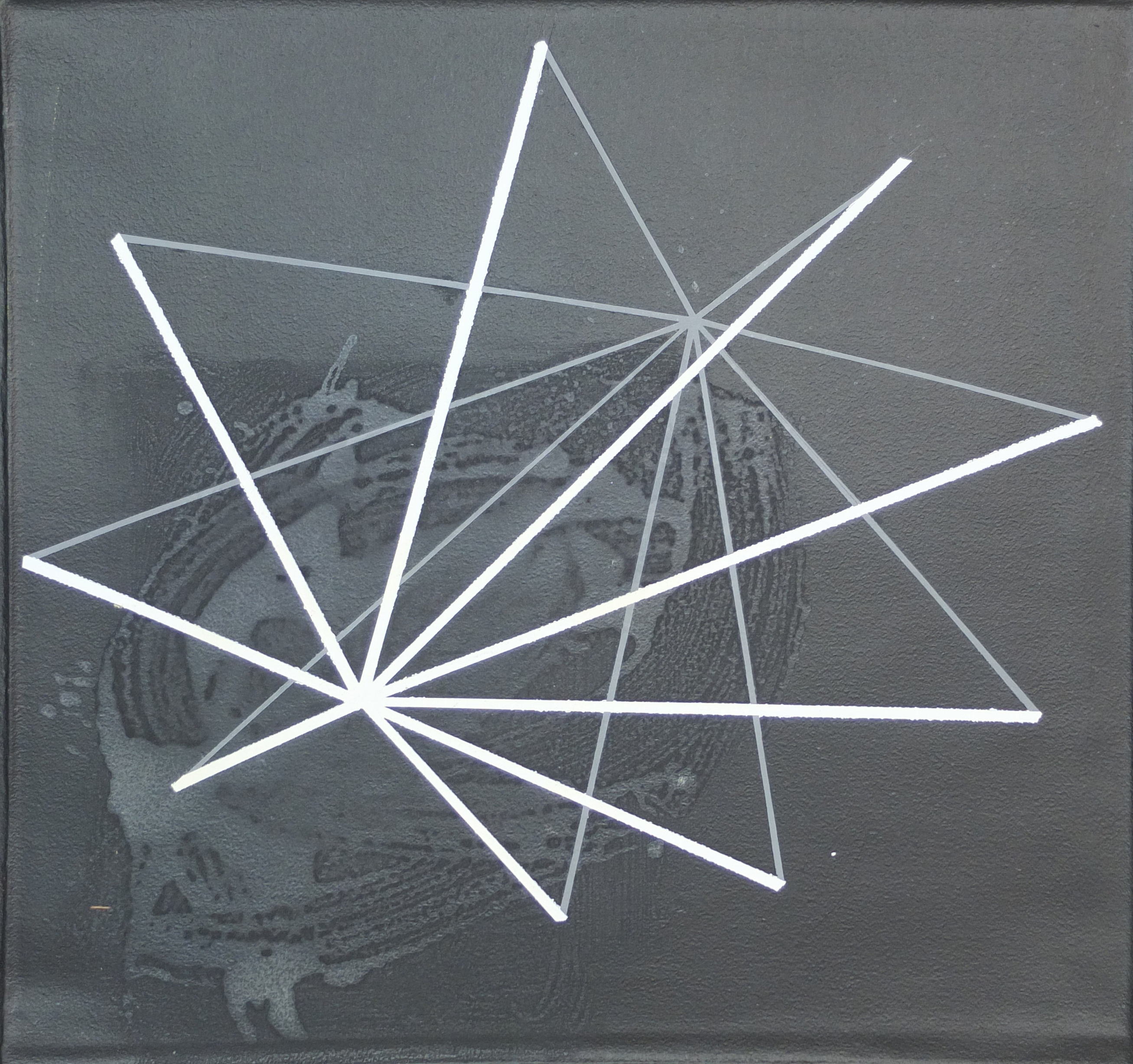
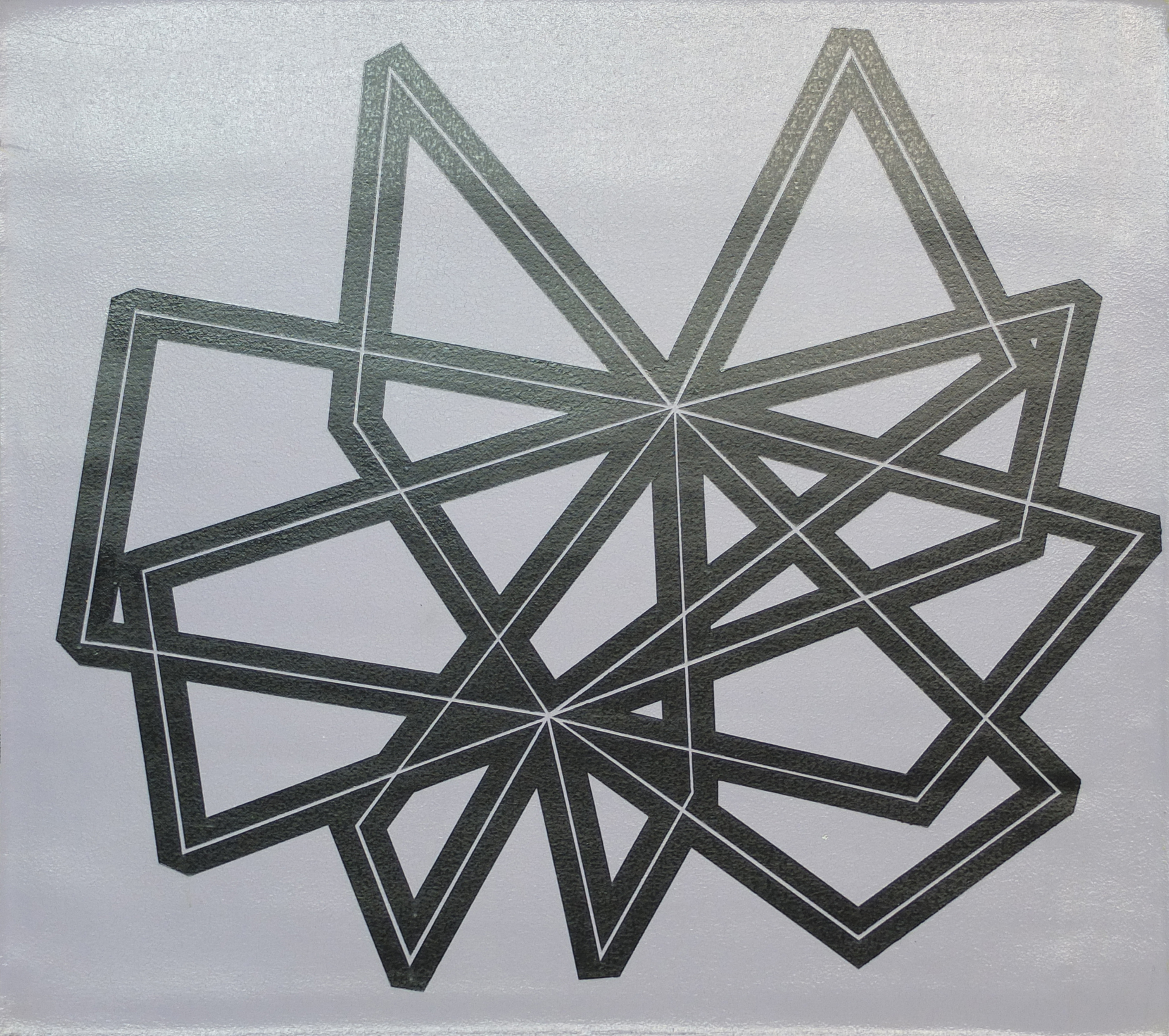
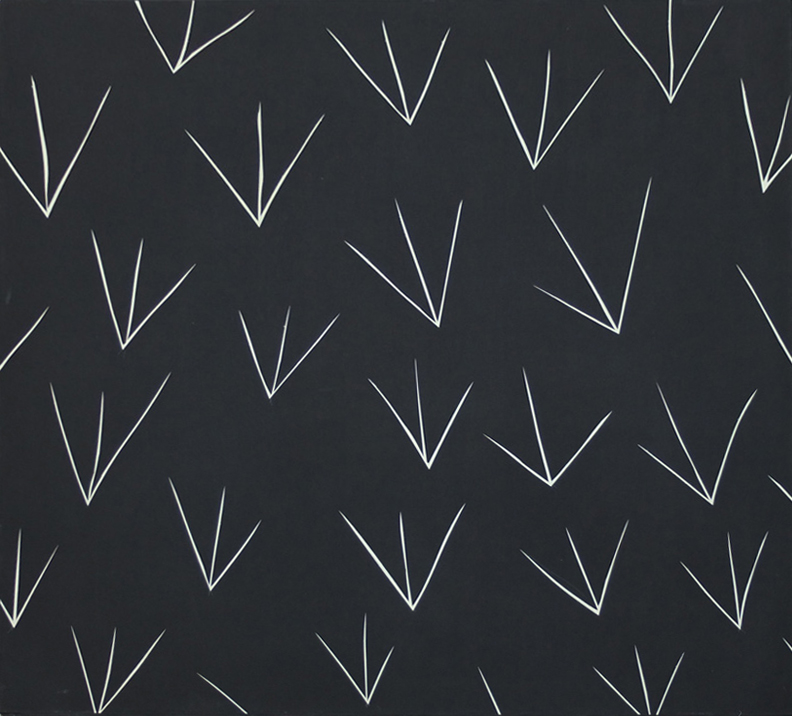
The works reminded me of Malevich, Albers, Rothko, and Fidelio. What I didn’t like at all was that I removed the color from the geometric shapes and left only the lines. The new form became the basis for a future series, which I called – “One-Liners”
(One-Liners are concise, witty, and often humorous, delivering a complete joke or observation in a single sentence. They rely on clever wordplay, unexpected twists, and brevity.)
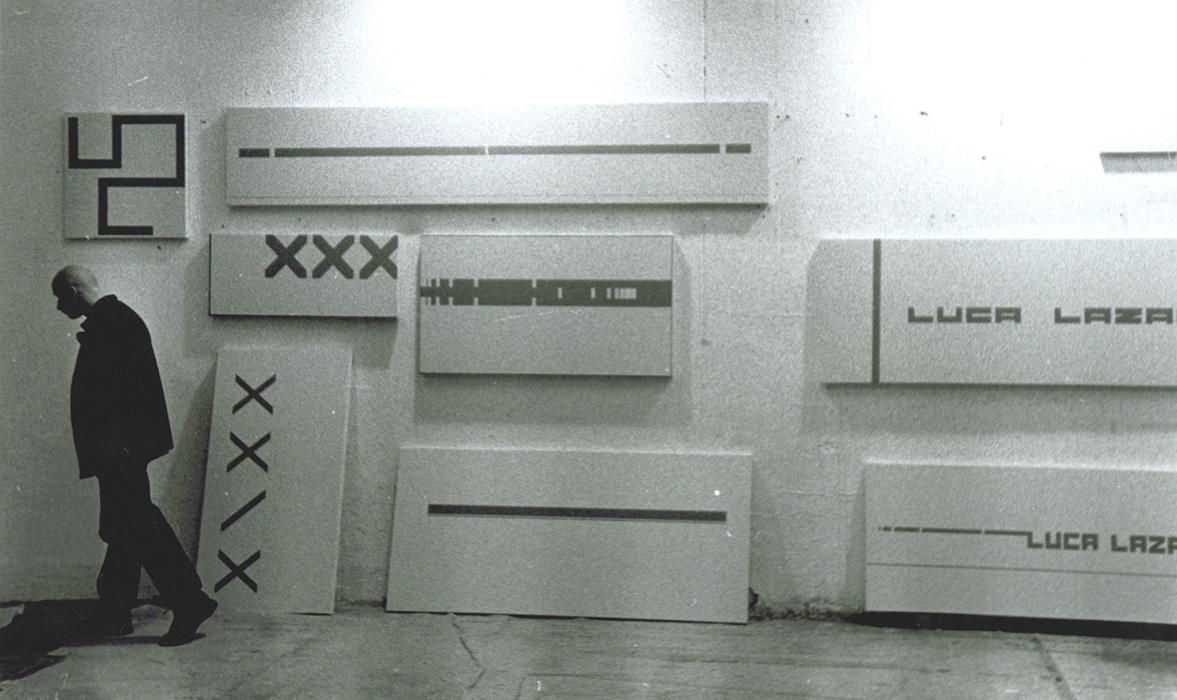
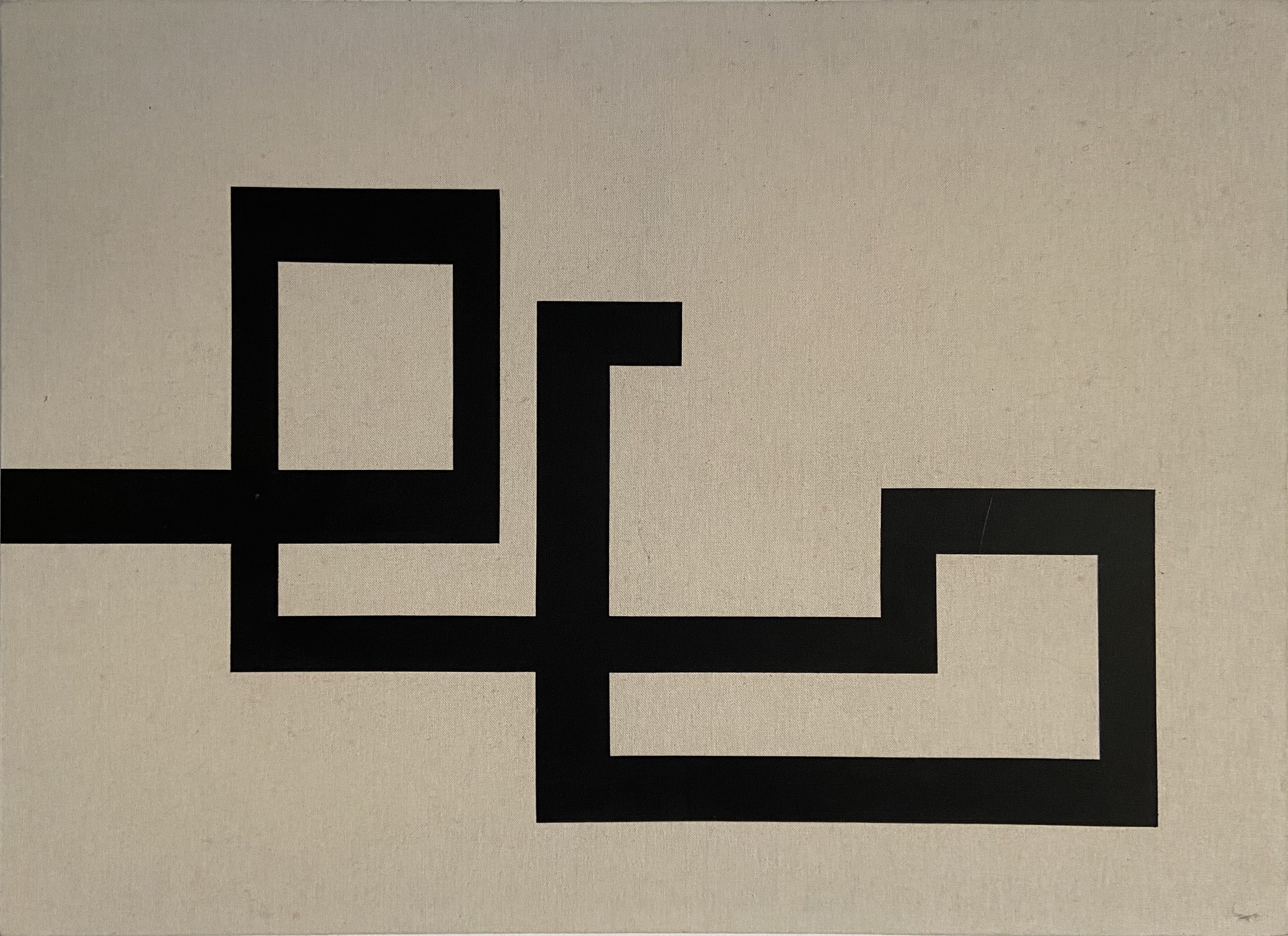
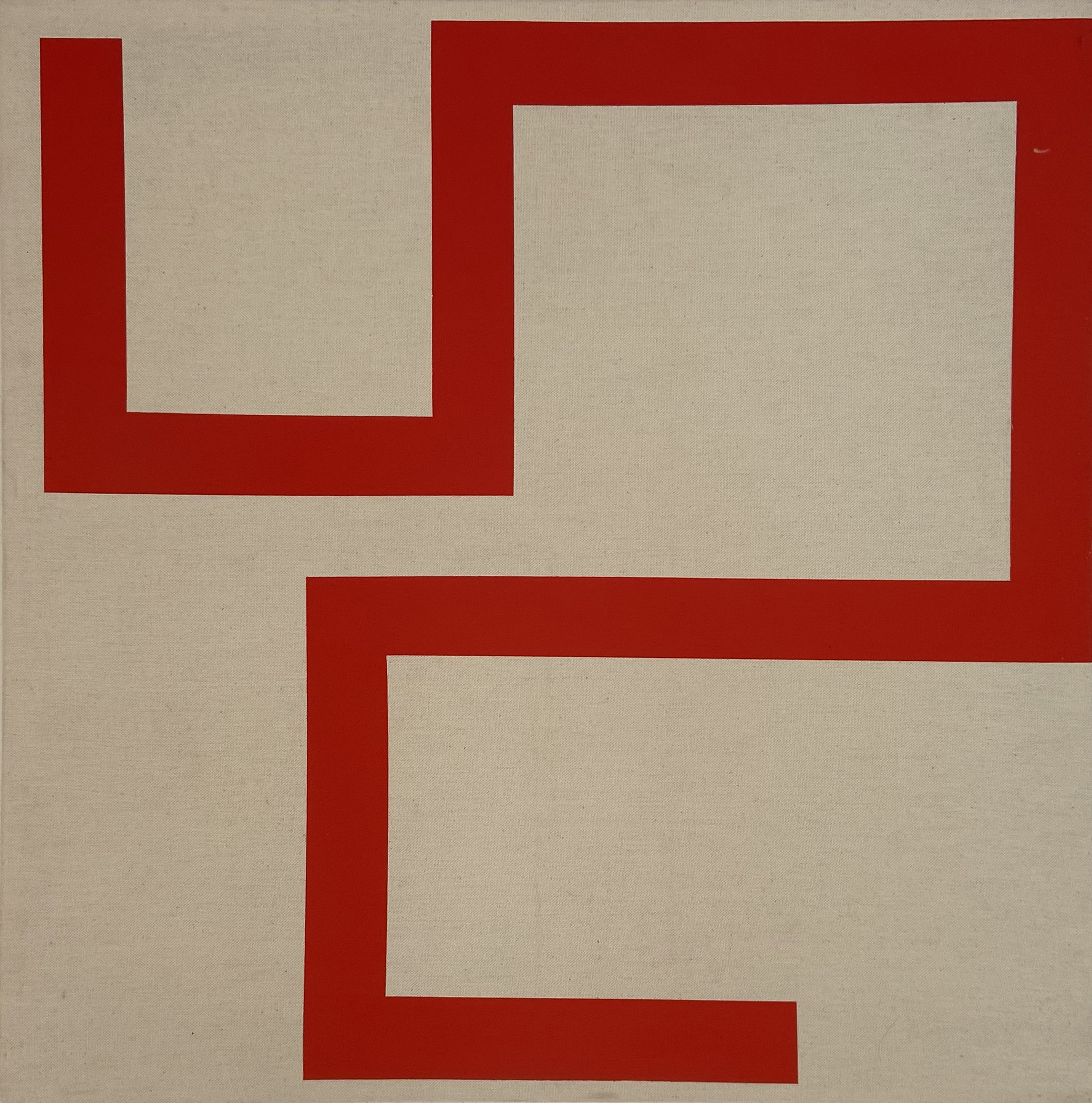
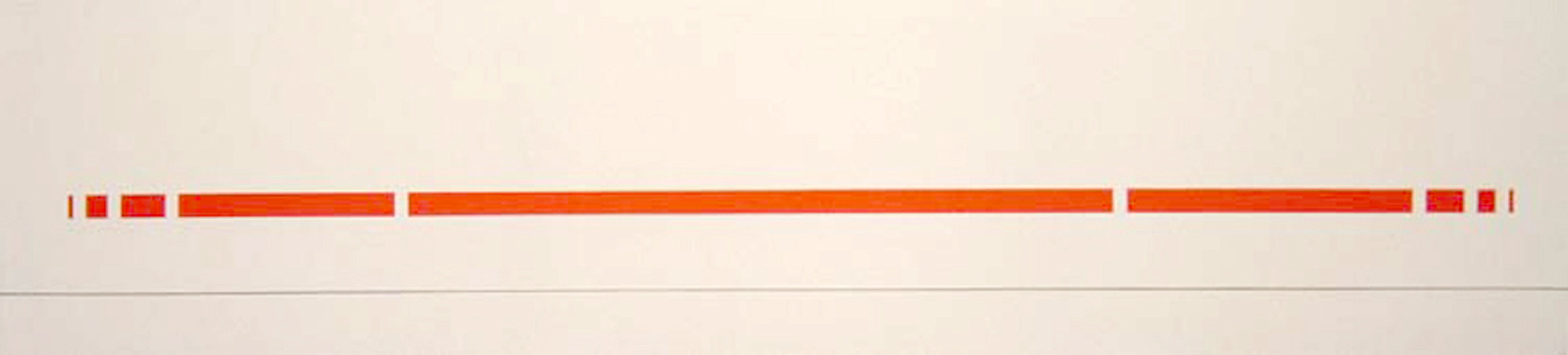
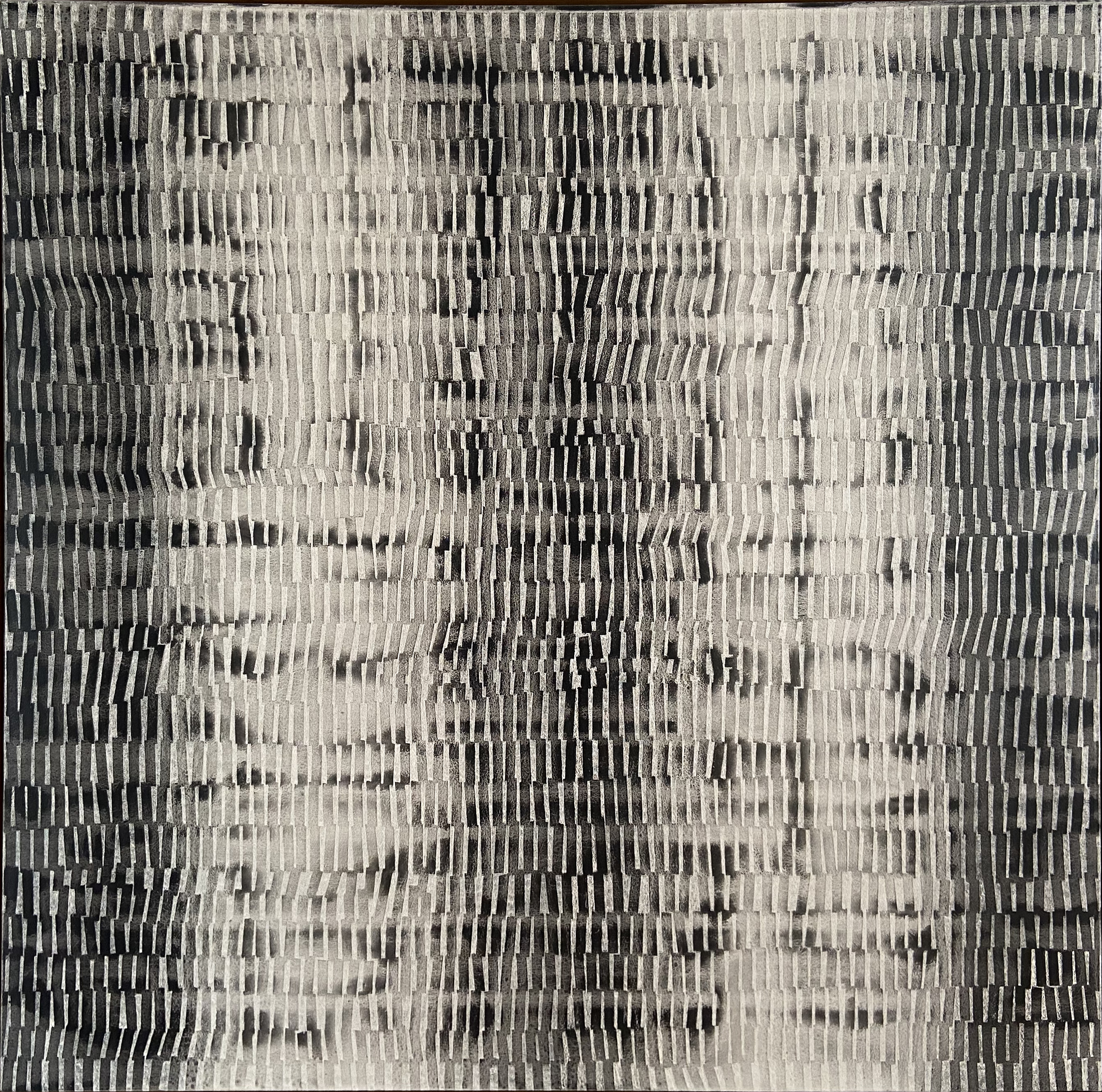
I discovered something interesting while working. The broken lines began to vibrate, and lines that were close together created the illusion of being pulled away from each other, and these visual effects gave me the idea to create a new series.
Moving Stills
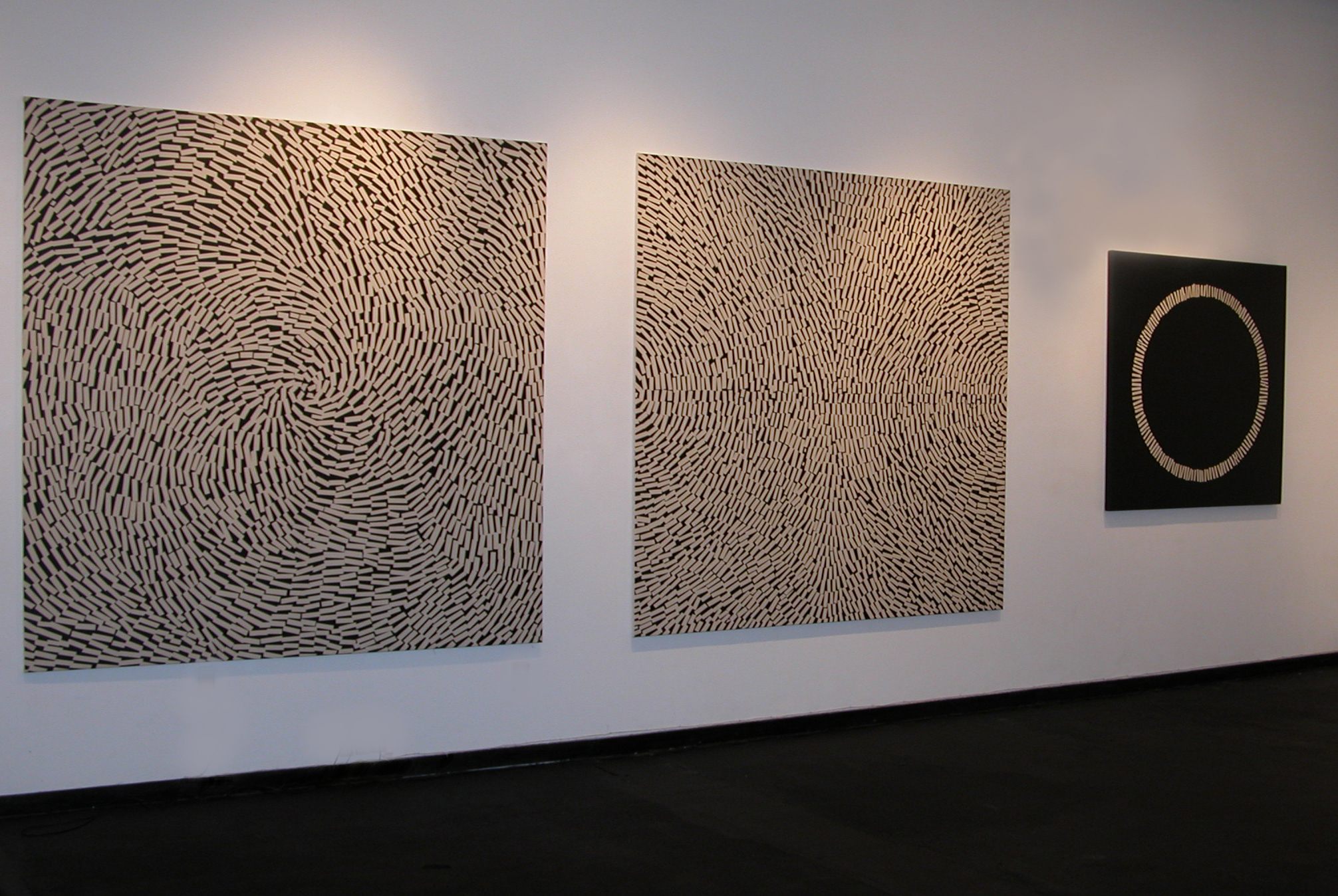
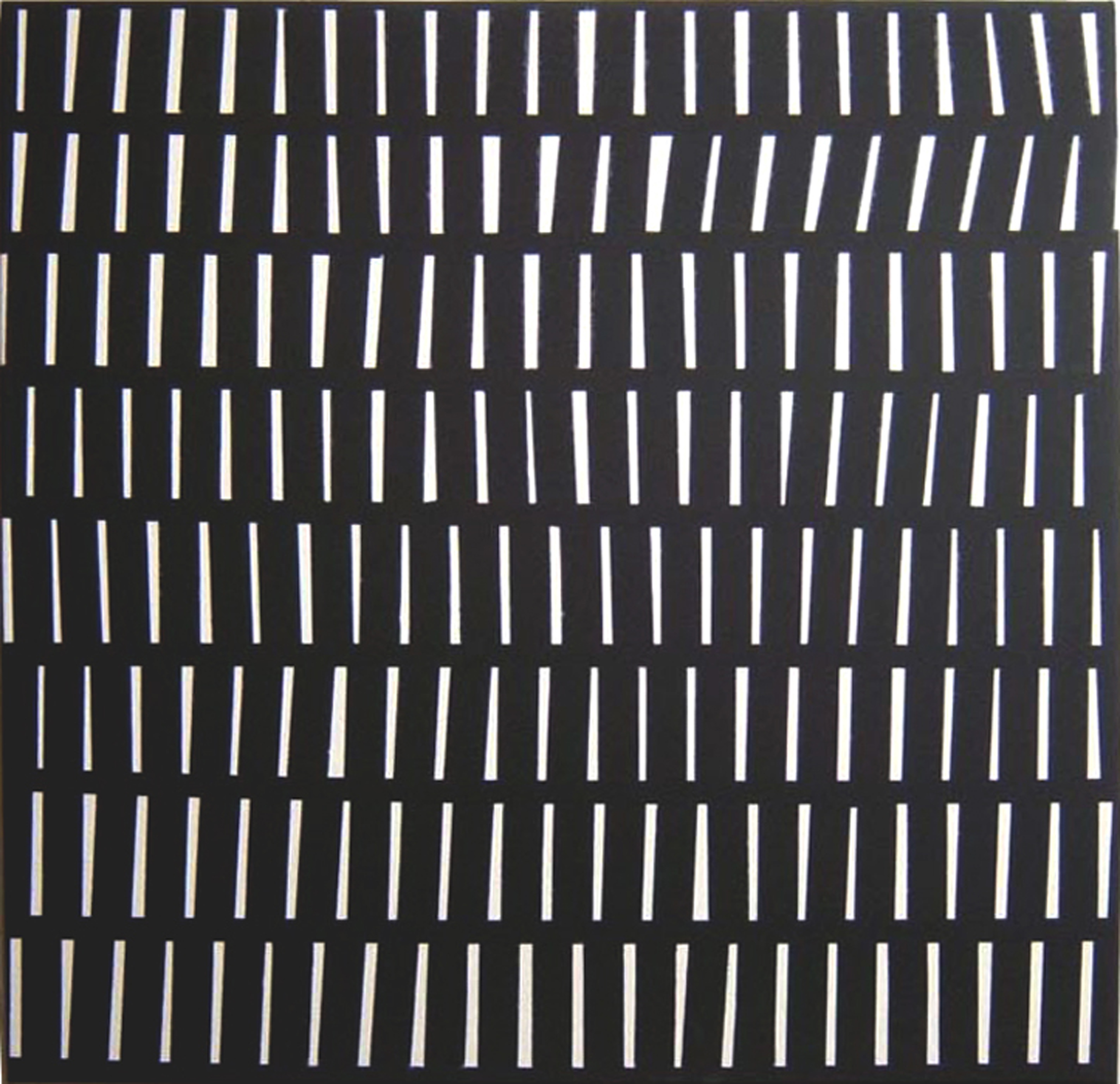
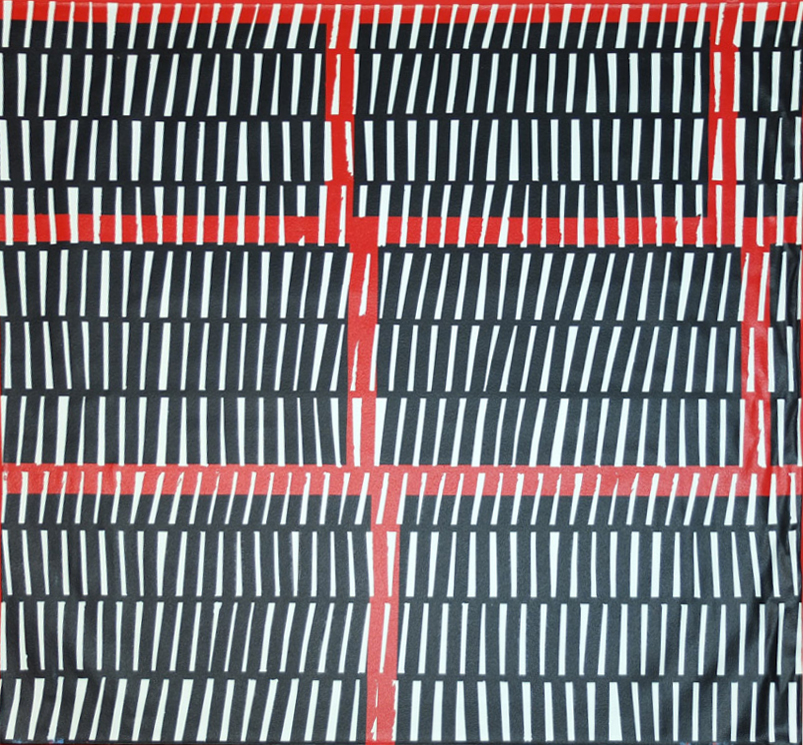
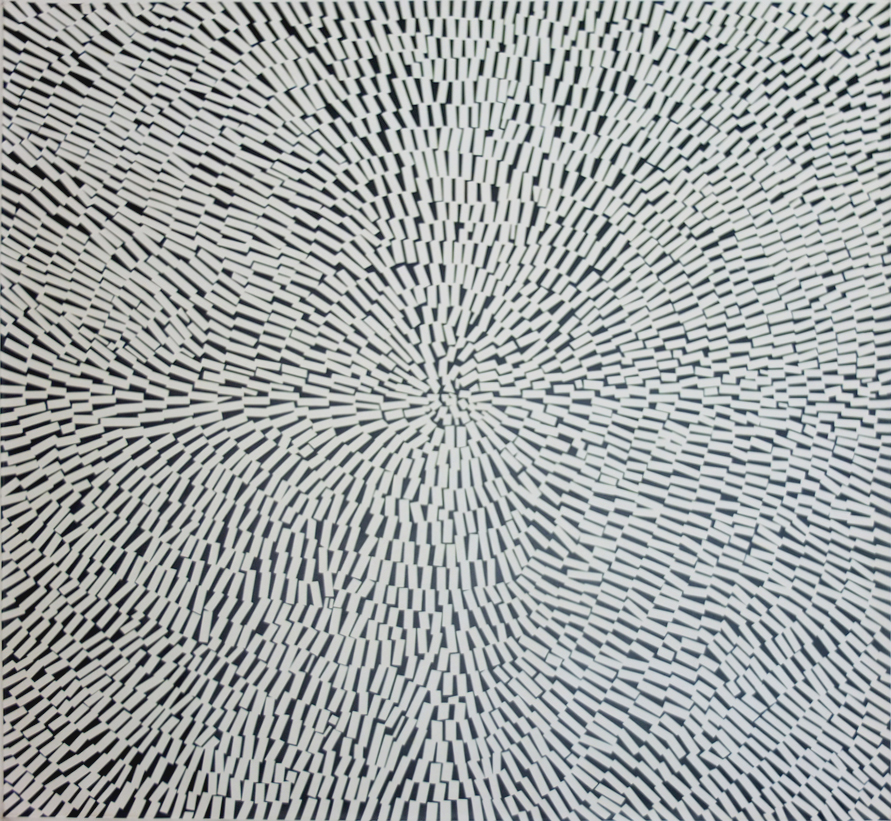
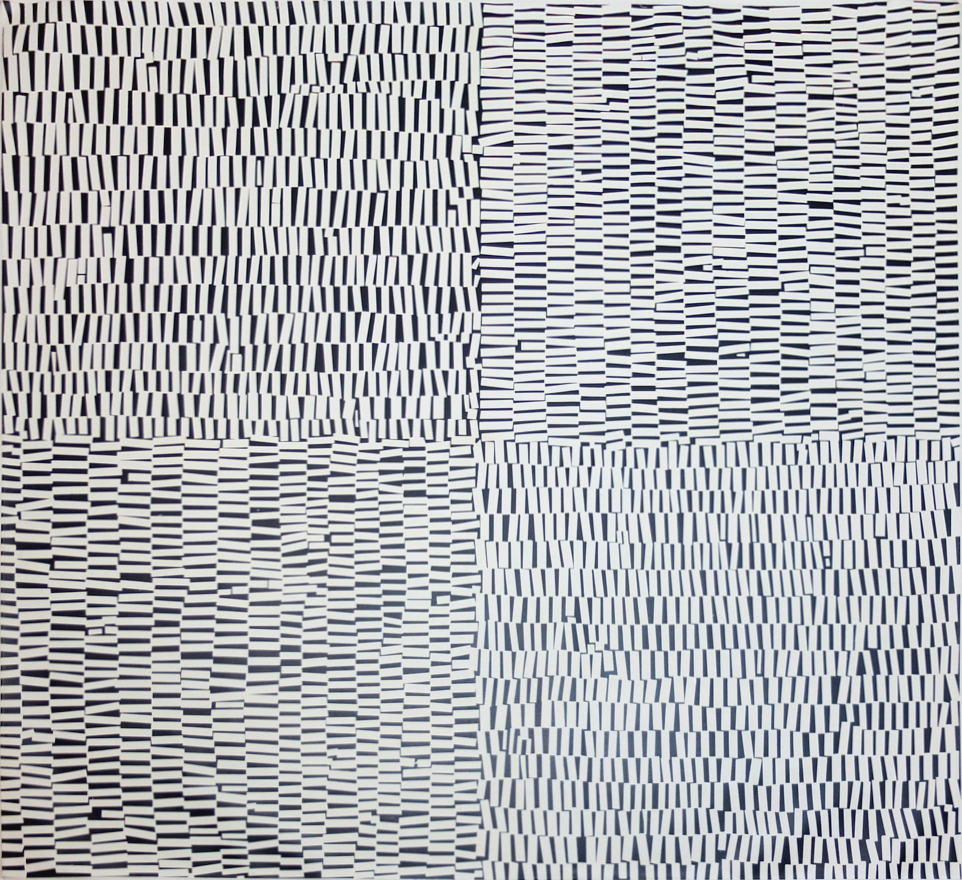
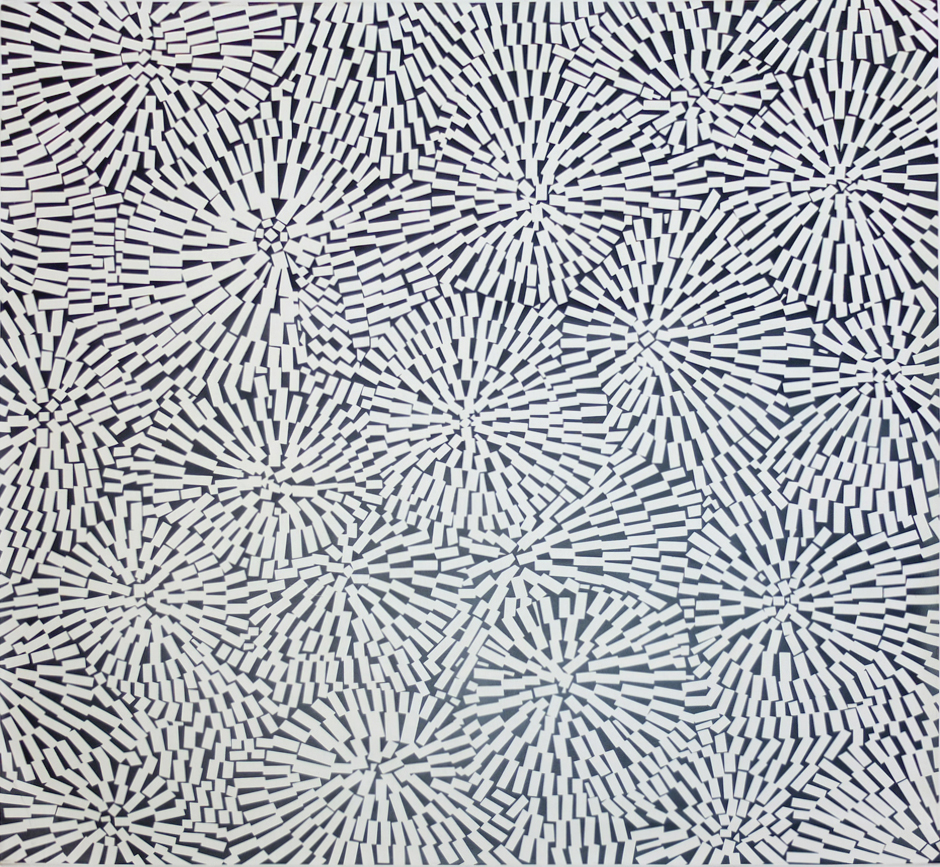
In Moving Stills the motion in space suggests a seeming fluidity. Yet each particle in the works of this series exists in its own defined boundaries, exact size and precise direction, thereby creating an absorbent vibration that has simultaneously converging as well as diverging features. In their individual distinctiveness, as well as in their cohesive collectivity the particles interact with their background. The entirety of movement and course of all elements in ostensible chaos, yet concrete formative structure when looked upon from a distance, render the works a transcendent, reflective quality.
The underlying principle of the works is controlled energy, raw powers created through and at the same time restricted by spatial structures and the arrangement of interlocking lines. Using a reduced vocabulary of minimalist forms, the untitled individual works in this series provide the suggestion of energetic movement within a motionless, frozen setting.
The works are not informed by any kind of anticipation of what the viewer may or may not see in them, but rather are to be understood by making the actual attempt of leaving the ways of perception behind that we are so accustomed to, in order to be “felt” quite intuitively in an act of self-communication.
Moving Stills came about in a process of continuous serial production, where each work -having its own chain reaction- led to new ideas for ongoing minimal abstract explorations. The works imply a certain volatility, though they are nevertheless deprived of any incidental, unintentional influences that might distract from the subtleness, efficiency and lucidity of their overall effect.
Move to New York
In 2003 I moved to New York, where I continue to work on my Movings Stills Series and keep furthering this Minimalist-Abstract exploration and developing new “chapters” in this Series, which I these days title with the date of their finalization as a sort of personal diary.
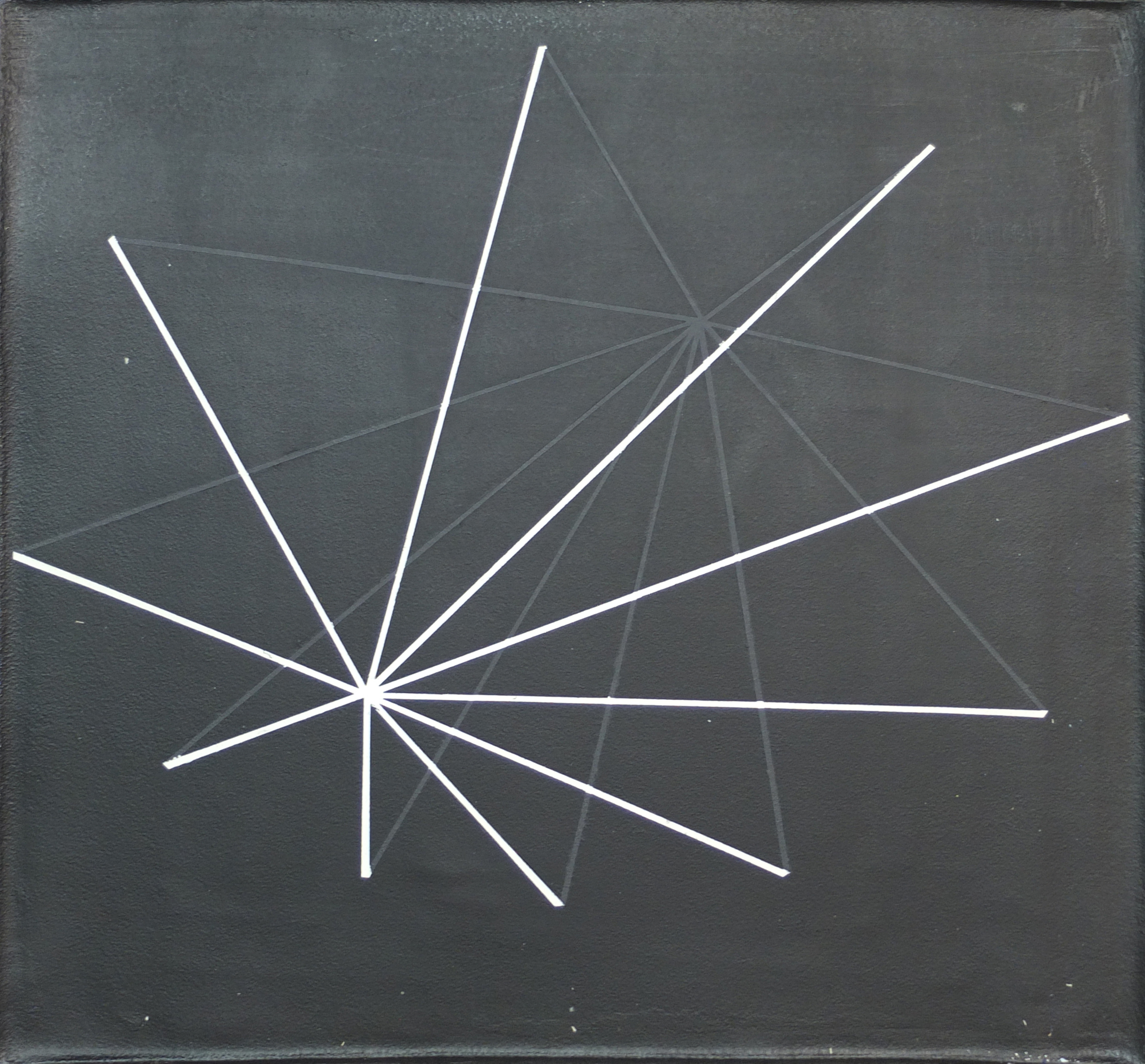
Initially, “Moving Stills” was divided into three stages before it took on its final form, which I call my masterpiece.
(A synthesis of minimal and geometric art, somewhere between expressive abstraction and optical art.)
Luca Lazar
lucalazarart@gmail.com
Pages